Small House Plans
At 1,000 to 1,800 square feet, most small house plans feature a two- or three-bedroom layout and a smaller footprint, which accommodates a smaller construction budget. Factors such as garage placement (if there is one), story count, and porch design shape the lot specifications more than just the square footage alone. Over 300 plans in this collection are 1,000 square feet or less, also referred to as tiny house plans. The full range of smaller homes runs from under 500 to just under 2,000 square feet, across styles including Craftsman, Ranch, Cottage, Modern, and Barndominium.
Key Features of Small House Plans
Small house plans share a set of structural and layout characteristics shaped by limited square footage.
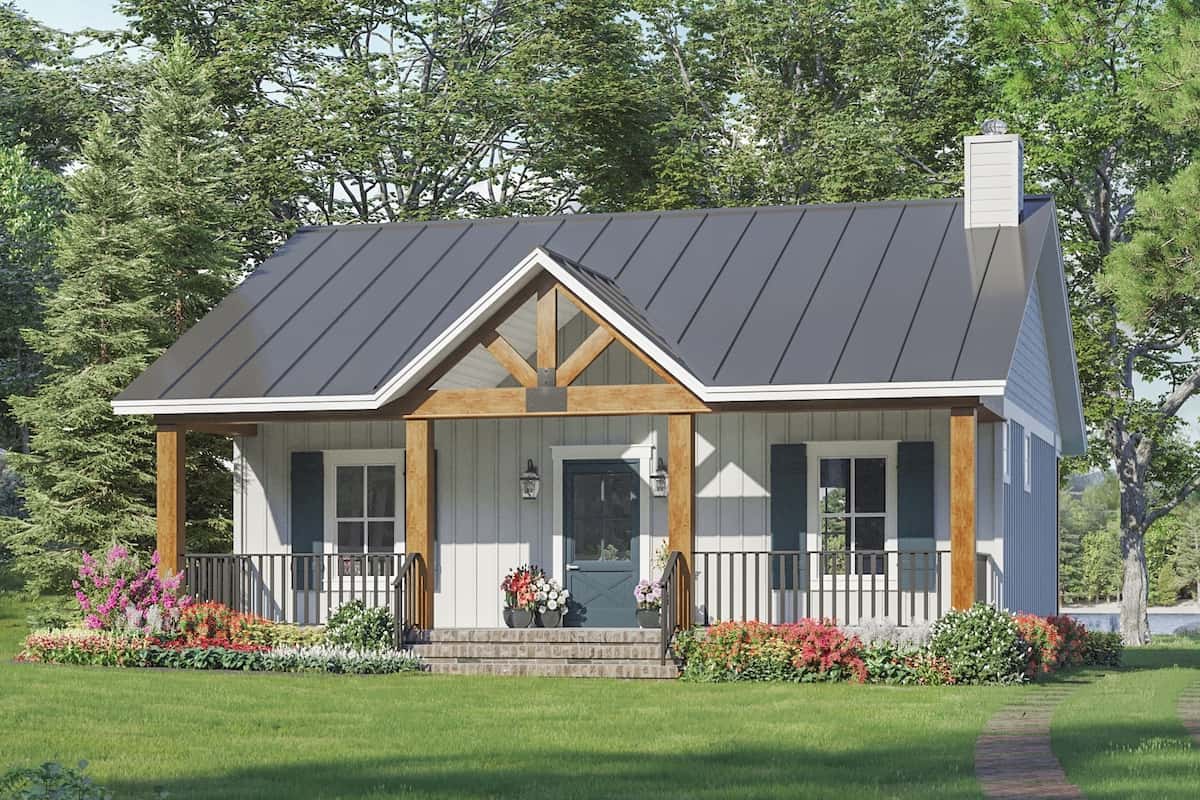
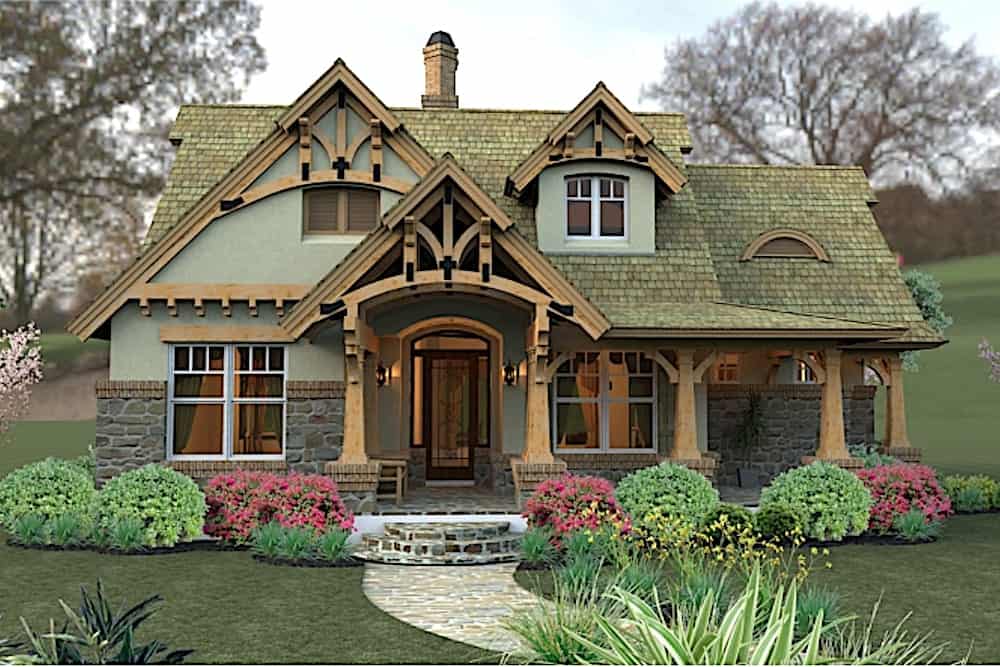
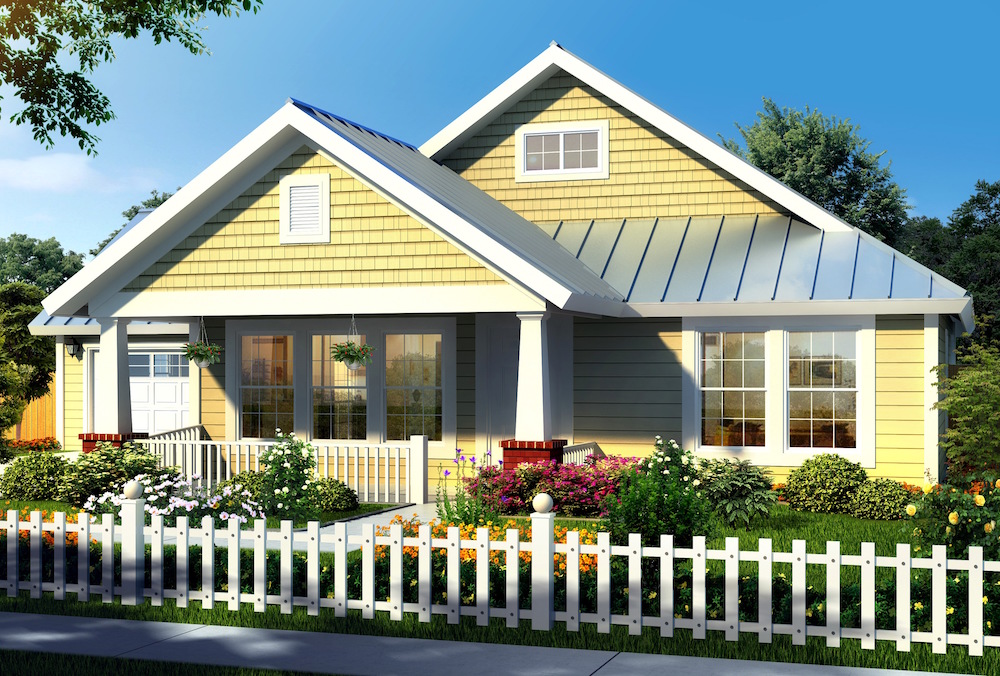
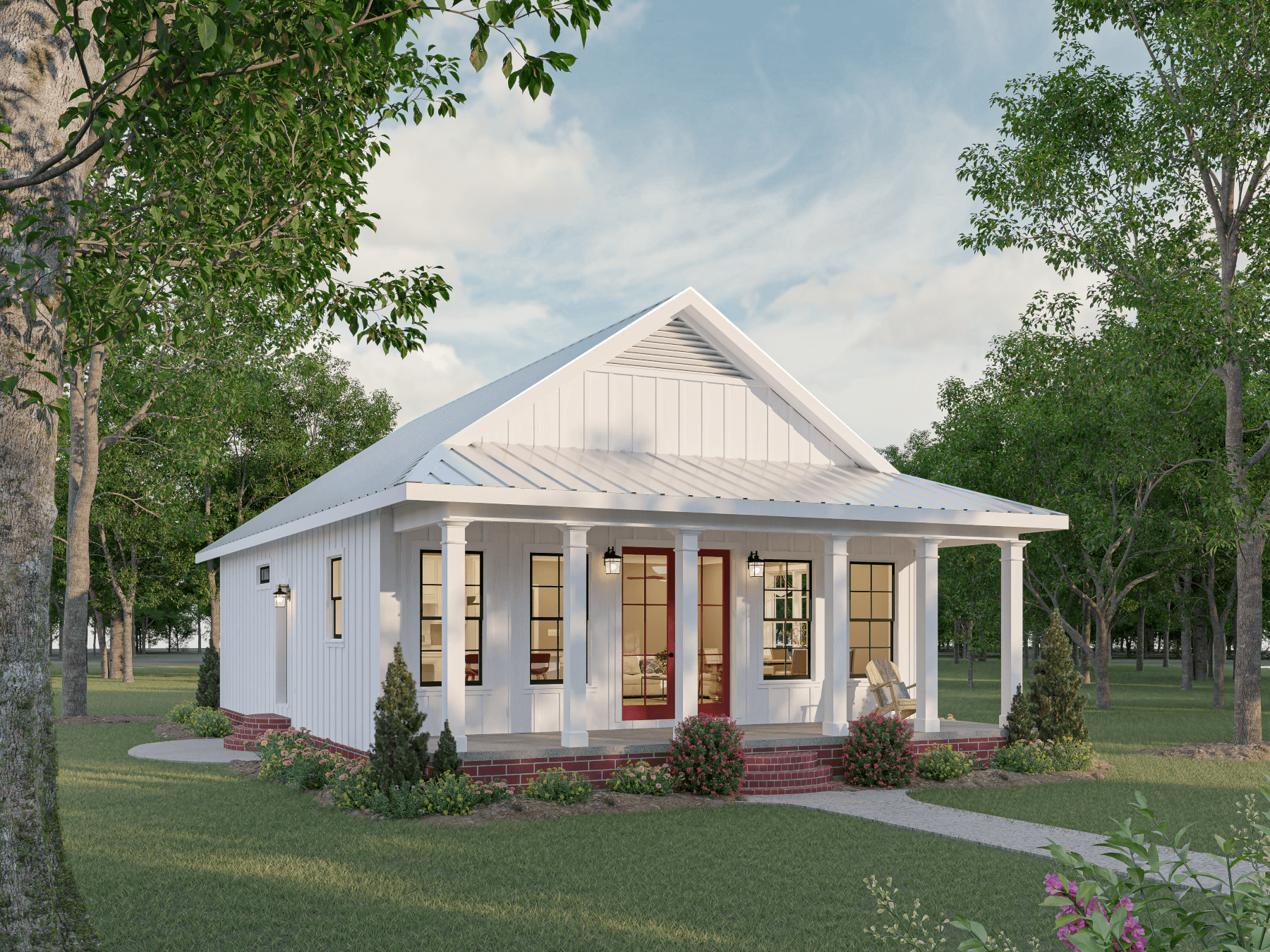
Rooflines and exterior form. Most plans under 2,000 square feet use simple gable or hip rooflines. A compact roof footprint reduces framing complexity and material cost. Craftsman and Cottage plans often carry a steeper pitch with decorative rafter tails. Ranch and Modern plans typically run a lower pitch across a wider, shallower form.
Window placement. Smaller homes often use larger window groupings on the rear elevation to bring in natural light without expanding heated square footage. Front elevation windows tend to be proportionally scaled to the facade width.
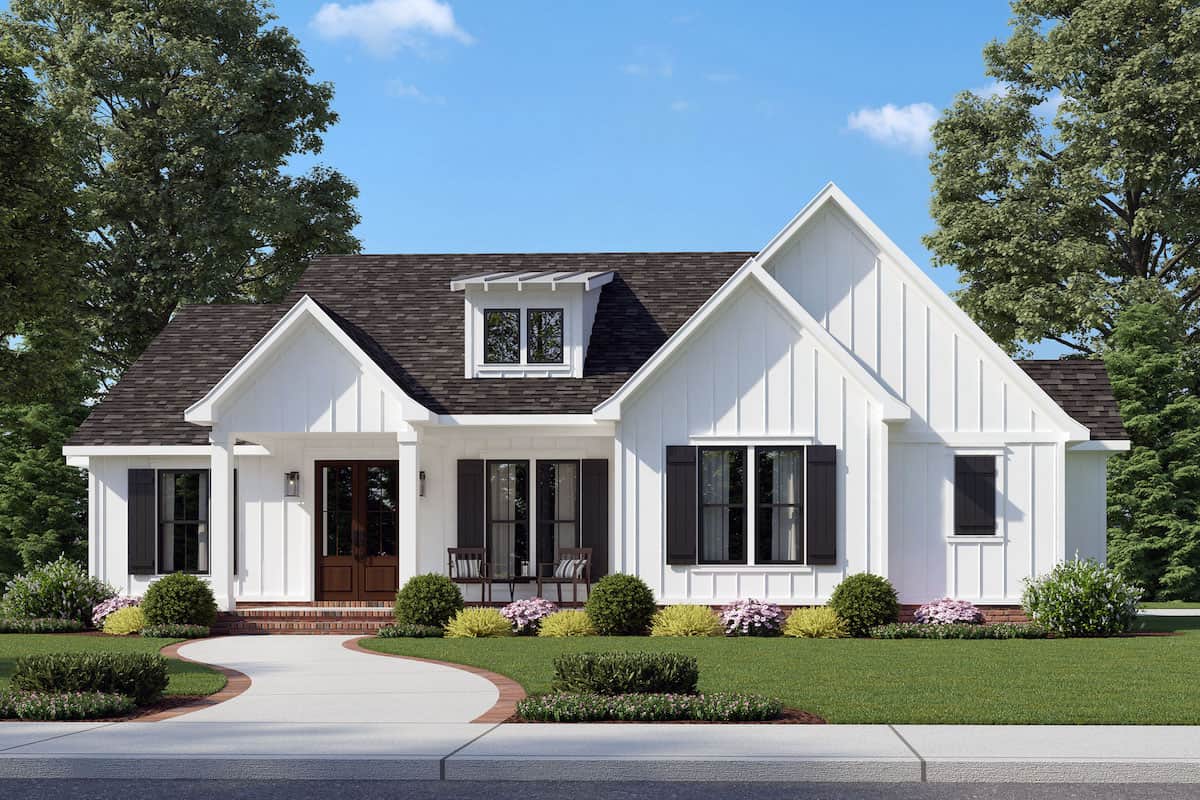
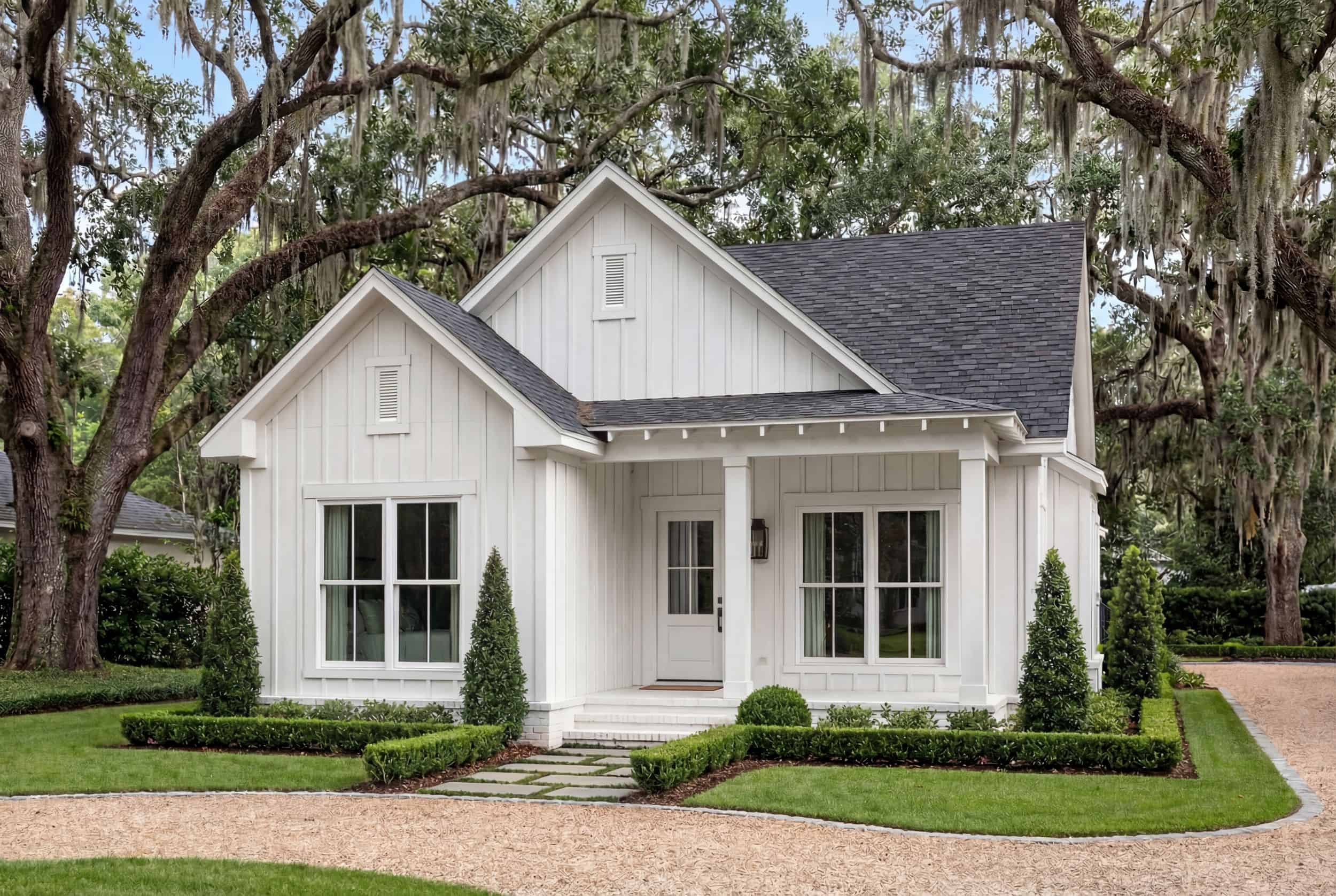
Exterior materials. Lap siding, board-and-batten, and brick veneer are the most common exterior material choices in this size range. Some Craftsman and Cottage plans combine cedar shake with lap siding on the upper gable ends.
Square footage range. Plans in this collection range from under 500 square feet to just under 2,000 square feet. The 1,000 to 1,500 square foot range is the most common — large enough for two or three bedrooms and a full kitchen, yet small enough to keep construction costs and utility loads in check.
One-Story vs. Two-Story Small House Plans
The choice between one and two stories shows up early in a plan search — it affects lot coverage, foundation cost, and how the interior circulates.
Footprint and lot coverage. A one-story plan spreads across the full lot width. On a 60-foot lot, that works fine; on a 40-foot lot, a two-story plan consolidates the same square footage into a tighter foundation and leaves more yard on the sides. Two-story foundations ranging from 1,200 to 1,600 square feet often run 24 to 28 feet wide, narrow enough for most urban lots.
Interior volume. One-story plans in this collection often feature 9- or 10-foot ceilings to compensate for the absence of a second level. Vaulted ceilings and clerestory windows serve the same purpose in smaller single-story designs. Two-story plans handle volume differently. The stair void and upper hall create vertical space on the main level without a higher ceiling plate.
Roofline. The roofline will vary materially between a one and two-story home. For example, a 1,400-square-foot home that is built vertically instead of horizontally will have a steeper roof, the footprint narrows to 26 or 28 feet, and the street elevation climbs. It should be noted that neighbors and HOA reviewers often react more negatively to height than to the square footage number.
Circulation and stairs. A one-story plan routes traffic across a single level — bedroom wings typically branch off a central hall or sit opposite the main living area. Two-story plans add a staircase to the home. Center-hall stairs lead to an upper landing with bedrooms on each side, while side-hall stairs run parallel to an exterior wall and reorganize the bedrooms toward the front or rear of the upper level.
Accessibility. One-story plans are the standard choice for aging-in-place layouts and builds where stair access is a constraint. Most single-level plans in this collection under 2,000 square feet are available on slab or crawl space foundations, both of which keep the entry threshold low.
The one-and-a-half-story plan is a smaller category worth noting. The primary bedroom sits on the main level; one or two secondary bedrooms occupy the upper half-story under dormered ceilings.
Floor Plan Layouts for Small Homes
Floor plan organization determines how rooms relate to each other, how circulation space is used, and whether the layout efficiently uses the available square footage.
Open layouts combine the kitchen, dining, and living room into a single shared volume, the standard arrangement in residential construction since the mid-1990s. An island or peninsula marks the boundary between cooking and seating without closing off the space. Cut the hallways, and a 1,200-square-foot plan gains usable area that a divided floor plan wastes on circulation.
Split bedroom layouts place the primary suite on one side of the plan and the secondary bedrooms on the other, with the main living area between them. This configuration appears frequently in small three-bedroom plans. Back-to-back bedrooms on a shared wall are a common complaint in smaller homes. A split layout moves that shared wall to the main living area instead, where sound transfer matters less.
Small house plans with 2 bedrooms often include a den or flex room that can be used as a home office. Small house plans with 3 bedrooms in the 1,400 to 1,800 square foot range typically include two full bathrooms and a utility/laundry room or mudroom entry.
Garage and Carport Options
The garage configuration directly impacts lot coverage, driveway placement, and the relationship between the entry and the main living area.
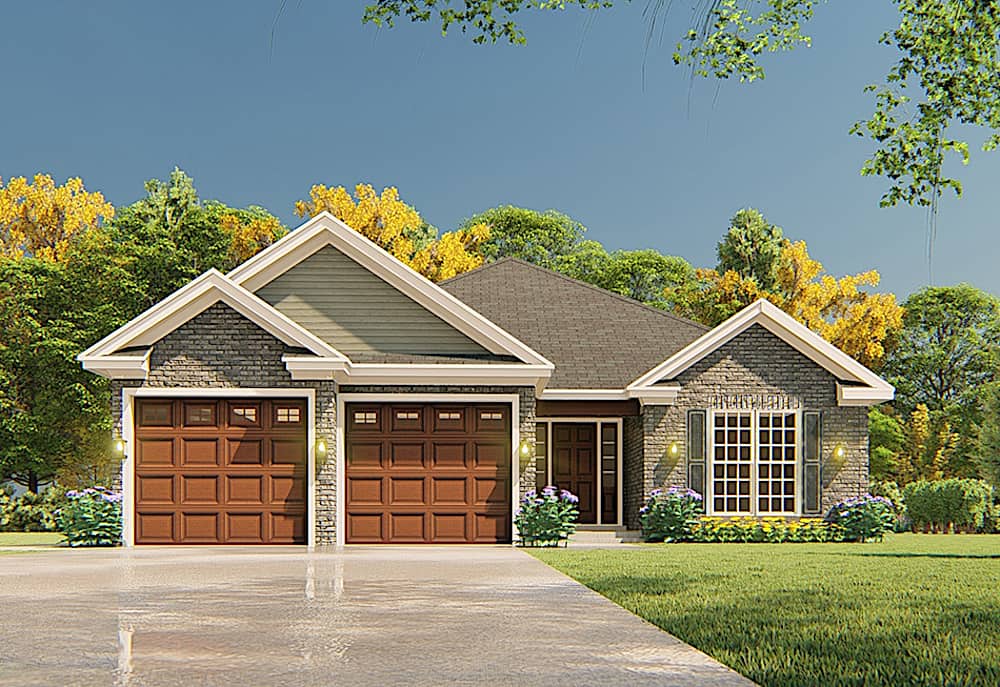
A two-car attached garage on a plan under 1,500 square feet adds 480 to 576 square feet to the structure, adding roughly a third to the square footage as compared to the heated area (although it should be remembered that the garage is unheated). On a narrow lot, the math matters: local building code coverage limits are easier to hit than buyers expect. Single-car bays run smaller at 240 to 280 square feet and leave more room to work with.
Side-entry garages set the door perpendicular to the street, which reduces the visual weight of the garage on the front elevation. This configuration requires a wider lot, typically 70 feet or more, to accommodate the driveway turn radius.
Detached garages and carports appear in some Cottage and Craftsman small house plans. A detached garage preserves the front elevation design and allows a breezeway connection to the main house. Carport plans are common in warm-climate and coastal designs where enclosed parking is a lower priority.
Plans that include a garage note the garage square footage separately from the heated living area in the plan specifications.
Porch Design in Small House Plans
Porches extend the usable area of a small house without adding to the heated square footage or the building permit calculations in most jurisdictions. House plans with porches span one-story and two-story configurations across nearly every architectural style in this collection.
Front porches appear across nearly every architectural style in this collection. Craftsman plans use tapered columns on masonry piers. Cottage plans tend toward simpler posts with decorative brackets. Ranch plans carry a low-pitched covered entry porch across part of the front facade.
Wraparound porches extend from the front elevation around one or more sides of the home. This configuration adds covered outdoor square footage and improves cross-ventilation in warm climates by shading multiple wall faces. Most wraparound porch plans in this collection carry 600 to 900 square feet of total porch area.
Rear covered porches are common in plans designed for lots with rear-facing views or where the rear yard is the primary outdoor living space. A deeper rear porch overhang reduces direct solar exposure through the adjoining rear elevation windows.
Screened porches appear on some Cottage and Ranch plans in this collection. A screened porch replaces an open rear porch and is enclosed with screen panels rather than glazing.
Lot and Foundation Considerations
Small house plans span a wide range of lot configurations and foundation types. Matching the plan to the site is as important as matching it to the bedroom count.
Lot width. A one-story small house plan with a front-entry attached garage typically requires a minimum lot width of 50 to 60 feet. Side-entry garage plans require 70 feet or more. Two-story plans with a narrow footprint can sit on lots 30 to 40 feet wide. That range covers most urban infill sites and many suburban narrow lot purchases.
Foundation types. Slab is the default in the South and Southwest. Frost depth in those regions is shallow enough that a concrete pour directly on grade is practical. Moving north or into the Midwest, frost depth pushes footings lower — full basement foundations are common there because the footing excavation is required regardless. Crawl space foundations split the difference: the finished floor sits 18 to 36 inches above grade, which changes the porch step count and the way the home reads from the street. House plans with basement options are filtered separately in this collection.
Narrow lot plans. Plans sized below 1,200 square feet are often well-suited to narrow or infill lots. A two-story plan in this range may sit on a footprint of 24 by 40 feet or smaller. Rear-entry garage plans eliminate the front-facing driveway, which makes them common in urban grid developments with alley access.
Frequently Asked Questions — Small House Plans
What is considered a small house plan?
A small house plan is generally defined as any residential floor plan with a heated living area of less than 2,000 square feet. Plans at or below 1,000 square feet are sometimes classified as very small house plans or tiny house plans. This collection includes designs from under 500 square feet to just below 2,000 square feet.
What are the most common bedroom counts in small house plans?
Two- and three-bedroom layouts are the most common in this size range. Small house plans with two bedrooms typically run 800 to 1,400 square feet. Three-bedroom plans generally require 1,100 to 1,800 square feet, including two full bathrooms and a utility space.
Are small house plans a good option for first-time buyers or starter homes?
Yes. Plans in the 1,000 to 1,500 square foot range are a common choice for first-time buyers. The smaller footprint reduces construction cost and ongoing utility expense. Most two- and three-bedroom plans in this size range include a full kitchen, two bathrooms, and an attached garage without the square footage that drives up build cost on larger designs.
Are small house plans suitable for retirees or downsizing?
One-story small house plans are a popular choice for retirees and buyers looking to downsize from larger homes. Single-level layouts eliminate stairs, which matters for aging-in-place planning. Plans in the 1,200 to 1,600 square foot range on slab or crawl space foundations keep the entry threshold low and reduce long-term maintenance relative to two-story designs.
Do small house plans include garage options?
Yes. Many small house plans in this collection include an attached one- or two-car garage. Detached garage and carport options also appear across Cottage and Craftsman styles. Garage square footage is listed separately from the heated living area in each plan's specifications.
How much does it cost to build a small house plan?
A plan under 1,500 square feet in the South or Midwest typically runs $120 to $200 per square foot for standard finishes. Slab foundations in warm climates come in at the lower end. Basements in the Midwest add cost. TPC offers a cost-to-build estimate for any plan through its partnership with StartBuild. Estimates are priced at $29.95 and are credited against the plan purchase price if you proceed with an order.
What makes a small house plan simple or easy to build?
The footprint drives most of the complexity. A rectangle or simple L-shape with a gable roof has fewer intersecting corners, which means fewer framing transitions and less waste on cut lumber. In Southern markets, a single-story plan on a slab skips the foundation excavation entirely — that alone removes several weeks from a typical build schedule.
What foundation types work with small house plans?
Foundation options vary by plan and region. Slab is standard in the South. Crawl space works on sloped lots and in areas with elevated moisture. Full basement foundations are more common in the Midwest and Northeast, where frost depth drives the footing depth regardless. Each plan's detail page lists which foundation types are available for that design.
Can small house plans work on a narrow lot?
Yes. Two-story plans in the 30- to 50-foot lot width range are the most practical option for narrow sites and should be seriously considered in the house plan search process. Rear-entry garages pull the driveway off the street entirely, while side-entry configurations keep the garage attached but rotate the door off the front elevation. Either way, the garage door moves off the primary street-facing elevation. The narrow lot house plans collection includes additional options.
What architectural styles are available in small house plans?
This collection includes small house plans across most major residential styles — Craftsman, Ranch, Cottage, Modern, Barndominium, Cabin, and others. Craftsman and Cottage styles appear frequently at or below 1,500 square feet. Ranch plans dominate the single-story segment.
Are small house plans available with a loft?
Yes. Some plans under 2,000 square feet include a loft above the main living area. Loft configurations typically sit above the living room in plans with vaulted or cathedral ceilings. Loft space is usually included in finished square footage in the plan specifications. Browse house plans with a loft for additional options.
Small house plans cover a broad range of configurations — from one-bedroom slab-foundation plans under 800 square feet to three-bedroom two-story designs approaching 2,000 square feet with attached garages and covered porches. Use the filters in this collection to sort by square footage, story count, bedroom count, foundation type, garage configuration, and architectural style. Reviewing plans at similar square footage side by side is the most effective way to identify which floor plan layout, porch arrangement, and lot footprint match the site and build requirements.
Plan Results


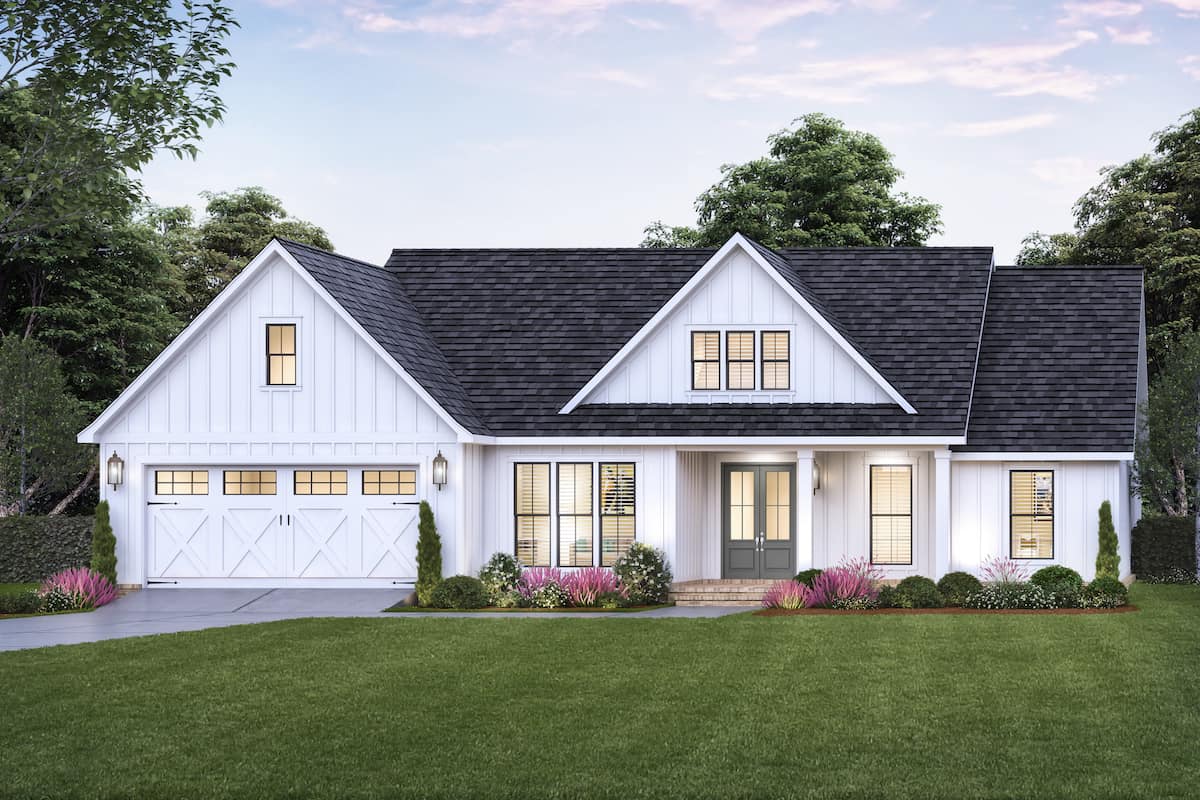
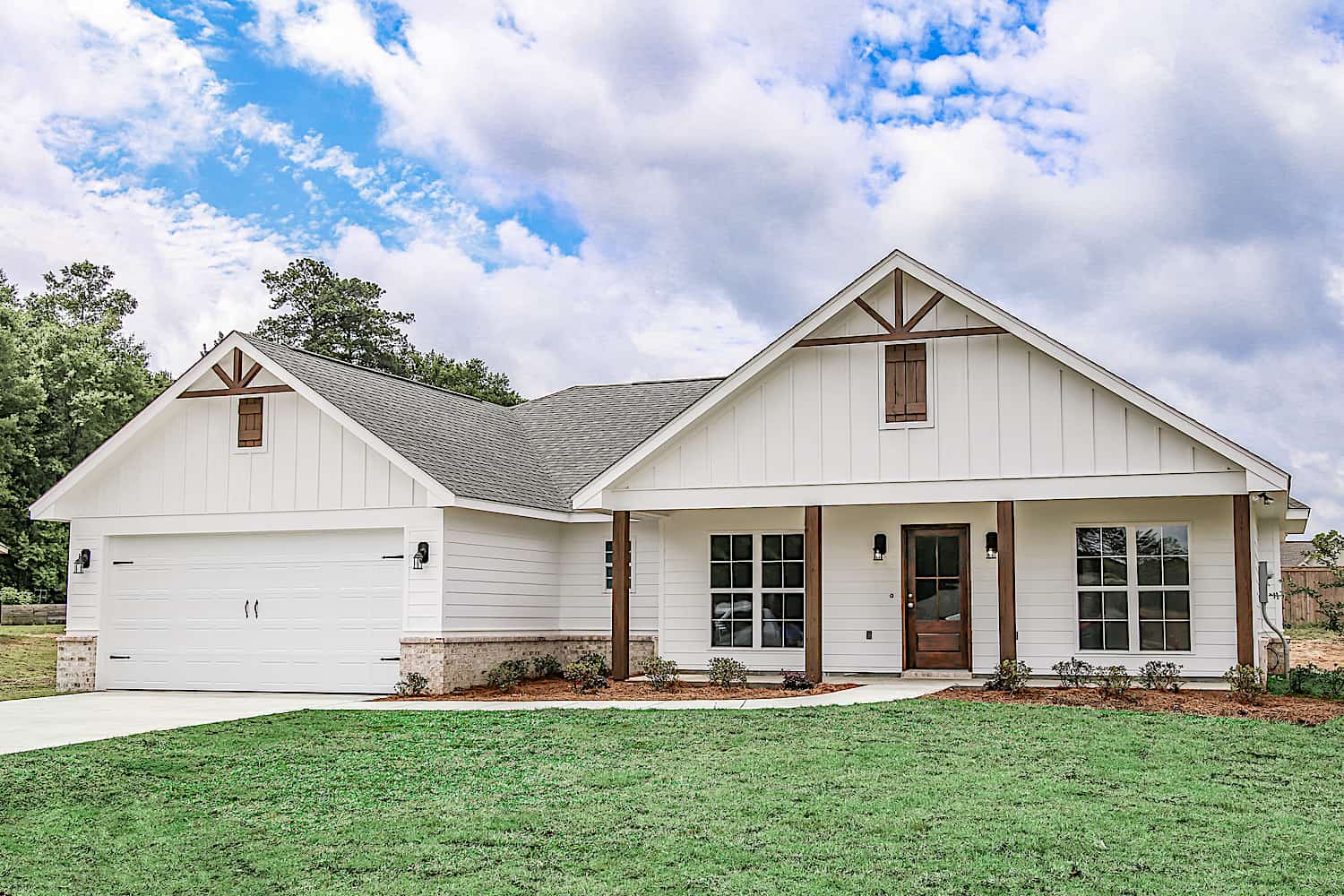
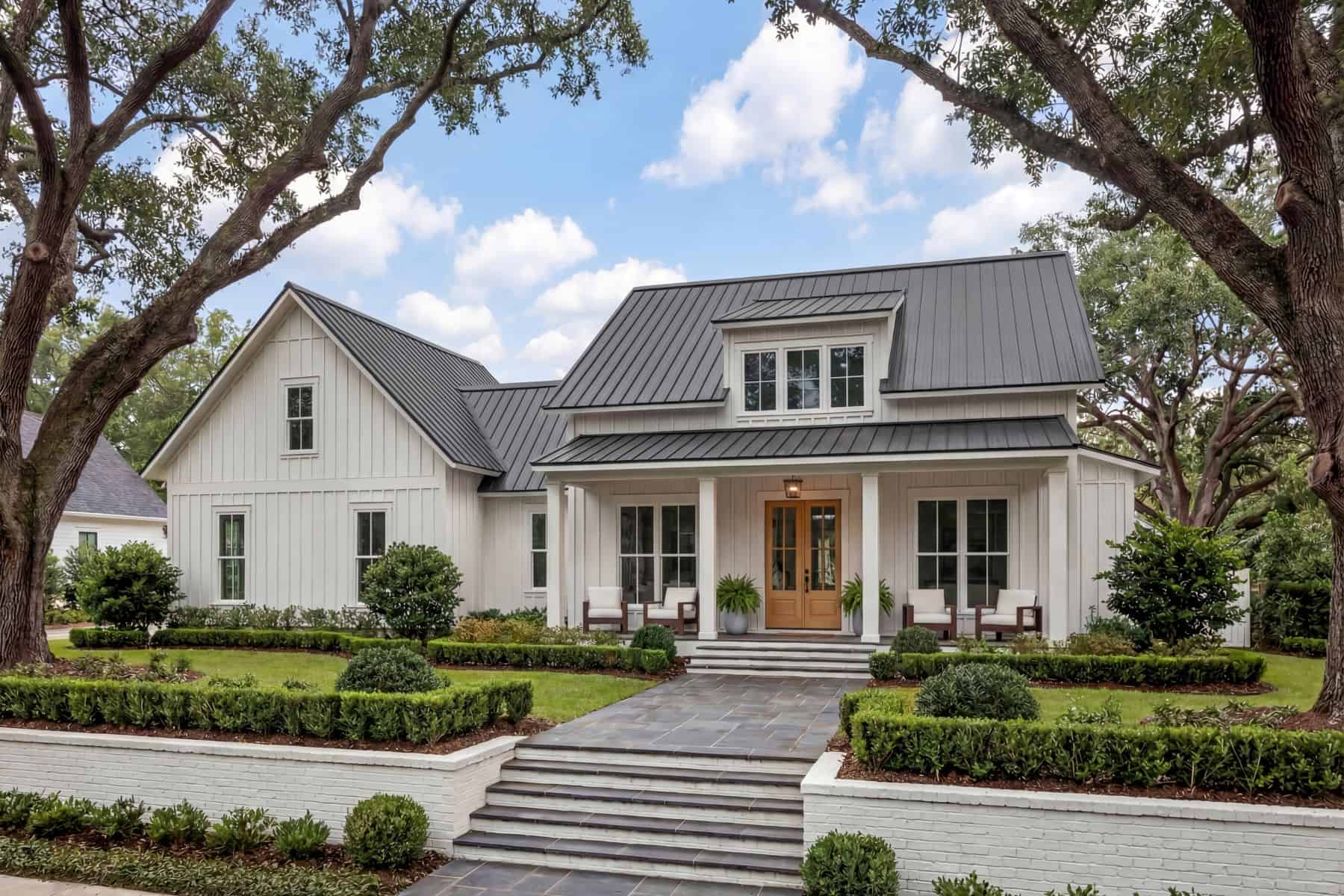
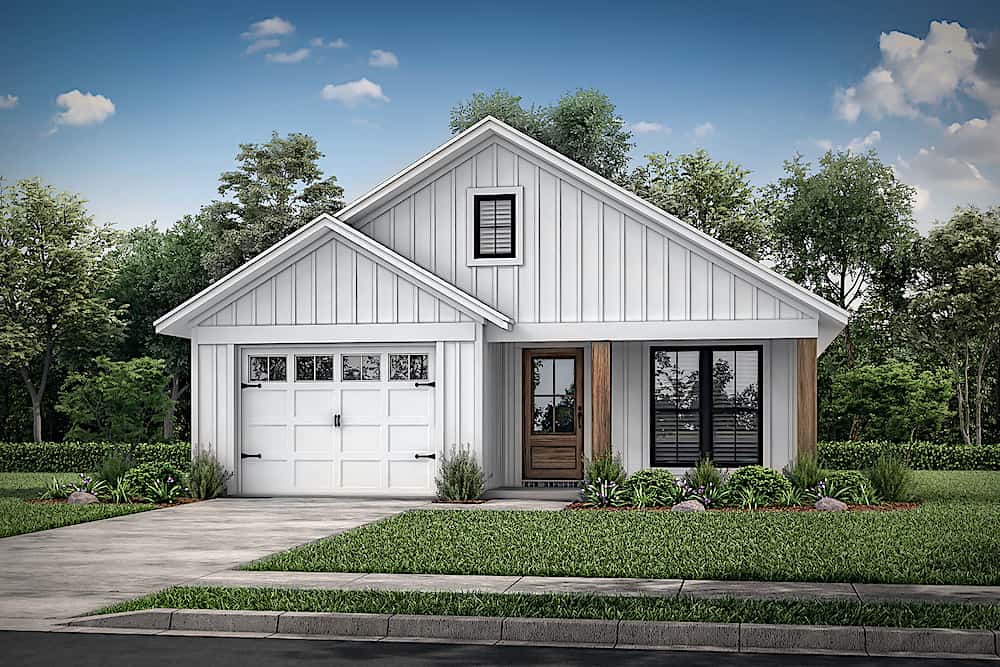



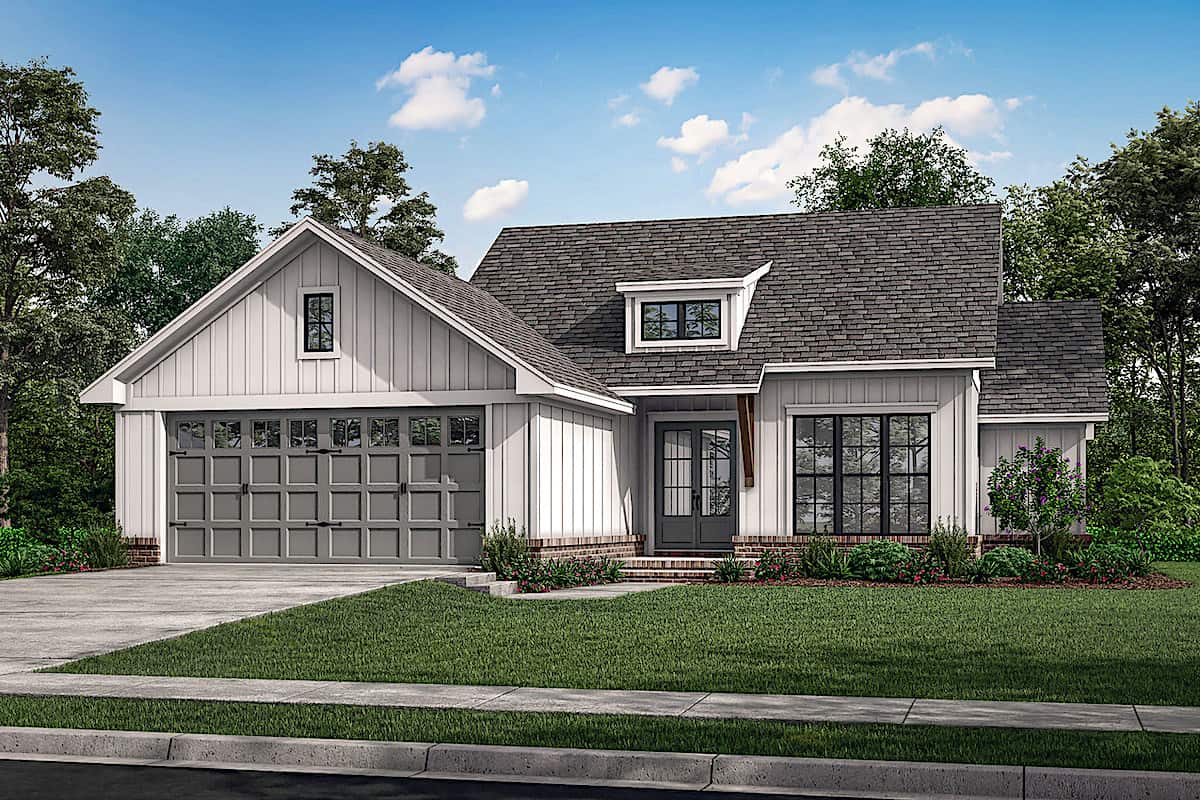
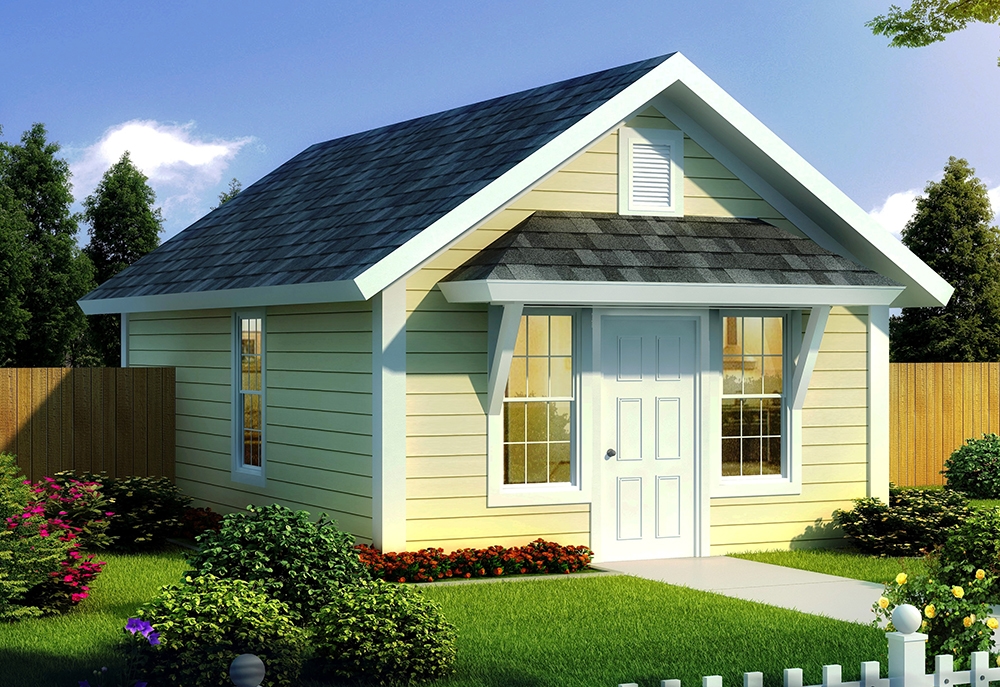
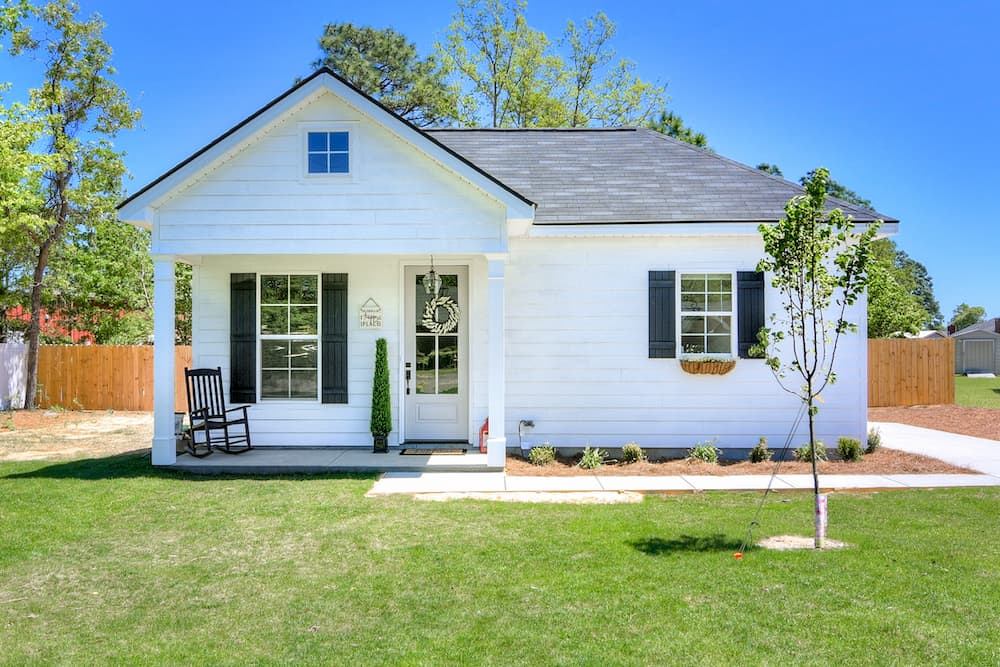
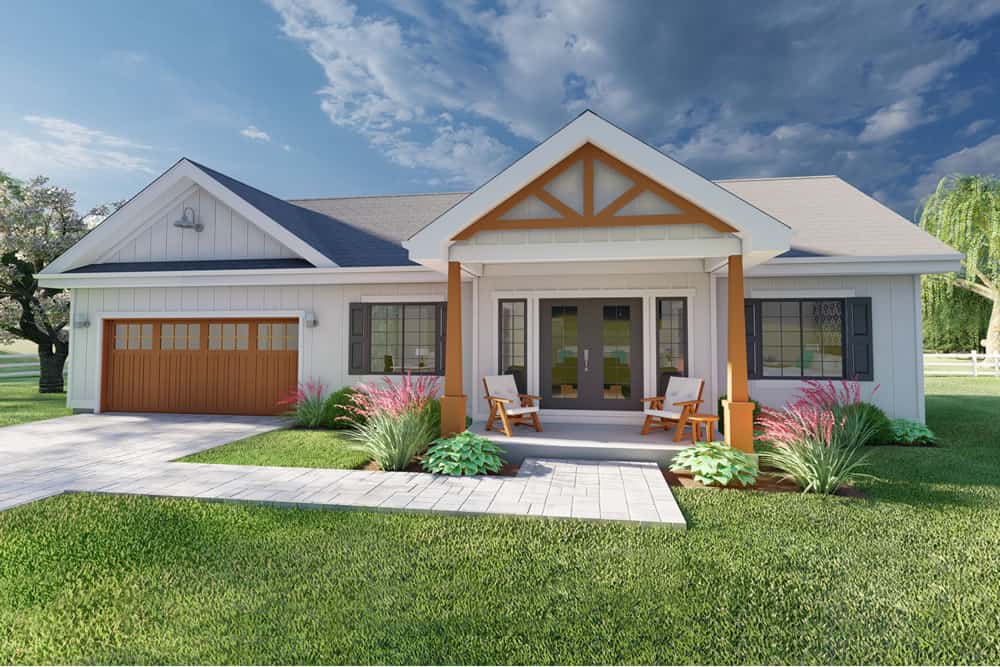
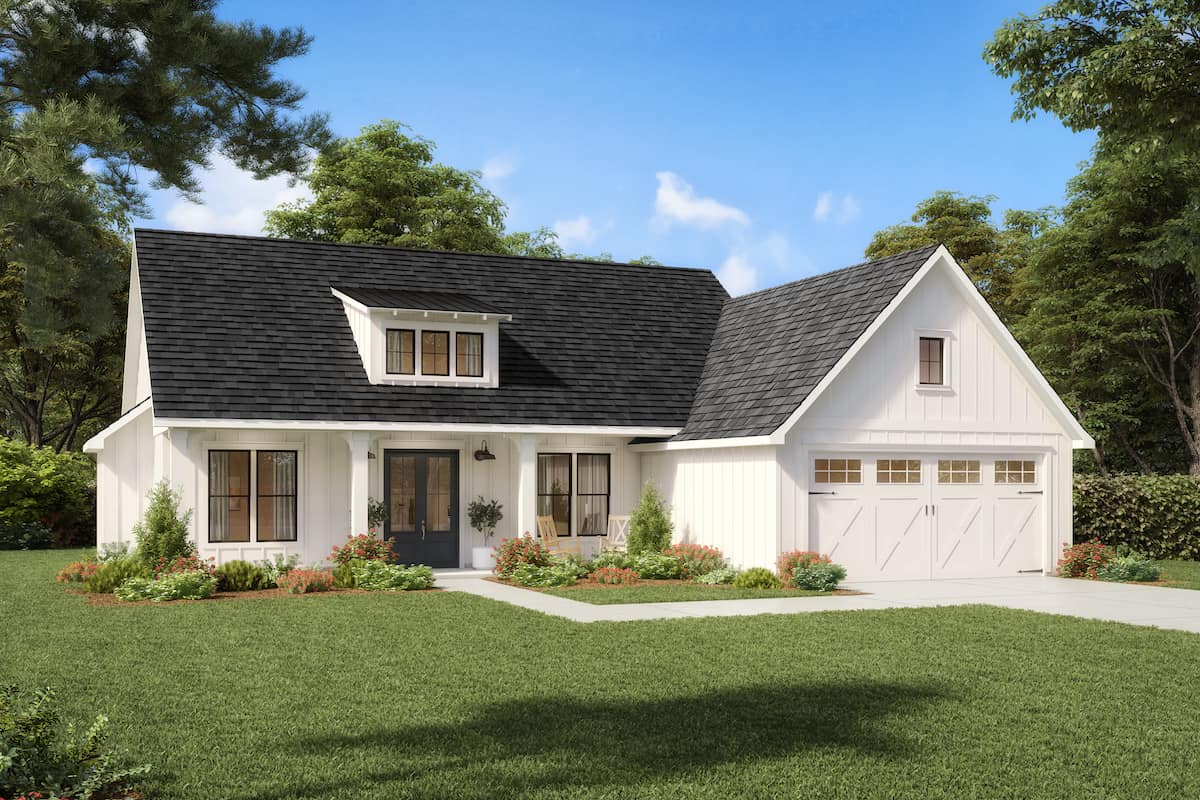
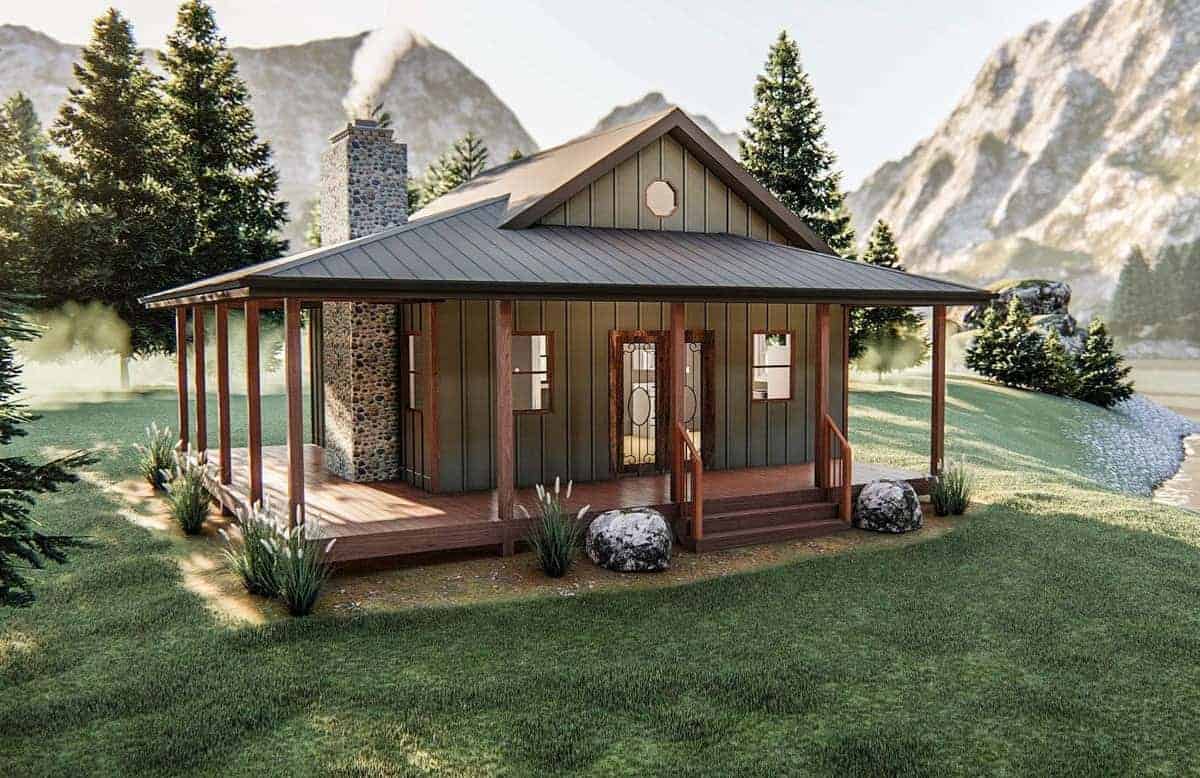
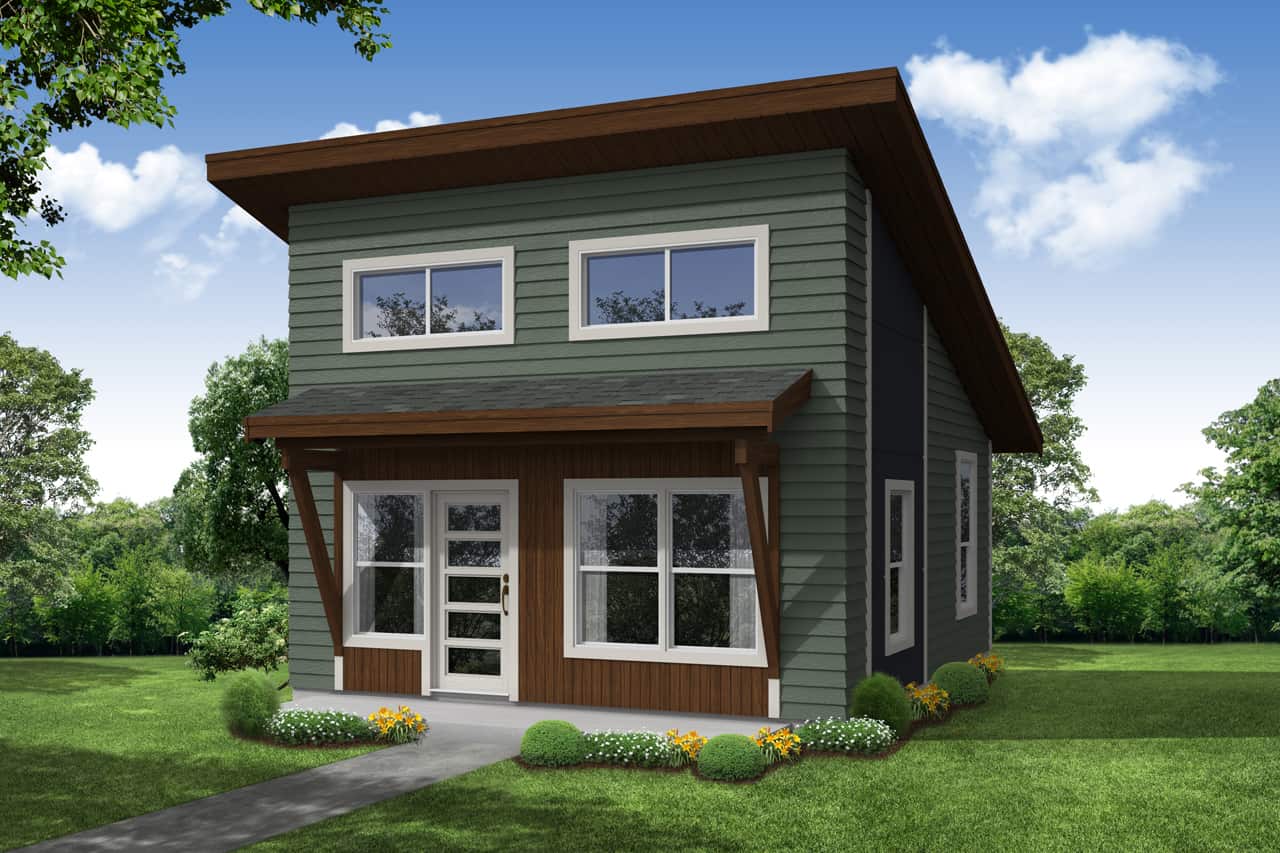
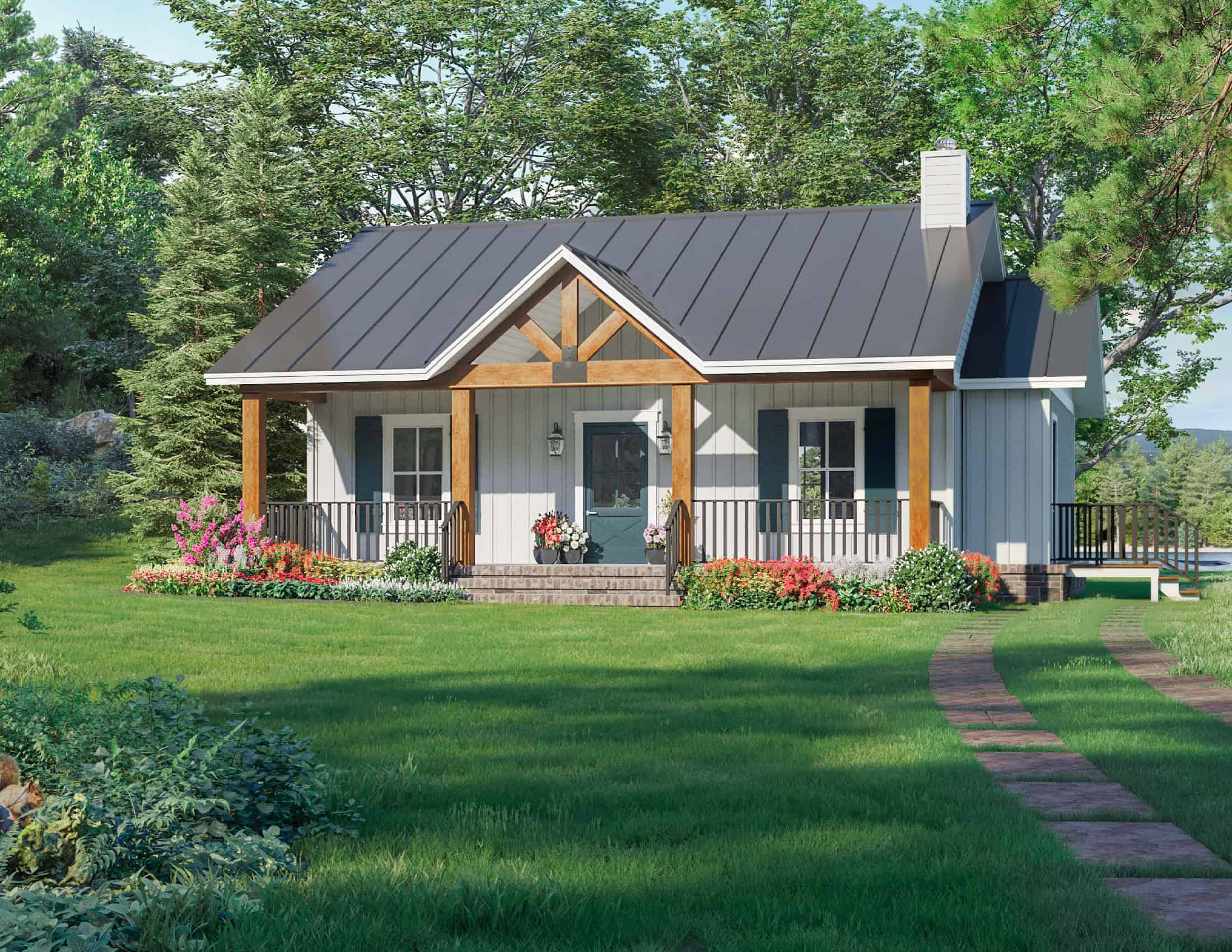


Small House Plans Video
The Plan Perspective
Welcome Back, “Small House!” The Small Home Design Can Pack a Big Punch
Small House Designs Offer Less Clutter and Expense – With Good Design, Small Homes Provide Comfort and Style. During a recent trip to New York City, one of my friends invited a few of us to her “mini-home” – a large studio with a wonderful layout and great views; and furnished to enhance the available space. Like a growing number of people who have downsized in recent years, moving from bigger apartments to smaller ones or from large “McMansions” to small houses, she adjusted and organized accord