How 3-Bedroom Modern Farmhouses Make the Most of Their Space
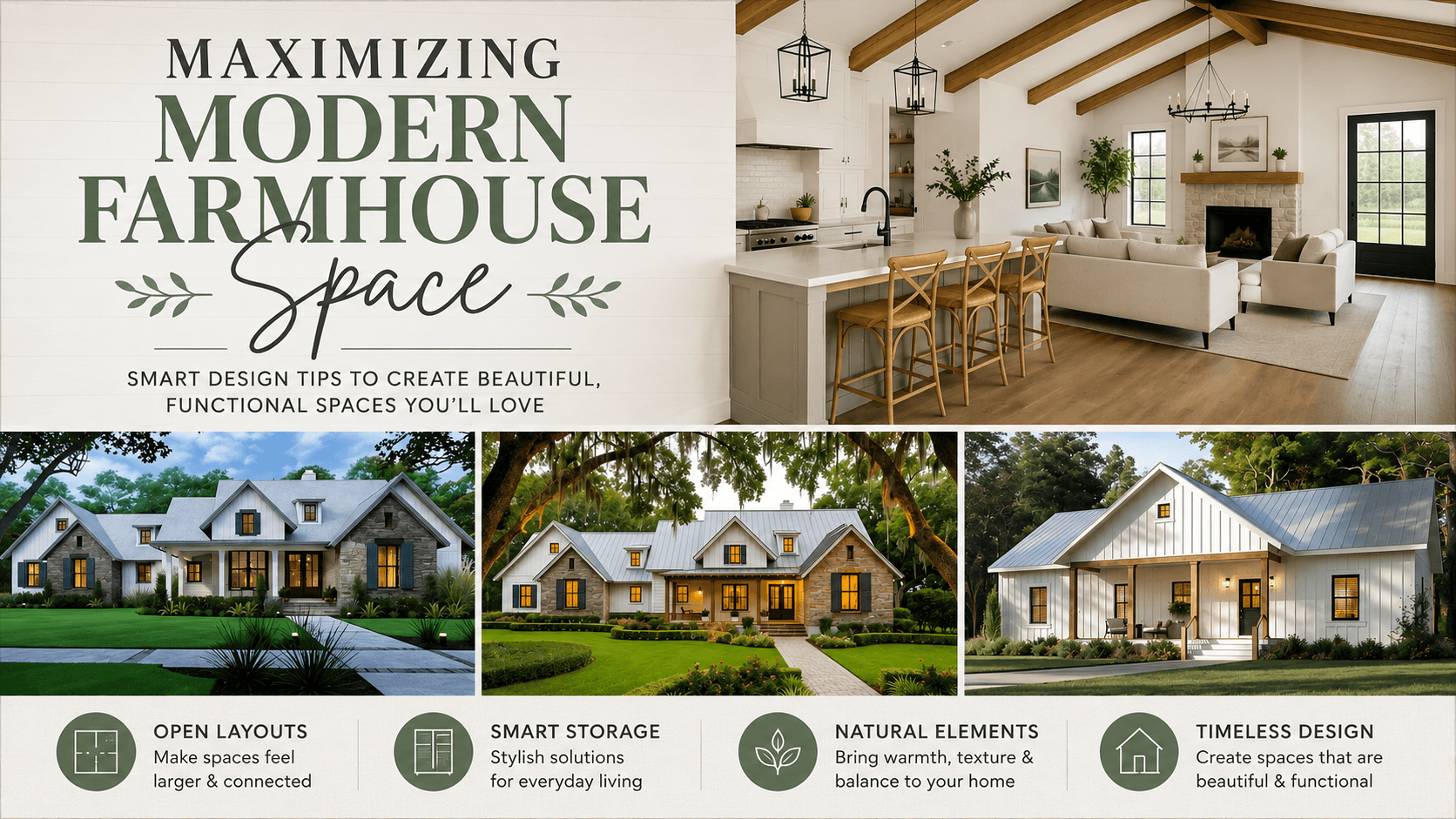
A 3-bedroom modern farmhouse has to do more than look good from the road. The porch, gables, simple rooflines, natural textures, and welcoming entry set the tone, but the real test is what happens once the front door opens.
For many households, three bedrooms are plenty. The question is whether the layout uses that space well. Where does the kitchen sit? Are the bedrooms tucked away from the noise? Is there a real place for bags, shoes, paperwork, guests, or a quiet call? Those choices matter more than another few hundred square feet.
The homes below take that idea in different directions. Some lean into porches and outdoor living. Others are about a tighter footprint, a better bedroom split, or a flex room that earns its keep.
A 2,230 Sq Ft Farmhouse with Outdoor Entertaining Built In
This 2,330-square-foot farmhouse with three bedrooms puts the gathering spaces to work. The kitchen, dining area, and living room stay connected, while the walk-in pantry and mudroom keep the practical mess out of the main view. The outdoor kitchen and dual fireplaces extend the entertaining space beyond the walls of the house.
The exterior has enough weight to feel settled: wood columns, brick bases, and a porch that looks like it belongs there. Inside, the rooms are open without becoming a single shapeless volume.

A midsize farmhouse with a generous porch, outdoor kitchen, bonus room, and storage spaces busy households notice first. (Plan #206-1039)
A Corner-Lot Cottage with a Lanai, Study, and Bonus Room
At 1,742 sq ft, this 3-bedroom farmhouse cottage does not try to solve everything with size. The vaulted living area adds height and light, and the covered lanai gives the plan a second place to live when the weather cooperates.
The study is a useful piece of breathing room: not a bedroom, not a hallway desk, but an actual place to close a door. Above, the 421 sq ft bonus room leaves options open. The side-entry garage also helps on a corner lot, where the front of the house can stay focused on windows, porch, and entry.

A smaller cottage with a vaulted living area, covered lanai, private study, and side-entry garage. (Plan #117-1141)
A Compact Ranch Layout with a Split-Bedroom Arrangement
This 1,493 sq ft, 3-bedroom ranch design is the kind of plan where placement matters. The kitchen, dining area, and living room sit at the center, so the house still feels open. The bedrooms are split, which gives the primary suite a little distance from the other two rooms.
The mudroom lockers and walk-in pantry are small details on paper, but they change the day-to-day feel of a compact house. Less clutter lands in the living room. Fewer kitchen items need to fight for cabinet space.

A ranch layout with split bedrooms, a mudroom with lockers, and a pantry tucked where it is easy to use (Plan #142-1264).
A Country-Style Farmhouse with Vaulted Ceilings and Private Work Space
This 3-bed, 2.5-bath, 2,516 sq ft country-style farmhouse has more room to stretch out, and it uses that room in the right places. The vaulted ceiling lifts the main living area, while the kitchen, dining area, and living room stay close enough to make the center of the house feel active.
The pocket office is the kind of space people tend to appreciate after move-in. It gives mail, laptops, school forms, and work calls somewhere to go. The Jack-and-Jill bath keeps the secondary bedrooms efficient, while separate walk-in closets make the primary suite feel less compromised.

A country-style farmhouse with vaulted ceilings, a pocket office, and a bedroom layout that keeps the primary suite private (Plan #211-1079).
A Barn-Inspired Exterior with Strong Farmhouse Detailing
Farmhouse style usually announces itself from the street. Here, the gables, board-and-batten siding, exposed beams, broad porch, and larger windows do the work without making the house feel like a reproduction.
Inside, this barn-style home keeps the volume going with a vaulted main living area. The kitchen is large, the pantry is easy to reach, and the rear porch offers the house another place to gather. A 3-car garage rounds it out for buyers who need storage as much as parking.

A barn-inspired exterior with gables, vertical siding, and porch details that give the home a rural edge (Plan #142-1497).
A Flexible Front Room for Work, Media, or Guests
Most families ask a lot from a 3-bedroom home. That front room may need to be an office now, a media room later, and a guest overflow space during the holidays. This is where a flex room earns its square footage.
This 3-bedroom, 2.5-bath farmhouse plan keeps the main gathering area simple: family room, fireplace, kitchen island, pantry, and French doors out to the lanai. The optional bonus room is the long-game move, giving the house somewhere to grow without changing the main floor.

A 3-bedroom farmhouse with a front flex room that can shift from office to media room to guest space (Plan #117-1139).
A Warm Farmhouse Kitchen Framed by Porch and Timber Details
In a farmhouse, the kitchen usually has to do more than just cook. It is where people stop when they come in, where conversations start, and where a good island can make the whole plan feel easier to use.
In this one-story, 2,073 sq ft house design the covered front porch, tall multi-pane windows, timber columns, and shutters give the outside a warm, built-over-time look. Inside, the kitchen and pantry do the practical work, while the bonus space over the garage gives the plan a useful reserve.

A porch-forward farmhouse with timber columns, shutters, and a kitchen that anchors the main living area (Plan #193-1157).
A Smaller Footprint with Simple, Efficient Living
A smaller 3-bedroom house plan can still feel like a farmhouse if the proportions are right. This 1,404 sq ft design keeps the great room open, puts the kitchen where it can serve the main living area, and still finds room for a walk-in pantry and a private primary suite.
That restraint is part of the point. A straightforward footprint can help with building costs, and natural light does a lot of the heavy lifting inside.

A smaller 3-bedroom farmhouse with a simple footprint, open great room, and just enough space in the right places (Plan #123-1149).
Choosing the Right 3-Bedroom Farmhouse Design
A strong 3-bedroom farmhouse home plan should not be judged by the rendering alone. Rooflines, porches, siding, and windows create the style. The floor plan decides whether the house will be easy to live in.
When comparing designs, look at the ordinary stuff first. How far are groceries carried from the garage? Can the kitchen see the living room? Do the secondary bedrooms have enough privacy? Is the flex room truly usable, or is it just leftover space with a label?
That is the value of comparing several homes side by side. One buyer may care most about a small footprint. Another may want an outdoor entertaining space or a room that can serve multiple purposes over time. The right design should make sense on paper, then keep making sense after the house is built.
Plan Results
OR ENTER A PLAN #
Blog Resources
Home Design & Floor Plans
Home Building
Architectural Styles/Architecture