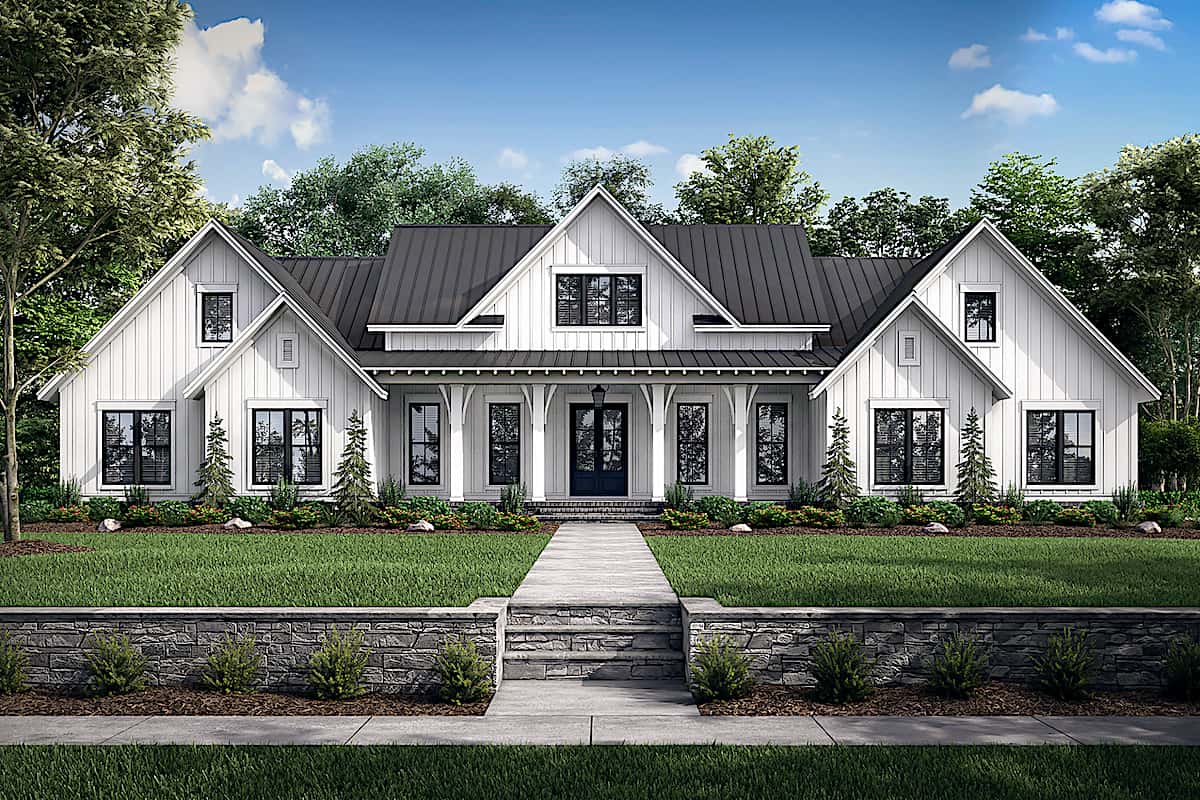
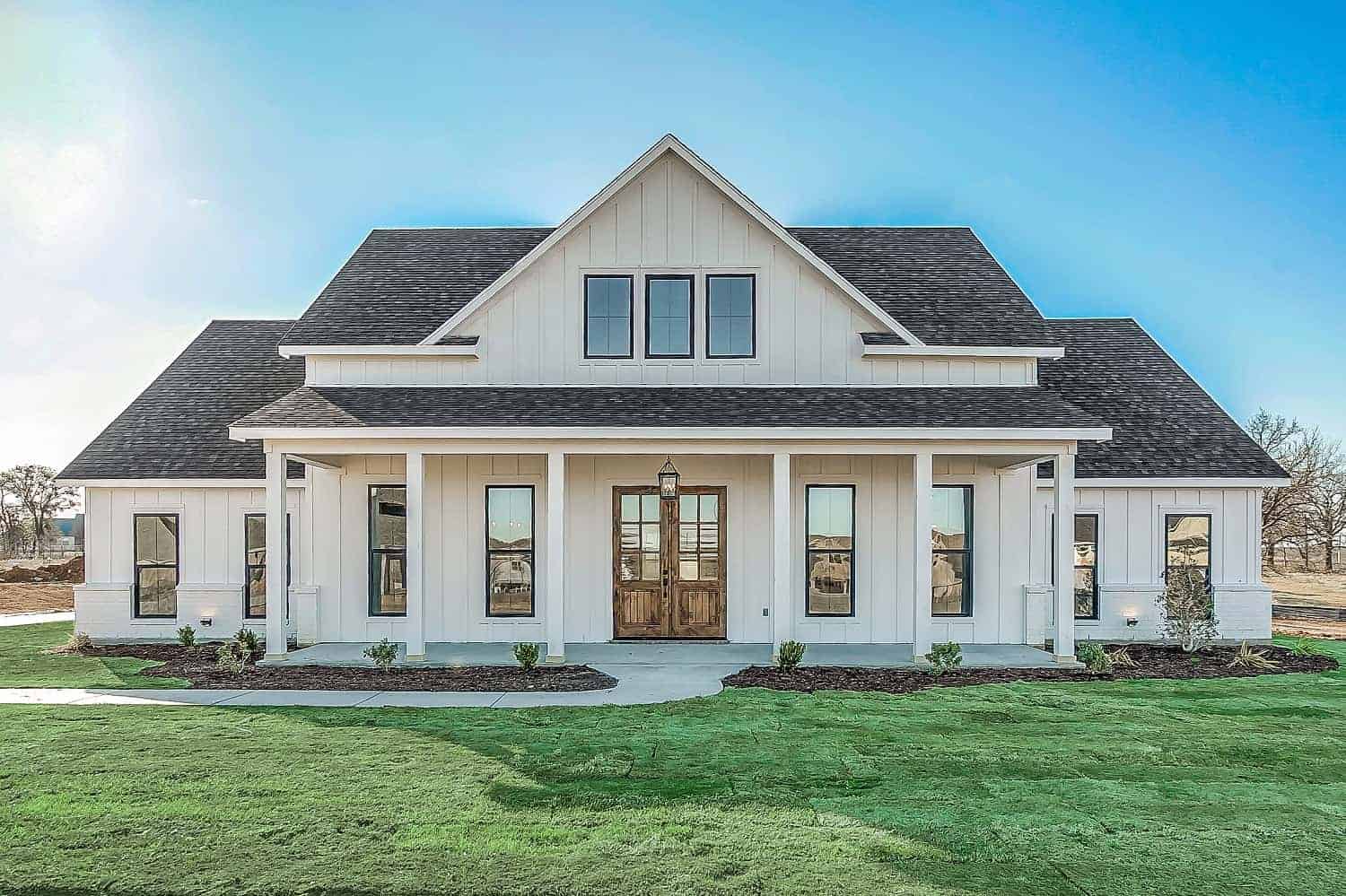
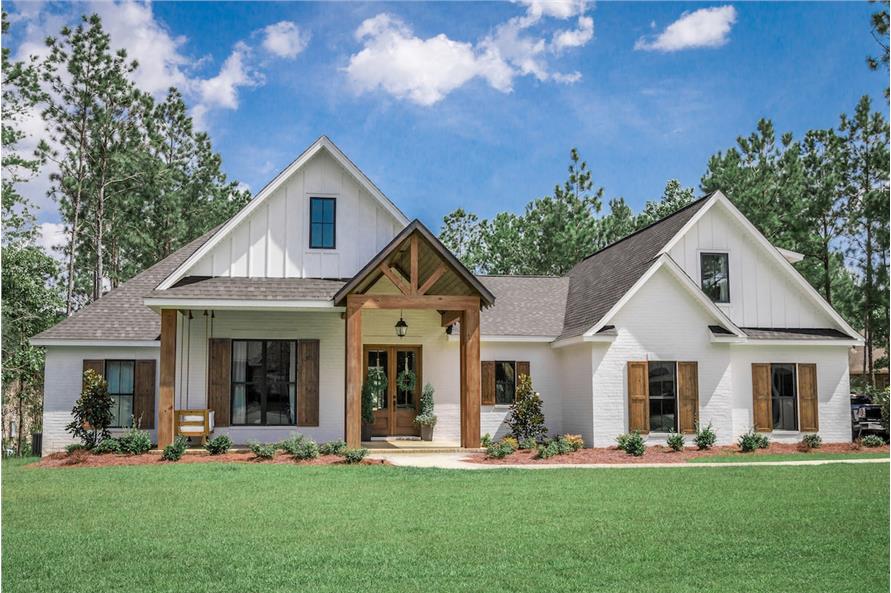
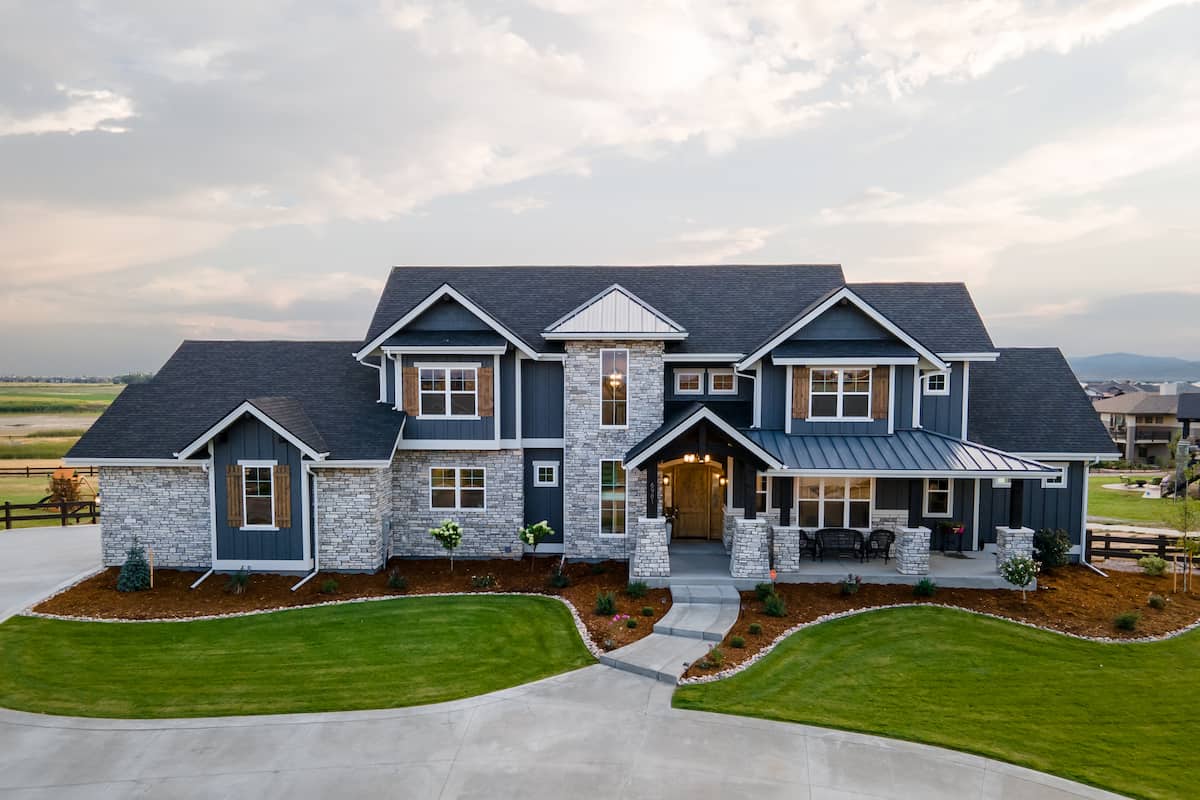
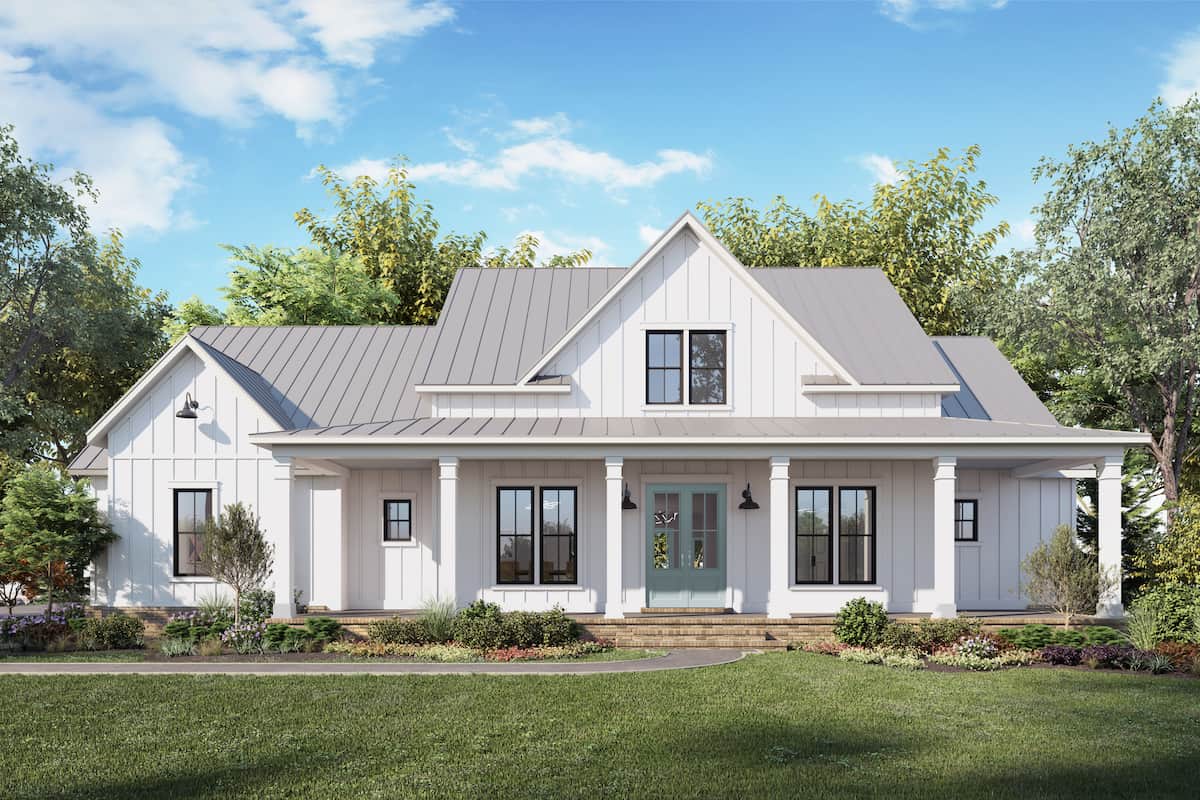
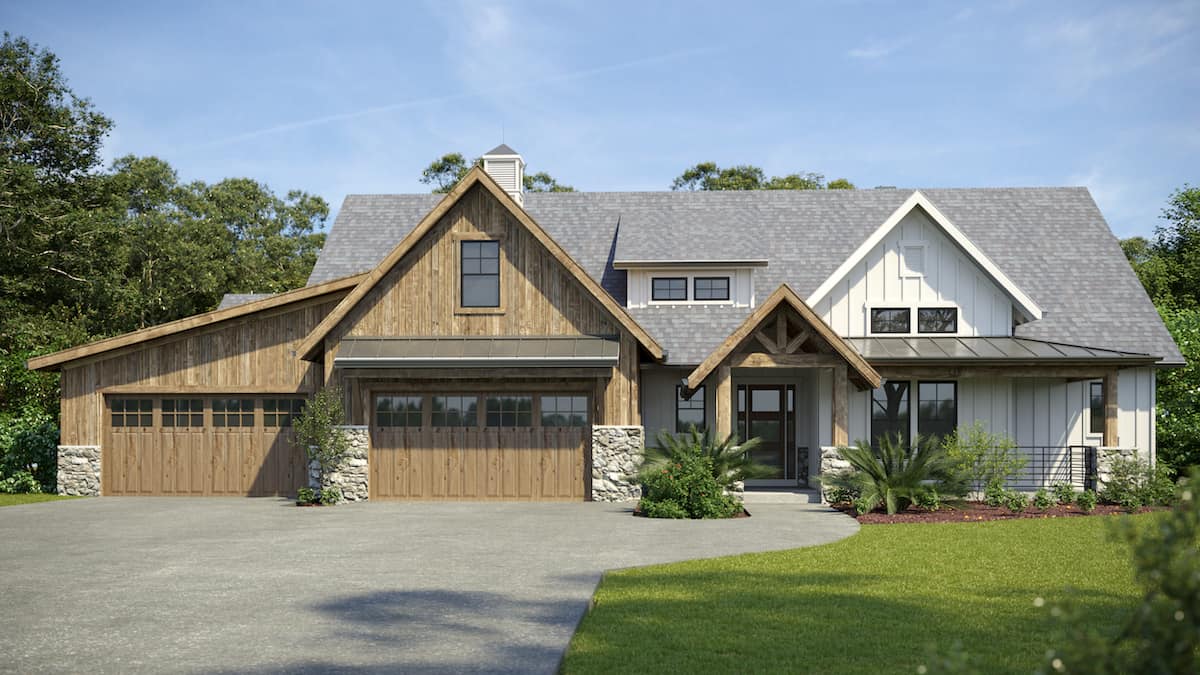
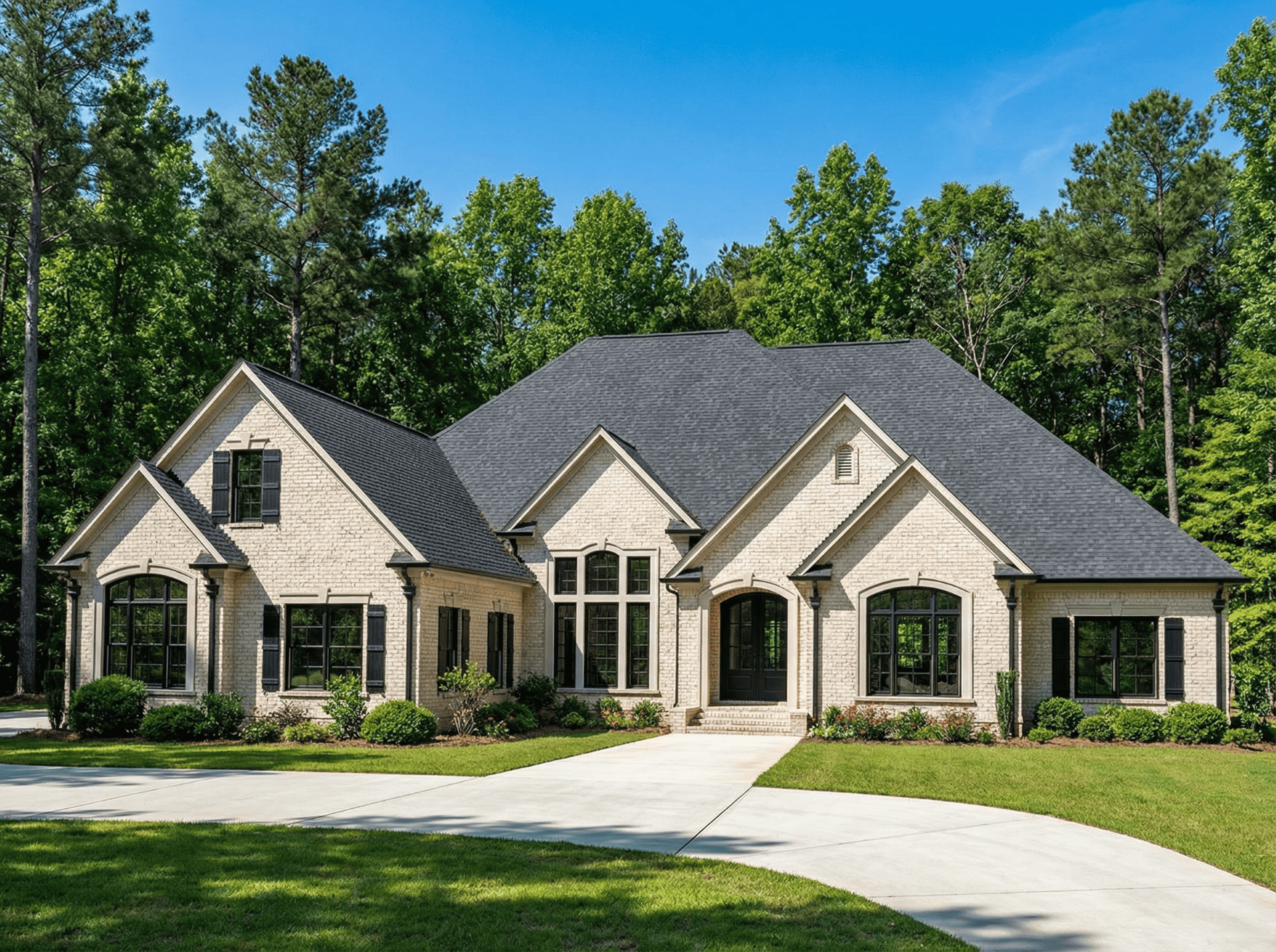
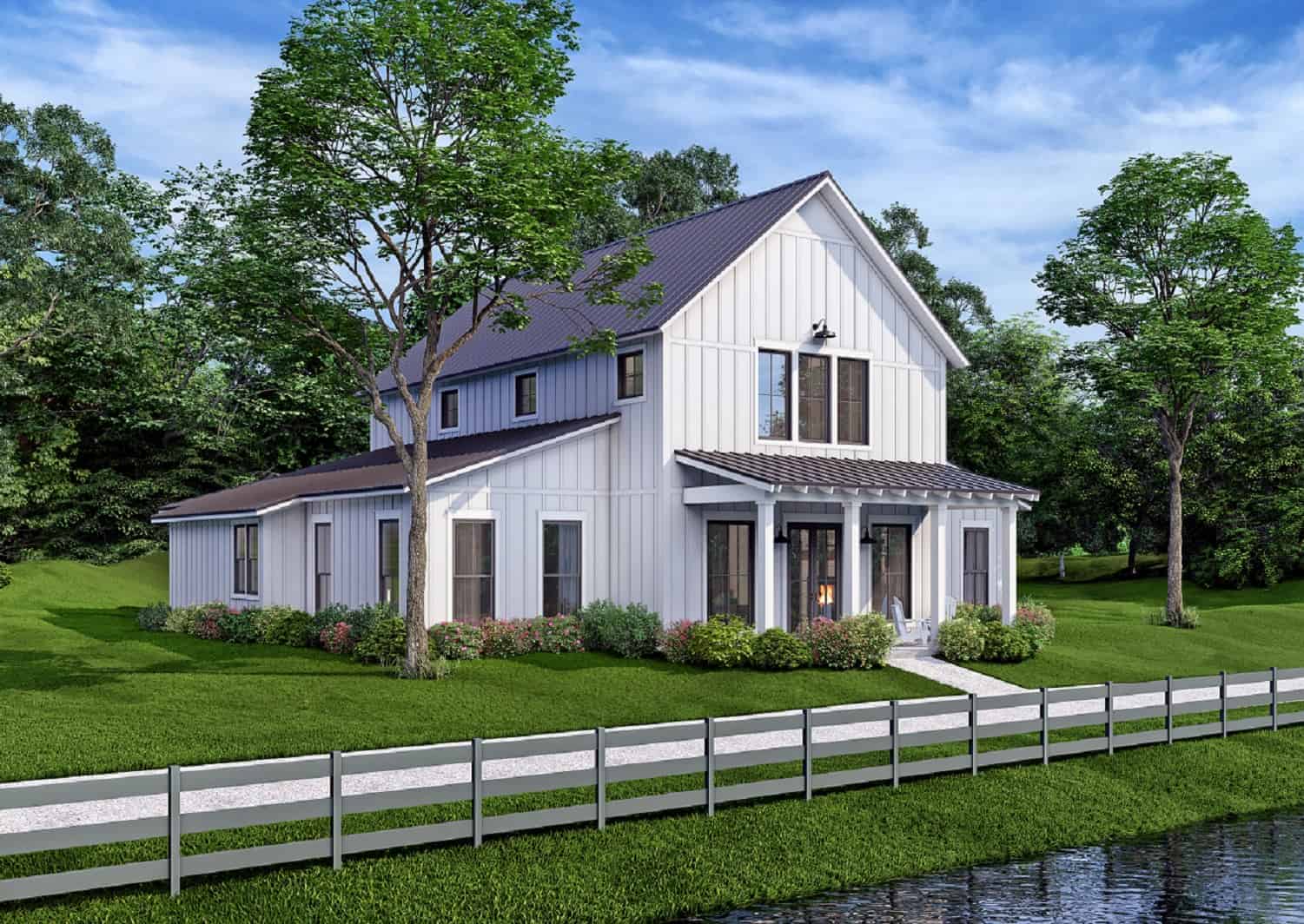
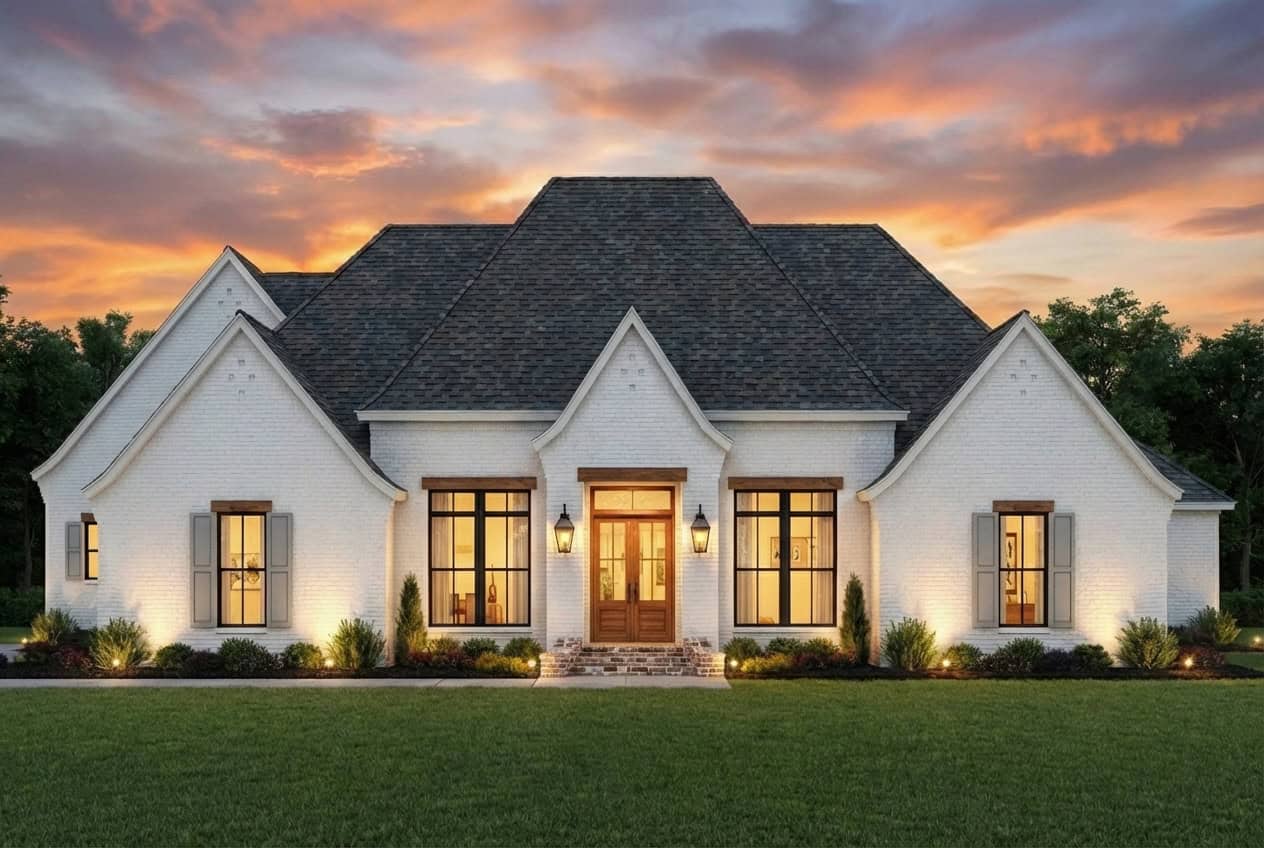
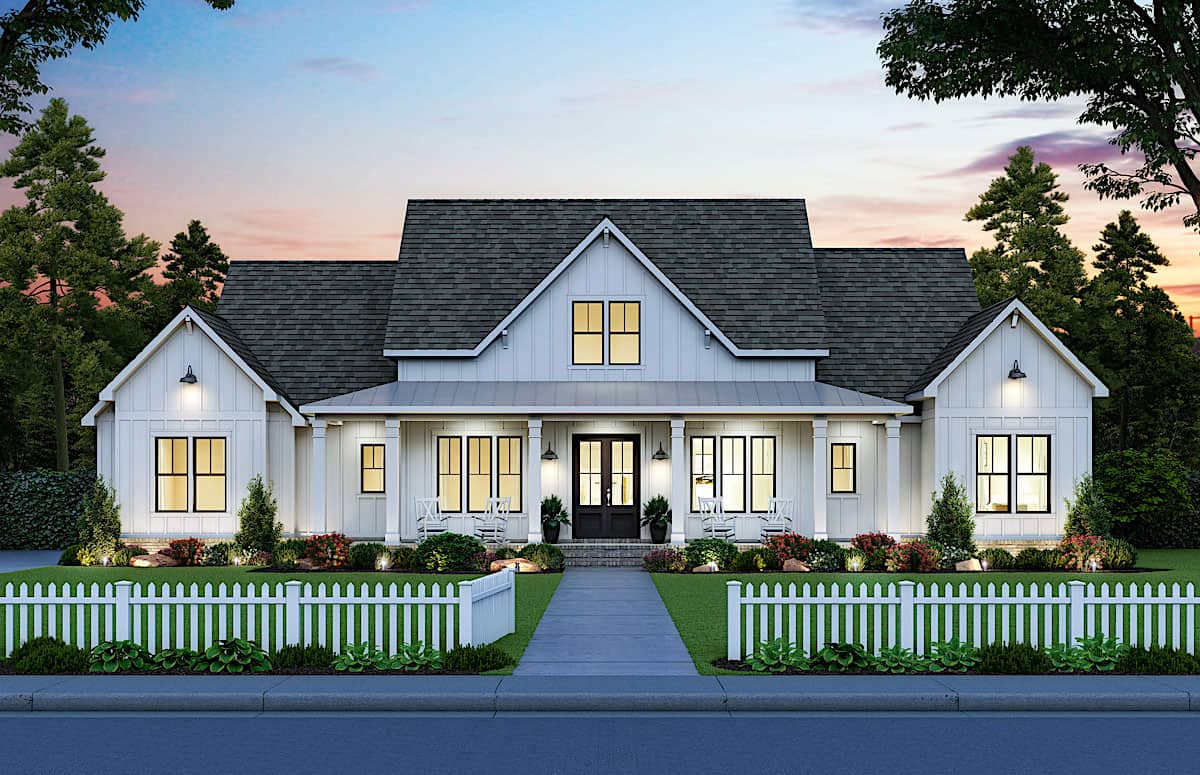
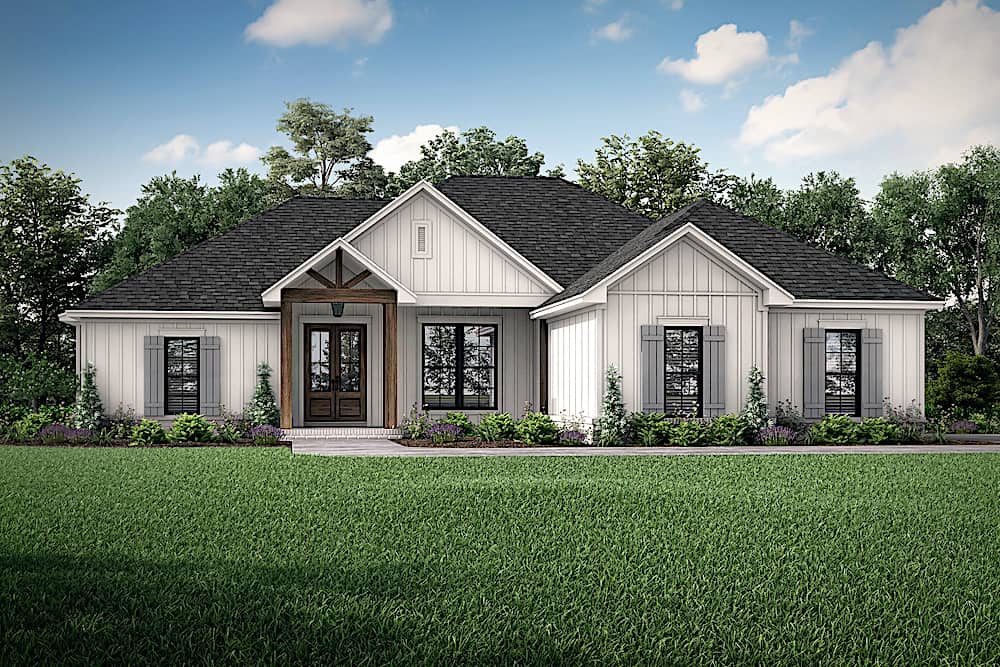
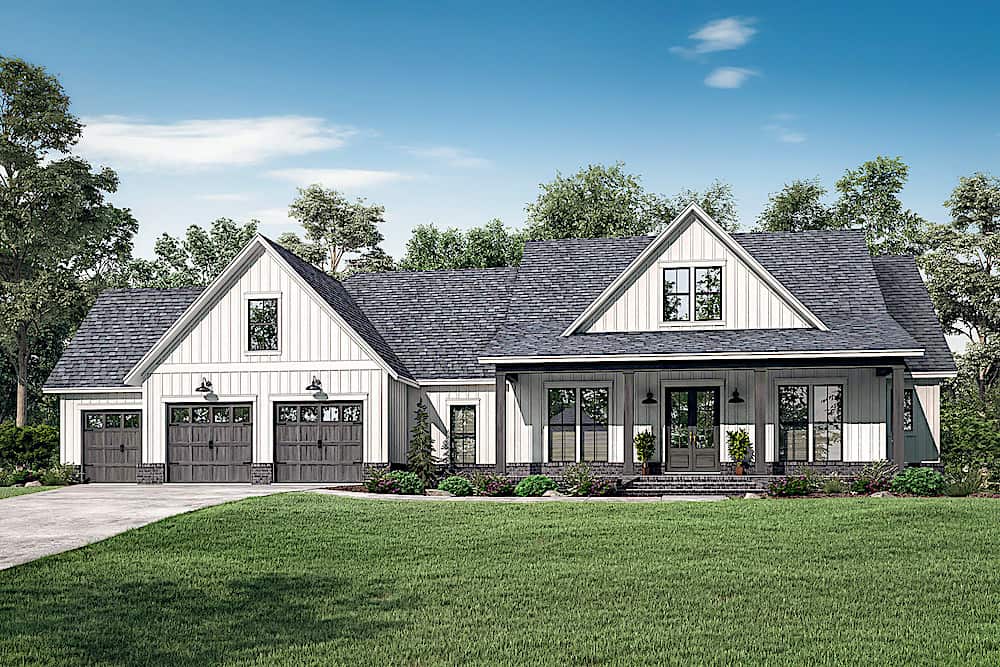
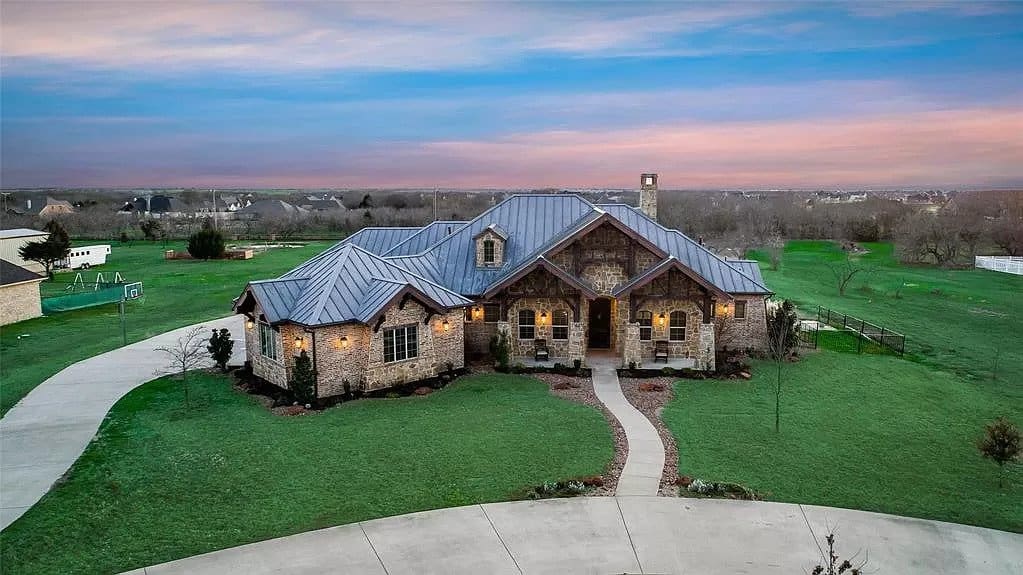
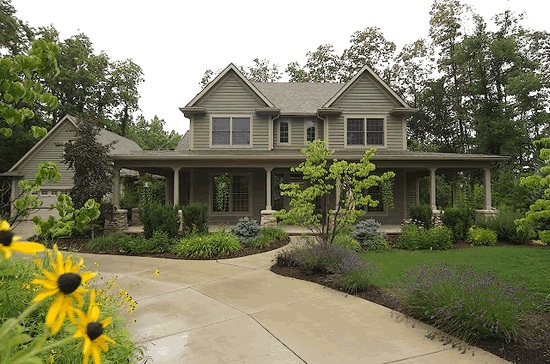
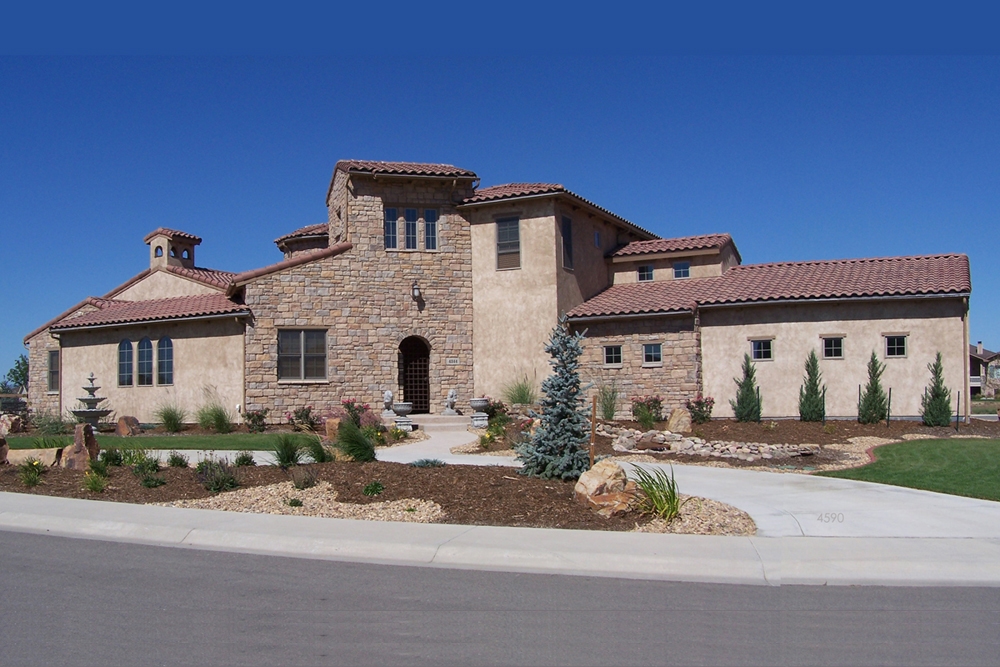
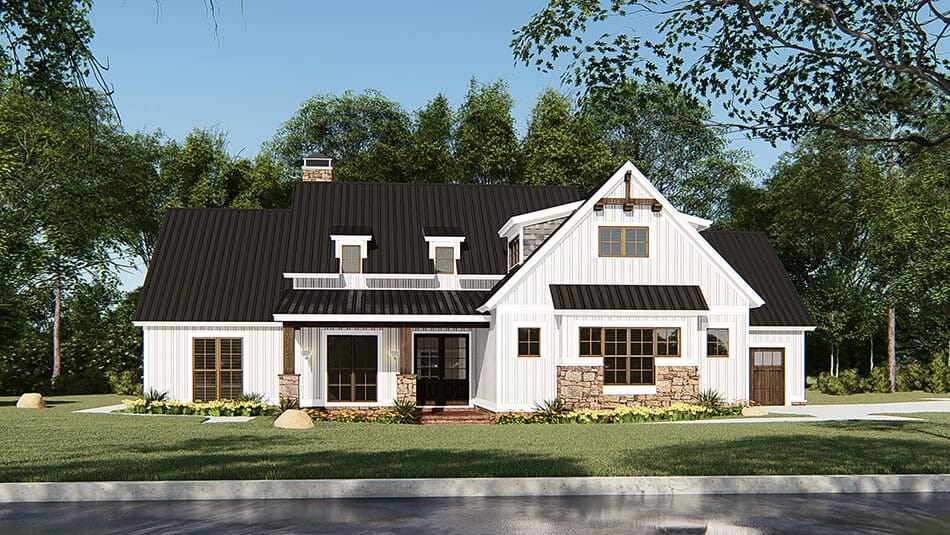
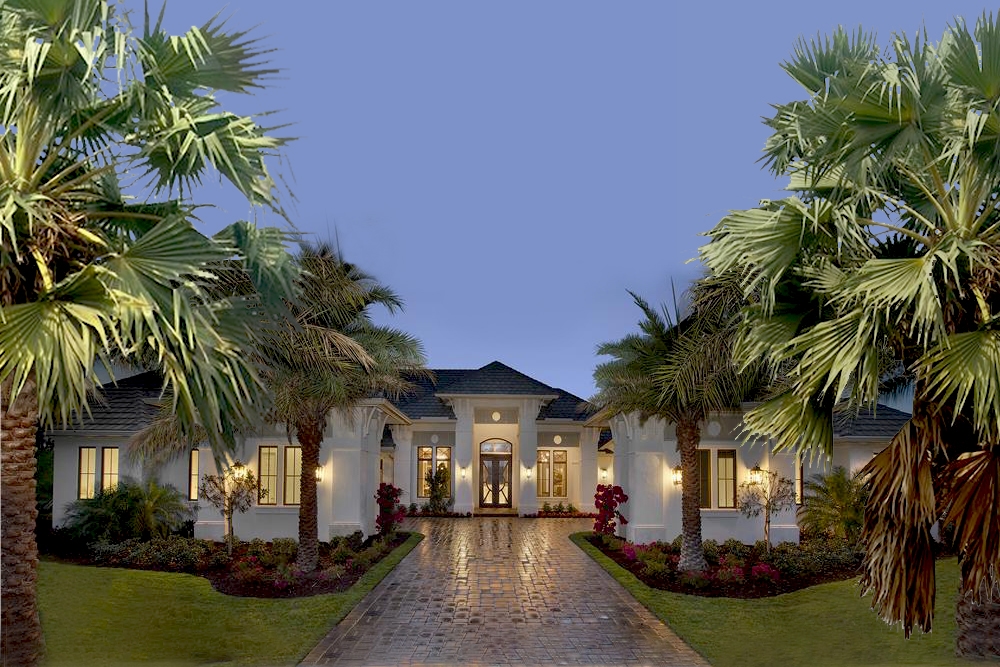
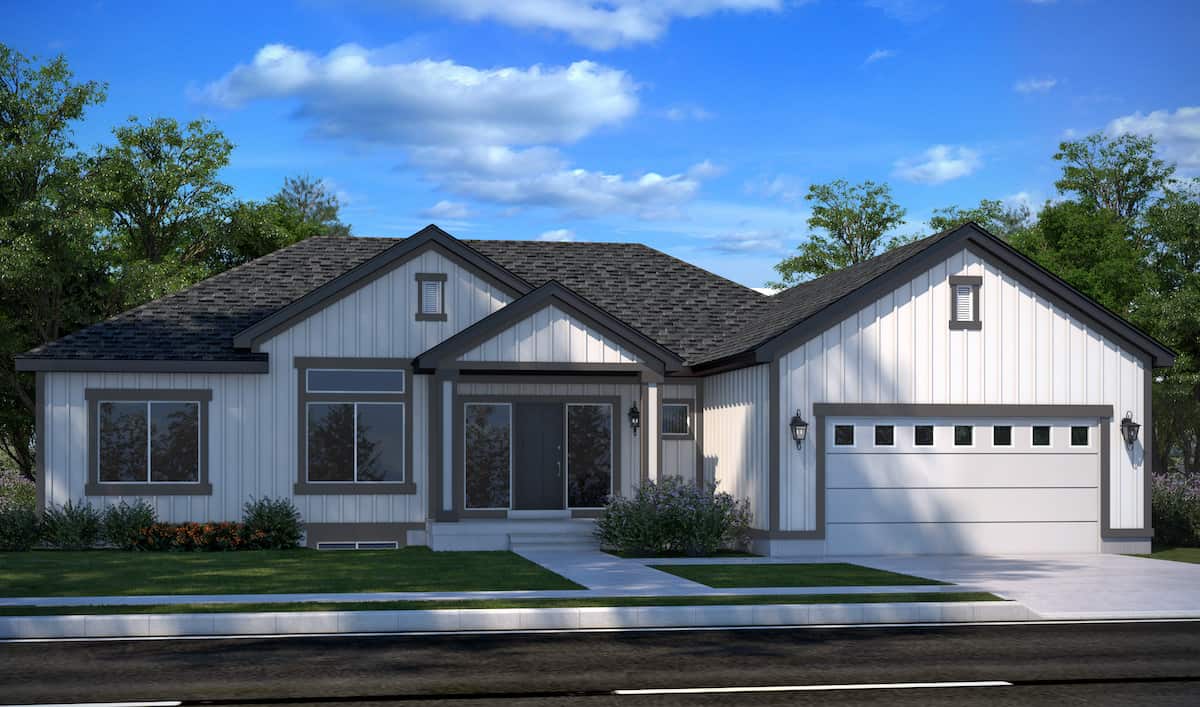
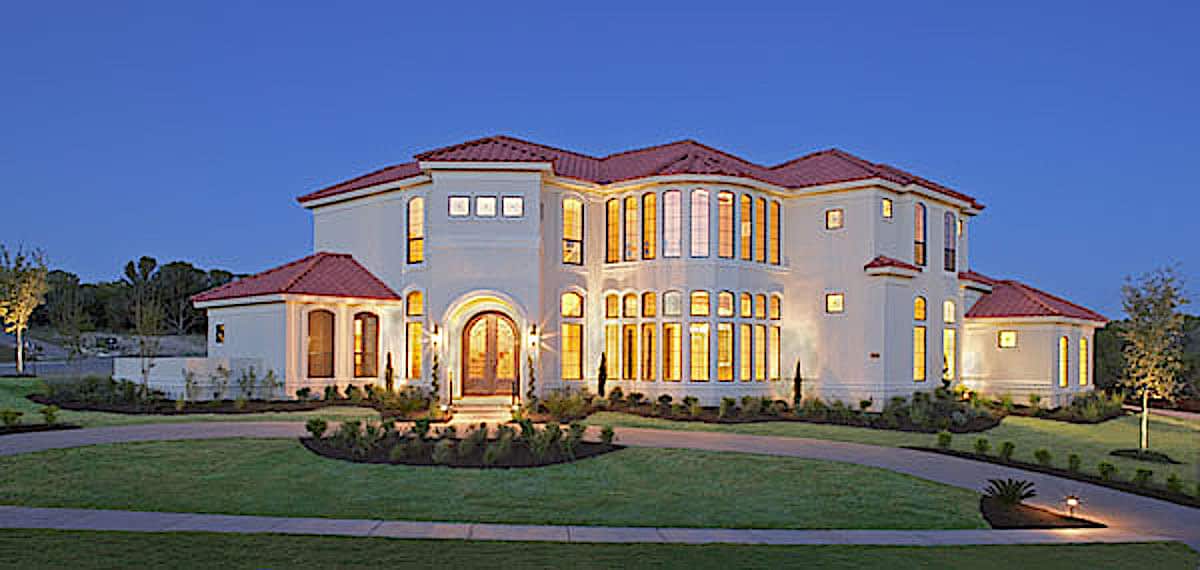
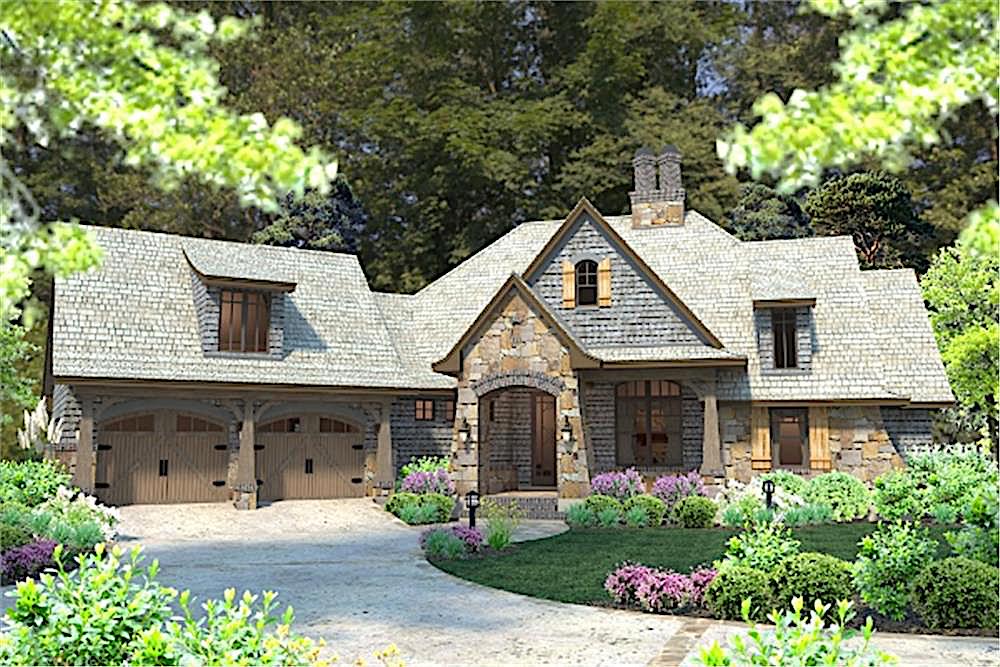
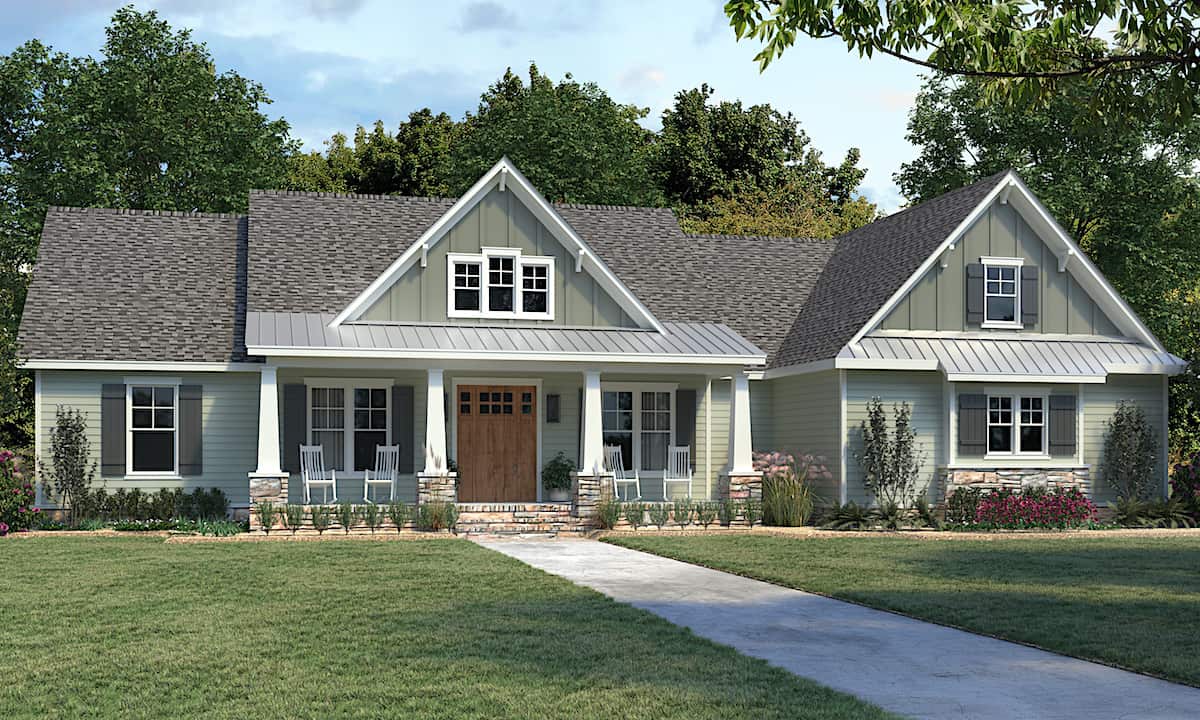
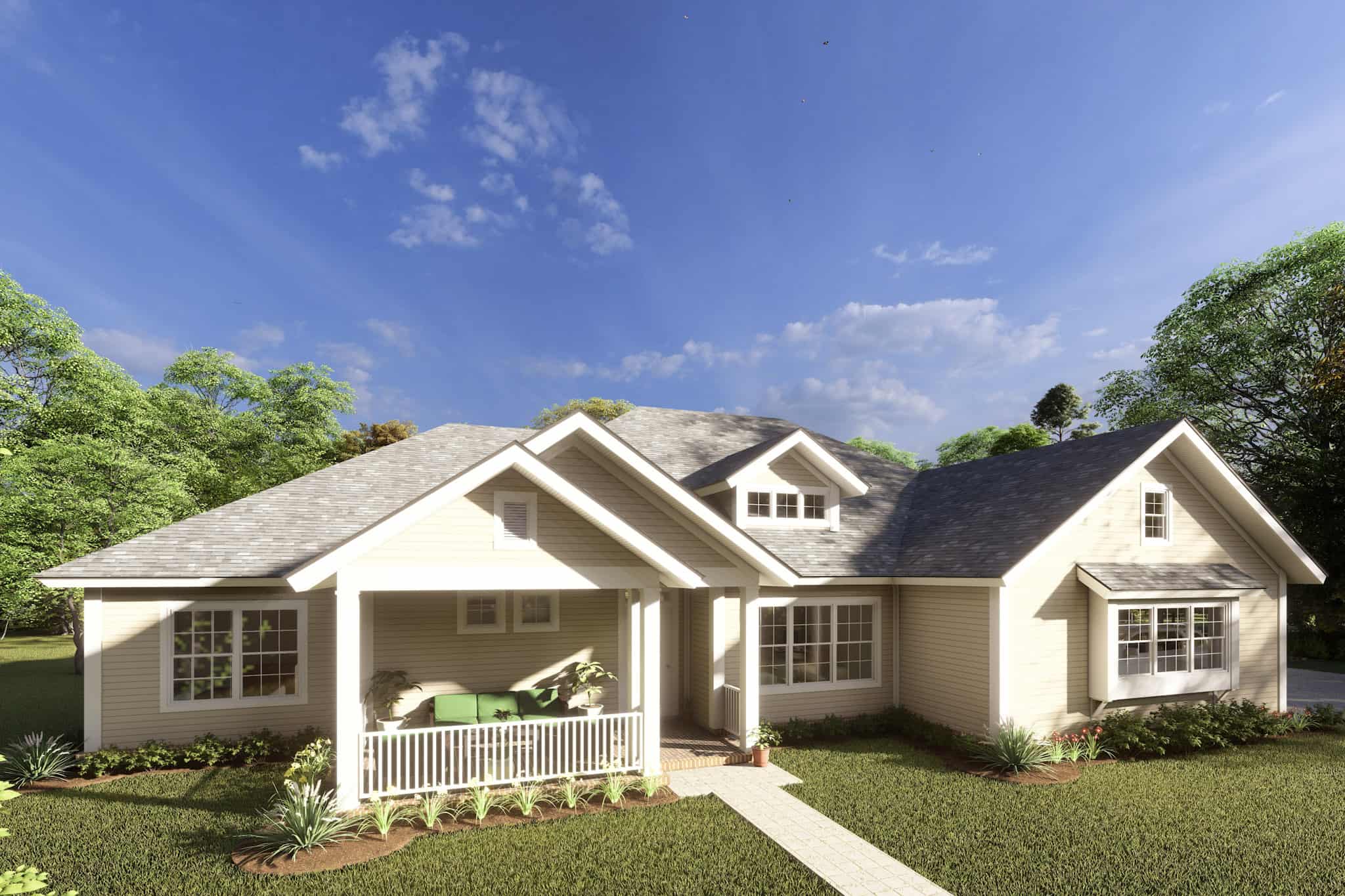
Four-bedroom house plans are built around a primary suite, three secondary bedrooms, and a shared living core — available in single-story and two-story configurations across a wide range of architectural styles. Sizes range from under 1,800 square feet on the compact end to well over 3,500 square feet for two-story designs.
Four-bedroom plans get built more consistently than almost any other home size in the US. A primary suite, three additional bedrooms, and a connected living core — that combination fits a wide enough range of households that demand stays steady regardless of market conditions.
Roofline profile, garage placement, and foundation type all shift with story count and architectural style — sometimes dramatically. A buyer on a narrow lot is looking at a fundamentally different plan than one on a wide suburban parcel, even at the same 4-bedroom floor plan and square footage.
Key Characteristics of 4 Bedroom Floor Plans
The core organization of a four-bedroom plan is fairly predictable. What changes is everything around it — square footage, story count, garage size, foundation type. Most plans in this category include:
-
A dedicated primary suite with a private bath, typically separated from secondary bedrooms
-
Three secondary bedrooms, often served by one or two shared bathrooms
-
A connected or open floor plan layout for the kitchen, dining, and living areas
-
Attached garage for two or three vehicles — front-entry or side-entry depending on lot width
-
Slab, crawl space, or full basement foundation — varies by region and site
The wide range of configurations means four-bedroom plans overlap with both the upper end of 3 bedroom house plans and the lower end of 5 bedroom house plans in terms of square footage and structural scope.
Single-Story vs. Two-Story 4 Bedroom Layouts
Story count is one of the first decisions in selecting a four-bedroom plan, and it affects nearly everything downstream — lot requirements, roofline complexity, foundation size, and where the primary suite lands.
Single-story plans put all living space on one level, which means the foundation covers more ground. Wider lots are generally required, particularly when a two- or three-car garage is part of the layout. Rooflines on these plans tend to be more varied — hip roofs, multiple gable runs, and broken eave lines are common because the structure spreads laterally rather than stacking vertically.
Side-entry garages appear more frequently on single-story plans where lot width permits, allowing a cleaner front elevation. Front-entry two-car garages are the standard configuration on narrower lots.
Two-story plans solve the lot-width problem by stacking the bedroom level above the main floor. Foundation and roofing costs are typically lower relative to total square footage because both surfaces cover less ground area.
The primary suite in two-story designs is most often on the upper level, though main-level primary suites are available for buyers who want single-floor primary living. Upper-level secondary bedrooms tend to get rear elevation window placement — useful for natural light without disrupting the front or side exterior profile.
For buyers working with a constrained lot, 2-story house plans are worth comparing directly against single-story options at the same square footage.
Bedroom Arrangement & Floor Plan Layout
The floor plan blueprints identify the arrangement of the bedrooms. However, it is not until you move in that the practical implications are obvious. Issues like primary suite placement, secondary bedroom grouping, and bathroom locations all impact hectic schedules, visiting guests, and personal privacy.
Split-bedroom layouts place the primary suite on one side of the floor plan and the three secondary bedrooms on the opposite side. It's the most common configuration in single-story four-bedroom plans, and it works because it creates real acoustic separation — not just distance on paper. House plans with a split bedroom layout are worth reviewing if that separation is a priority.
Grouped layouts put all four bedrooms together — either in a dedicated wing on a single-story plan or along a shared hallway on the upper level of a two-story. Secondary bedrooms in this arrangement typically share a hall bath, with a private bath off the primary suite.
Jack-and-Jill bathrooms are a specific version of that: one bathroom, two adjoining bedrooms, a door on each side. It keeps the bathroom count lower without putting multiple occupants in line for one hall bath.
Many four-bedroom plans also incorporate a flex room or bonus room above the garage or adjacent to the bedroom wing. House plans with a home office are a useful reference for buyers prioritizing a dedicated workspace within the floor plan.
Lot and Construction Considerations
Plan selection doesn't happen in isolation — lot dimensions, regional building norms, and foundation conditions all narrow the field before style or square footage come into play.
Lot width is usually the first filter. Single-story four-bedroom plans with an attached two- or three-car garage generally need 65 feet of lot width, sometimes more. Two-story plans bring that number down — some fit on lots as narrow as 50 feet depending on garage orientation. Narrow lot house plans in the four-bedroom category are worth reviewing for tighter parcels.
Foundation type is largely a regional decision. Slab is the norm across the South and Southeast. The Carolinas, Tennessee, and much of the Midwest lean toward crawl space. Go north — Upper Midwest, Great Lakes states — and full basements become standard because frost depth drives footing depth regardless of preference. Most plans here are available with more than one option.
Garage configuration affects both the front elevation design and the required lot width. Side-entry garages improve the front elevation profile and are more common on wider lots. House plans with a big garage — three-car configurations or oversized two-car bays — are available throughout the four-bedroom category.
Construction cost per square foot tends to be lower on two-story plans than on equivalent single-story designs because the foundation and roof surface area are smaller relative to total finished space.
Frequently Asked Questions About 4 Bedroom House Plans
What is included in a 4 bedroom house plan?
A four-bedroom house plan includes floor plans for all levels, exterior elevations (front, rear, and sides), a roof plan, a foundation plan, and construction details. Plans are available as a PDF download, CAD file, or printed 5-set package. Foundation type is selected at the time of purchase.
How many bathrooms do 4 bedroom house plans typically have?
Two full bathrooms is the floor for most four-bedroom plans; three is more common at 2,000 square feet and above. The typical layout: a private primary bath, one bathroom shared among the secondary bedrooms, and a half bath somewhere on the main level. Larger plans sometimes add a fourth — usually an en suite off one of the secondary bedrooms.
Are 4 bedroom house plans available in single-story designs?
Yes. Single-story four-bedroom plans are widely available and are among the most searched configurations in this category. They require a larger lot footprint than two-story designs of equivalent square footage but keep all living spaces on one level.
What foundation types are available for 4 bedroom house plans?
Foundation availability varies by plan. Most plans offer at least two options — commonly slab and crawl space, or slab and basement. The appropriate foundation type depends on regional building practices, local codes, and site conditions. Foundation selection is made at the time of purchase.
Can a 4 bedroom house plan be modified?
Yes. Modification services are available for plans in this collection. Common modifications include adjusting room dimensions, changing exterior wall framing from 2x4 to 2x6, adding or relocating windows, and altering garage configuration. Modification requests are quoted directly by the plan's designer.
How much does it cost to build a 4 bedroom house?
Construction cost depends on square footage, foundation type, finish level, and local labor and material prices. A cost-to-build estimate is available for plans in this collection. The estimate is priced at $29.95 and is credited toward the plan purchase price if the plan is bought.
What styles are available in the 4 bedroom category?
Four-bedroom plans are built in most major home styles. Within the four-bedroom category, farmhouse house plans and modern farmhouse plans pull more traffic than any other style grouping by a considerable margin.
Four-bedroom house plans cover a wide range of configurations — single-story and two-story, split-bedroom and grouped layouts, slab and basement foundations. That range means 4 bedroom house plans can be matched to most lot conditions, regional building requirements, and household arrangements. Use the filters above to sort by square footage, story count, garage configuration, architectural style, and foundation type.