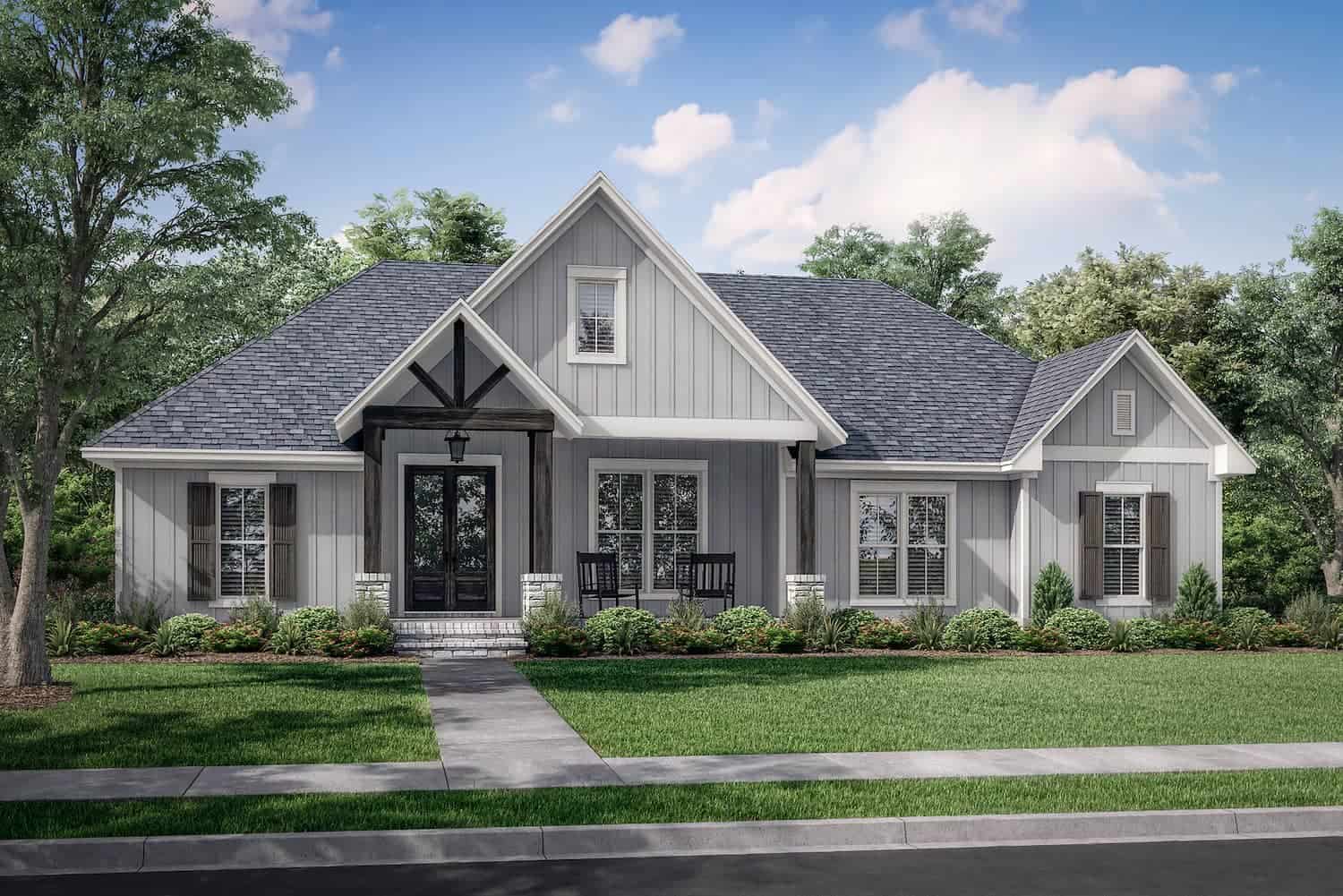
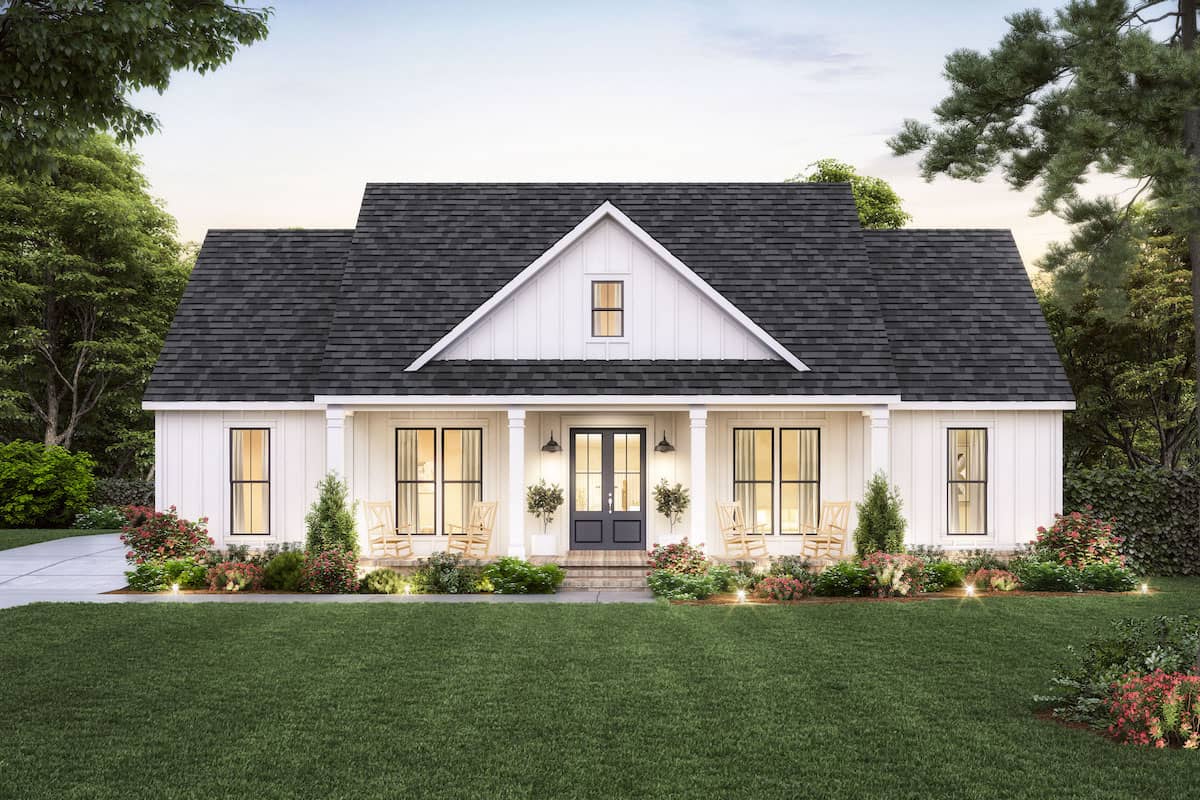
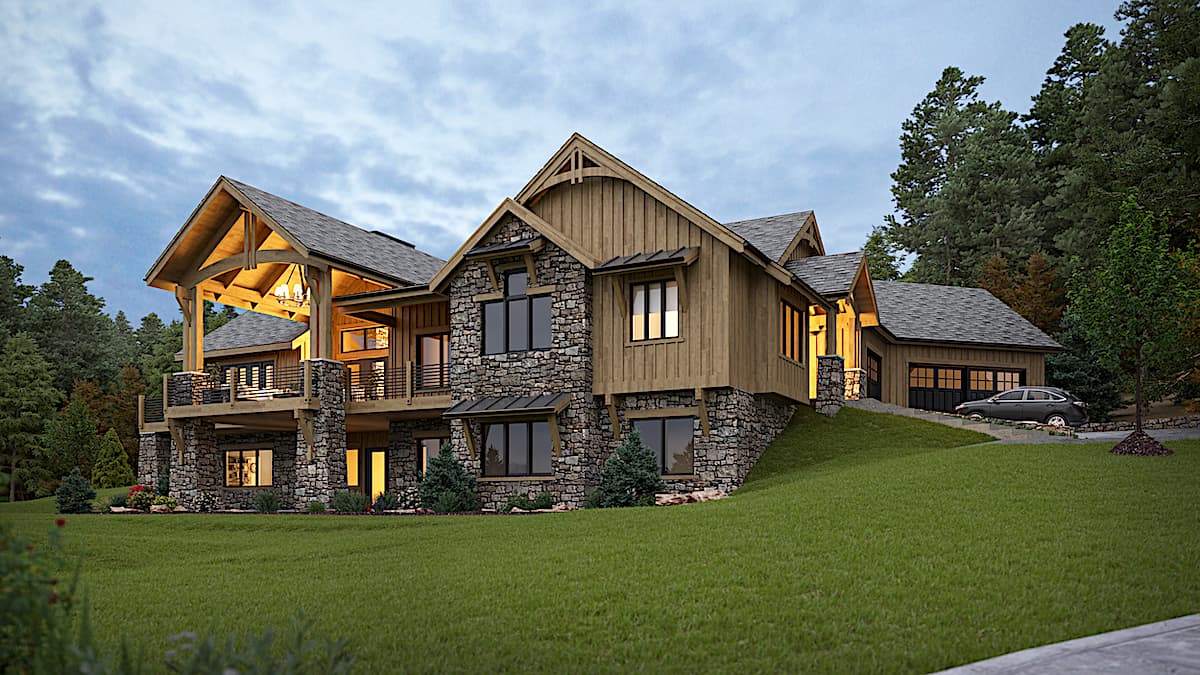
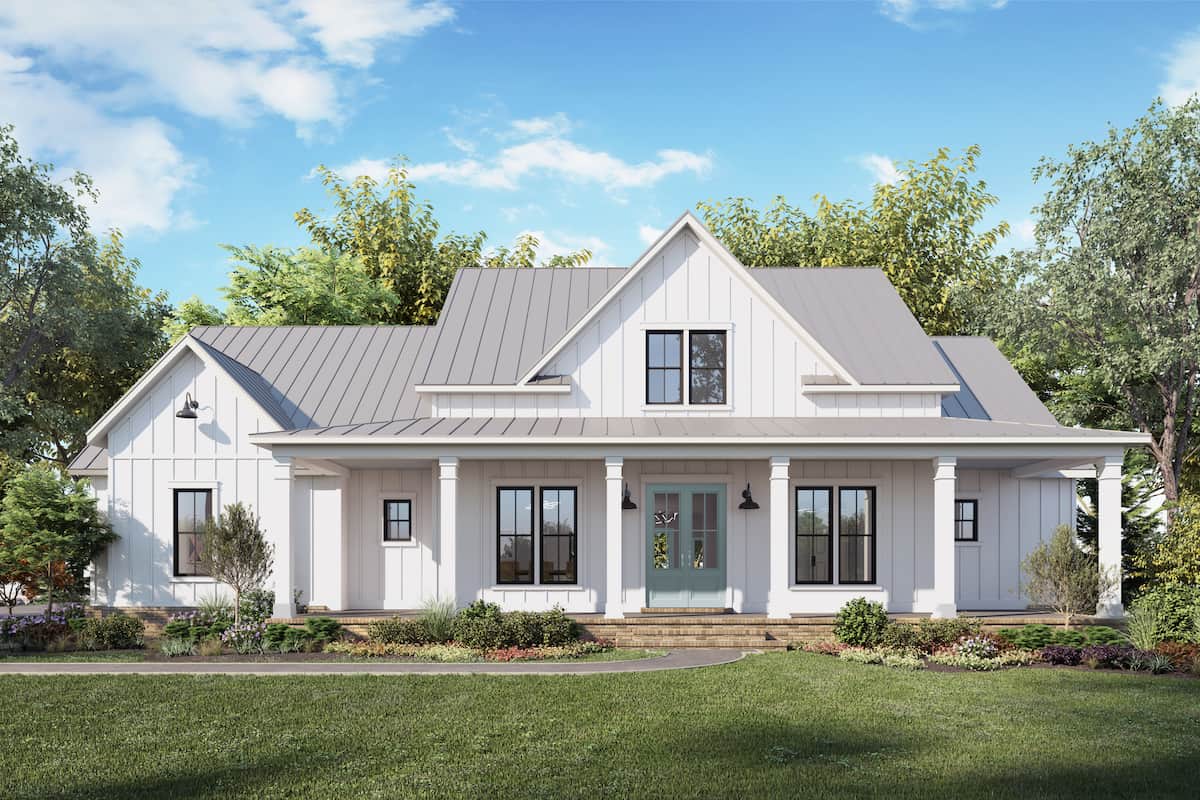
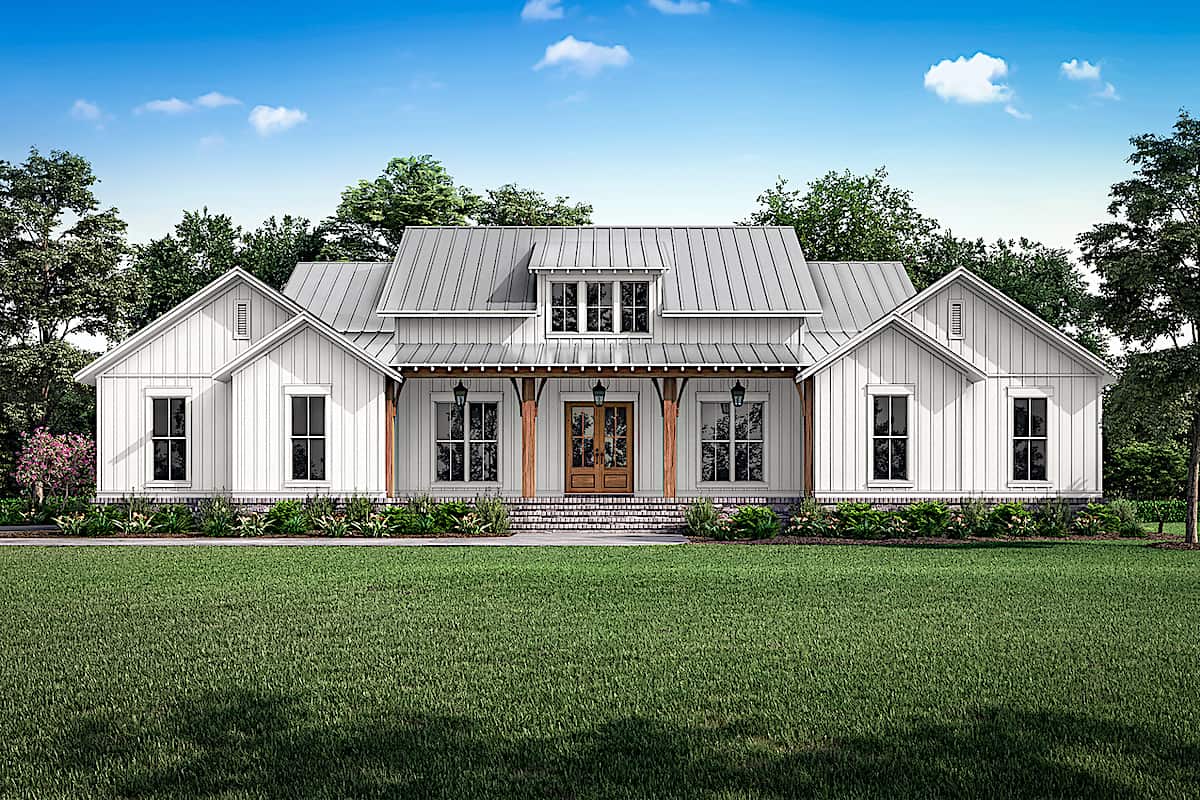
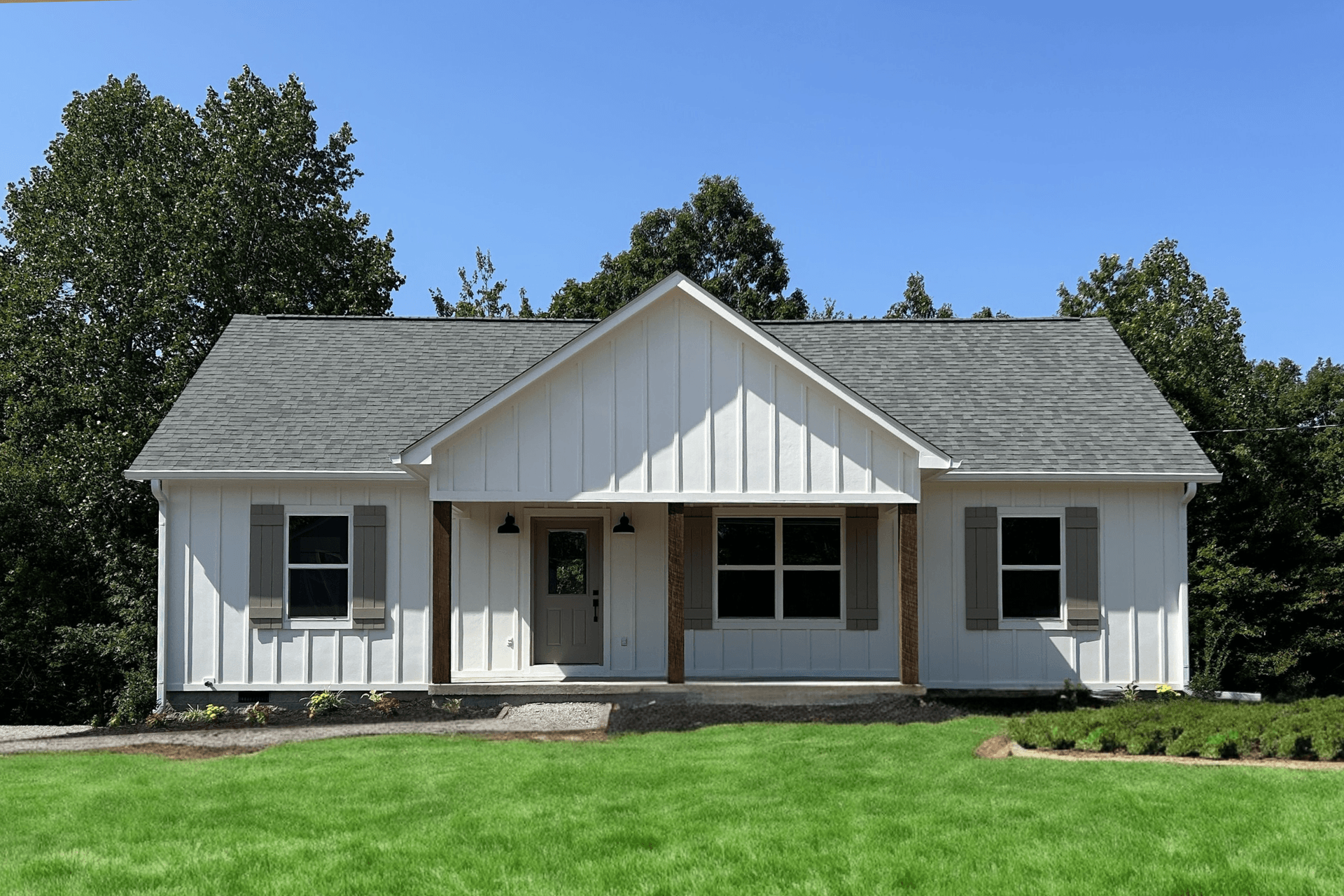
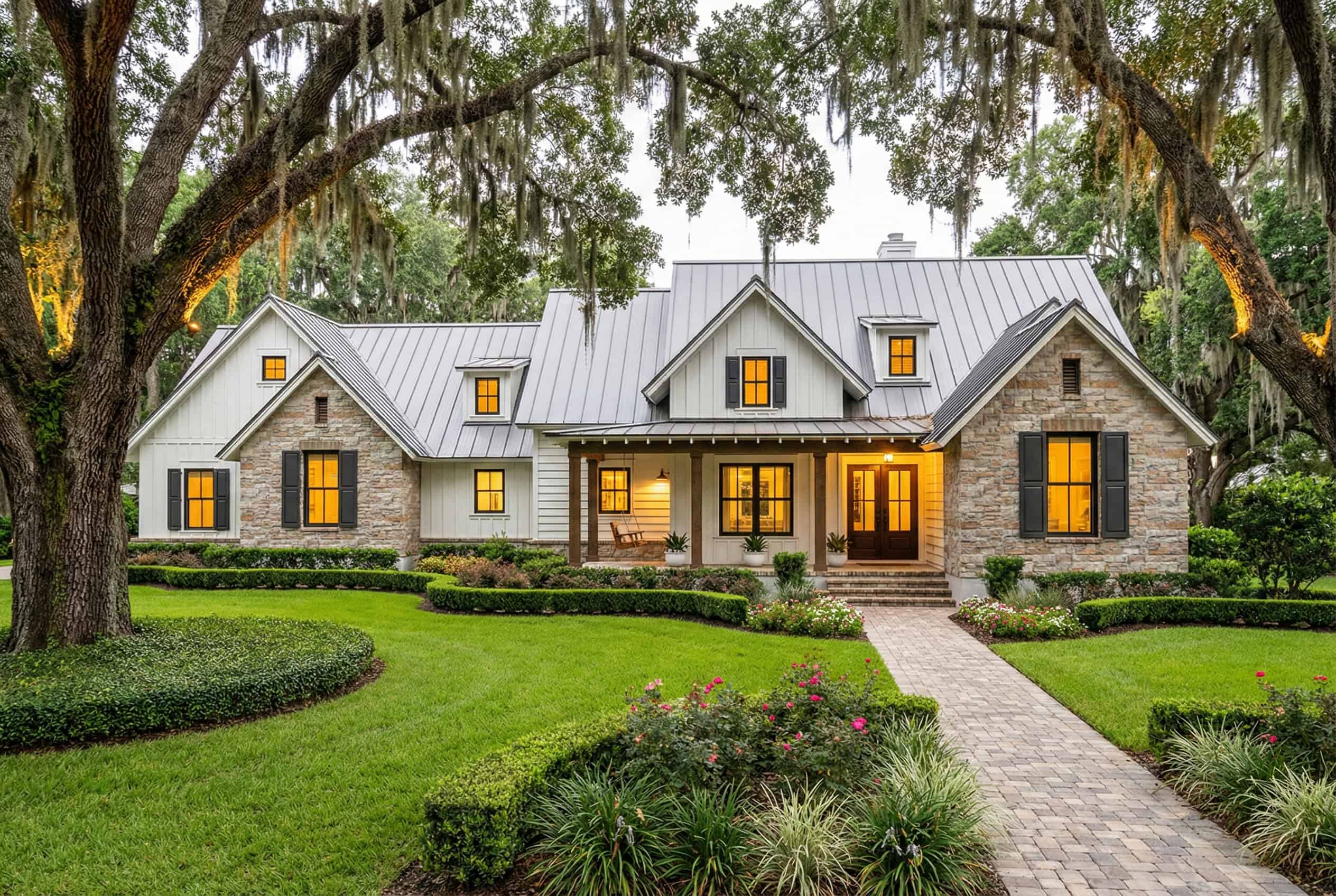
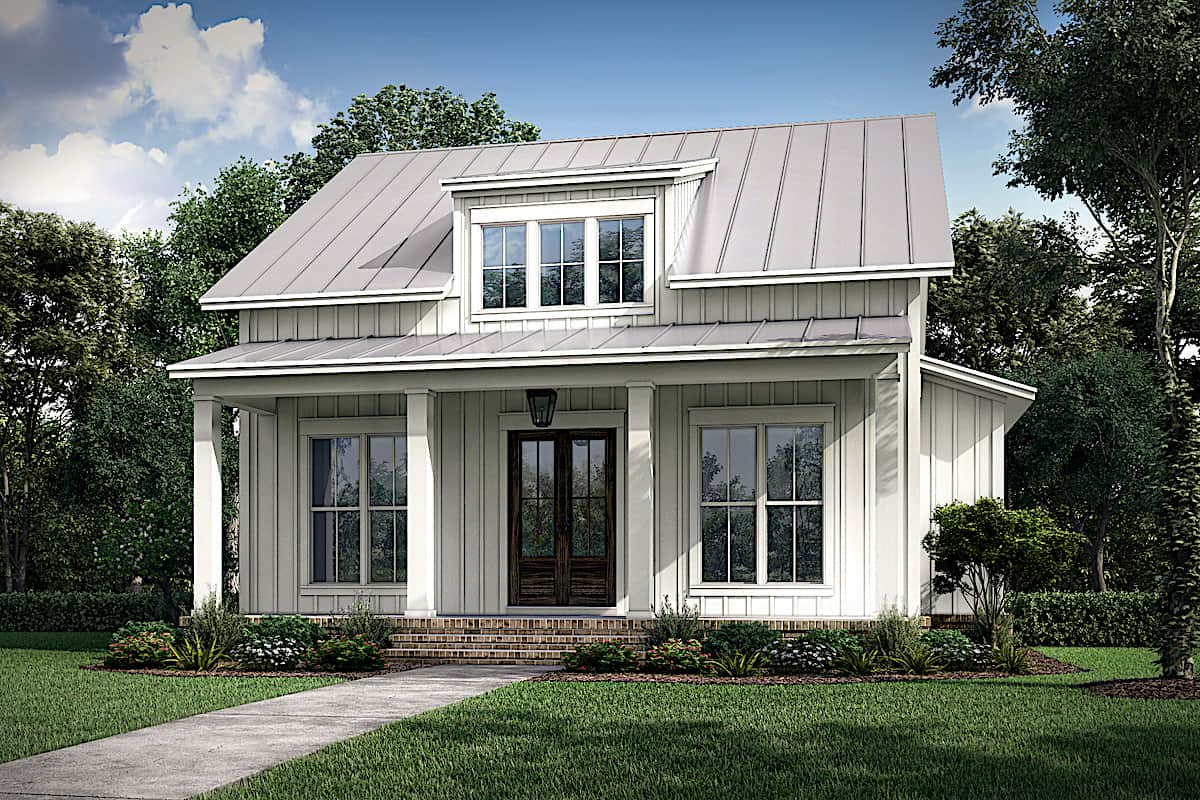
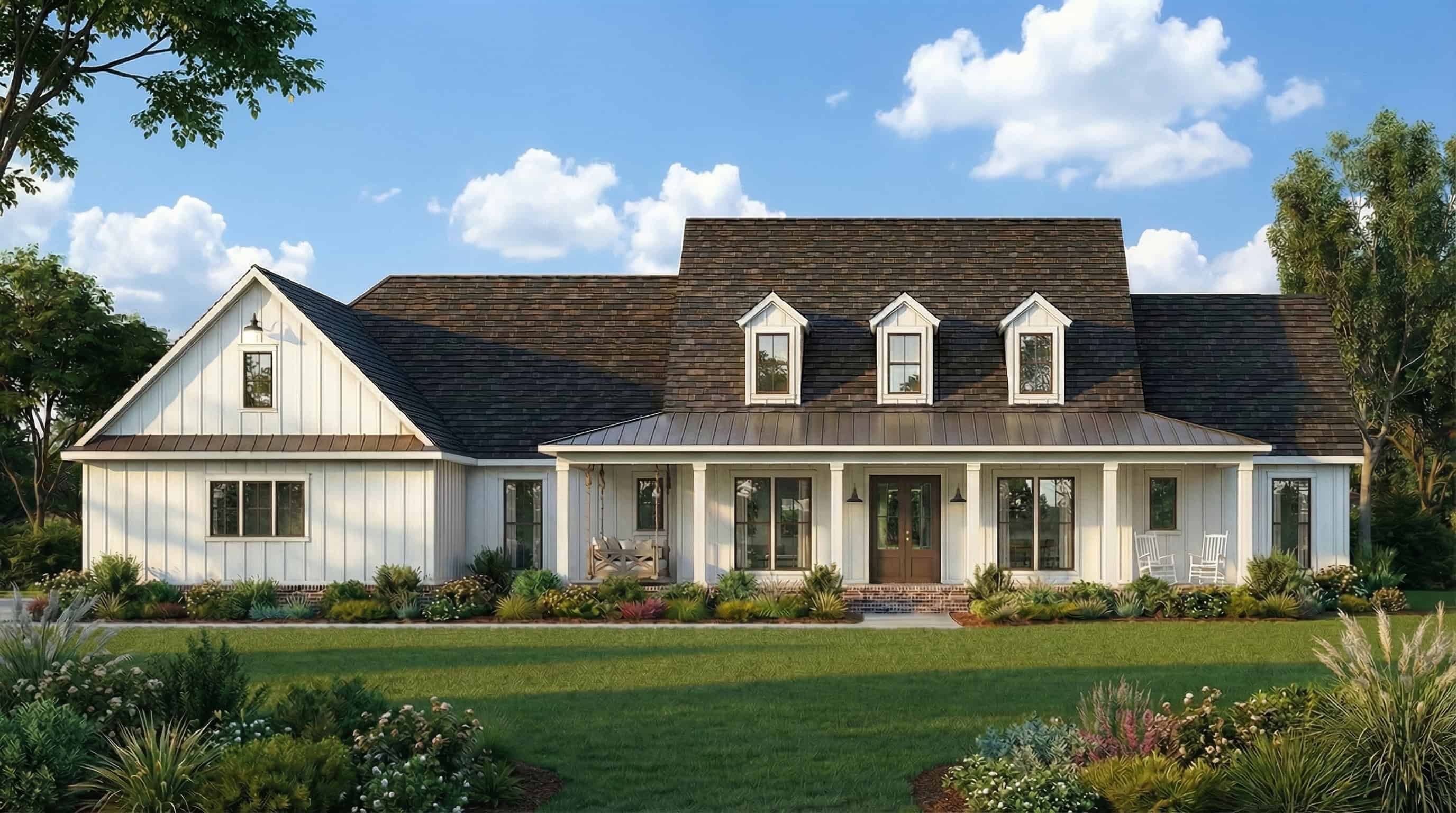
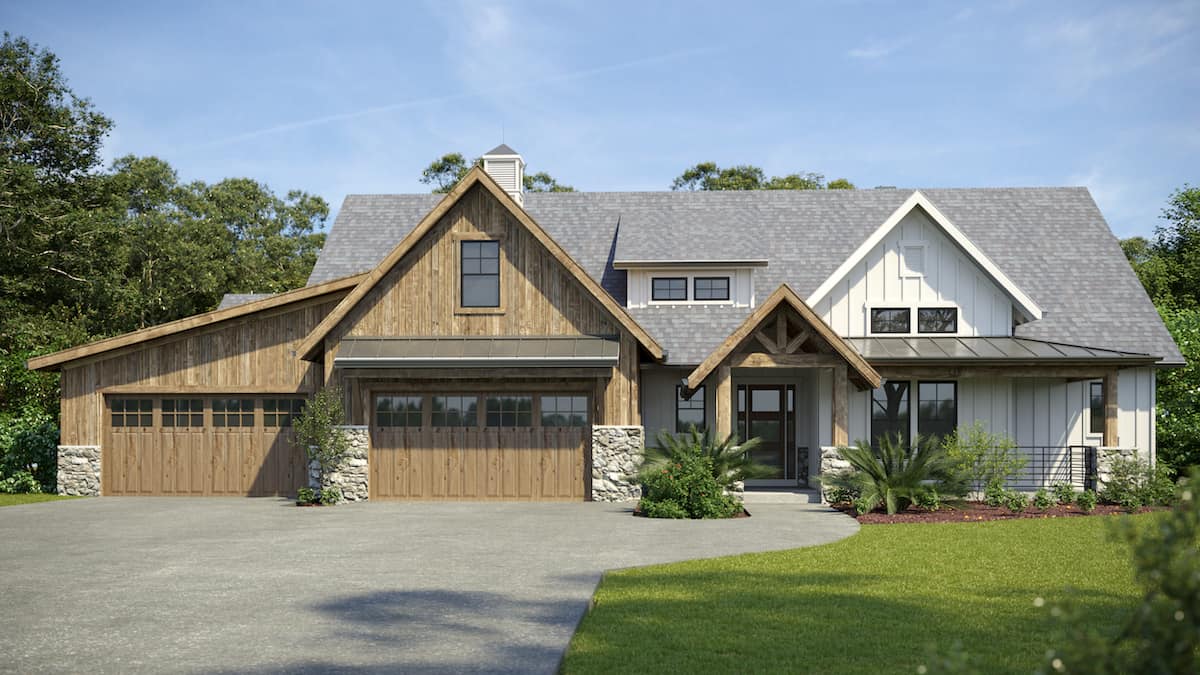
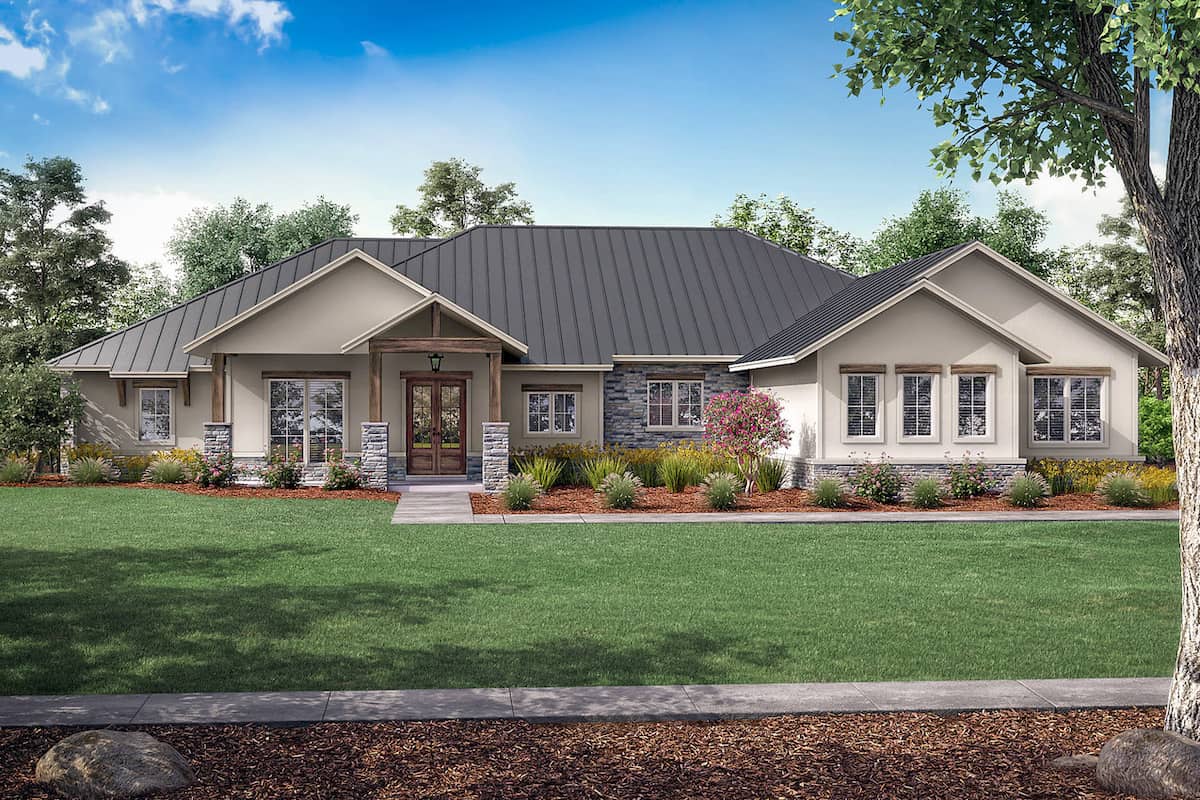
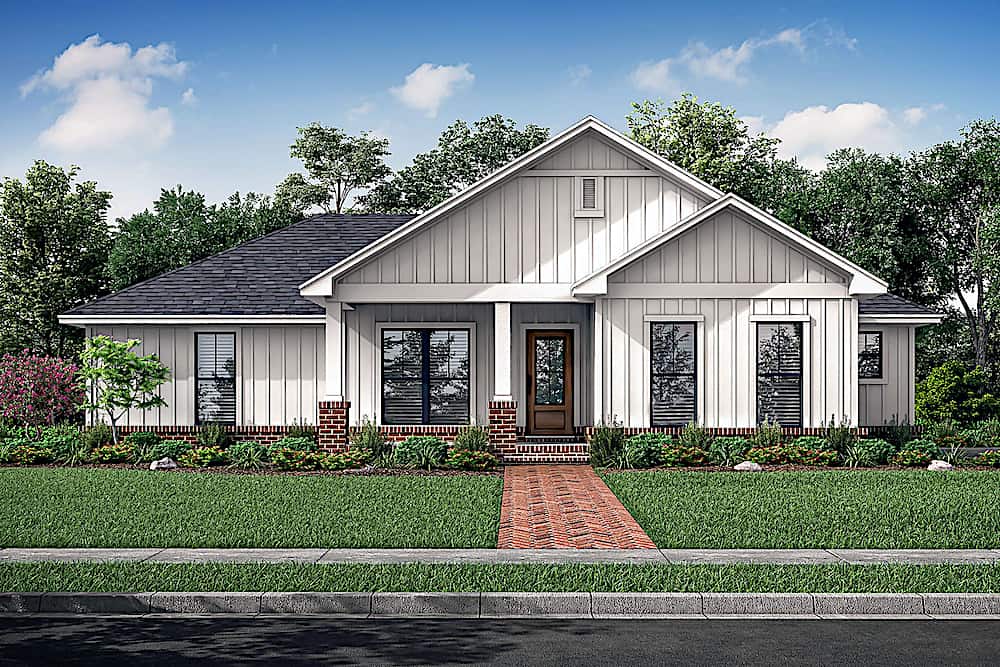
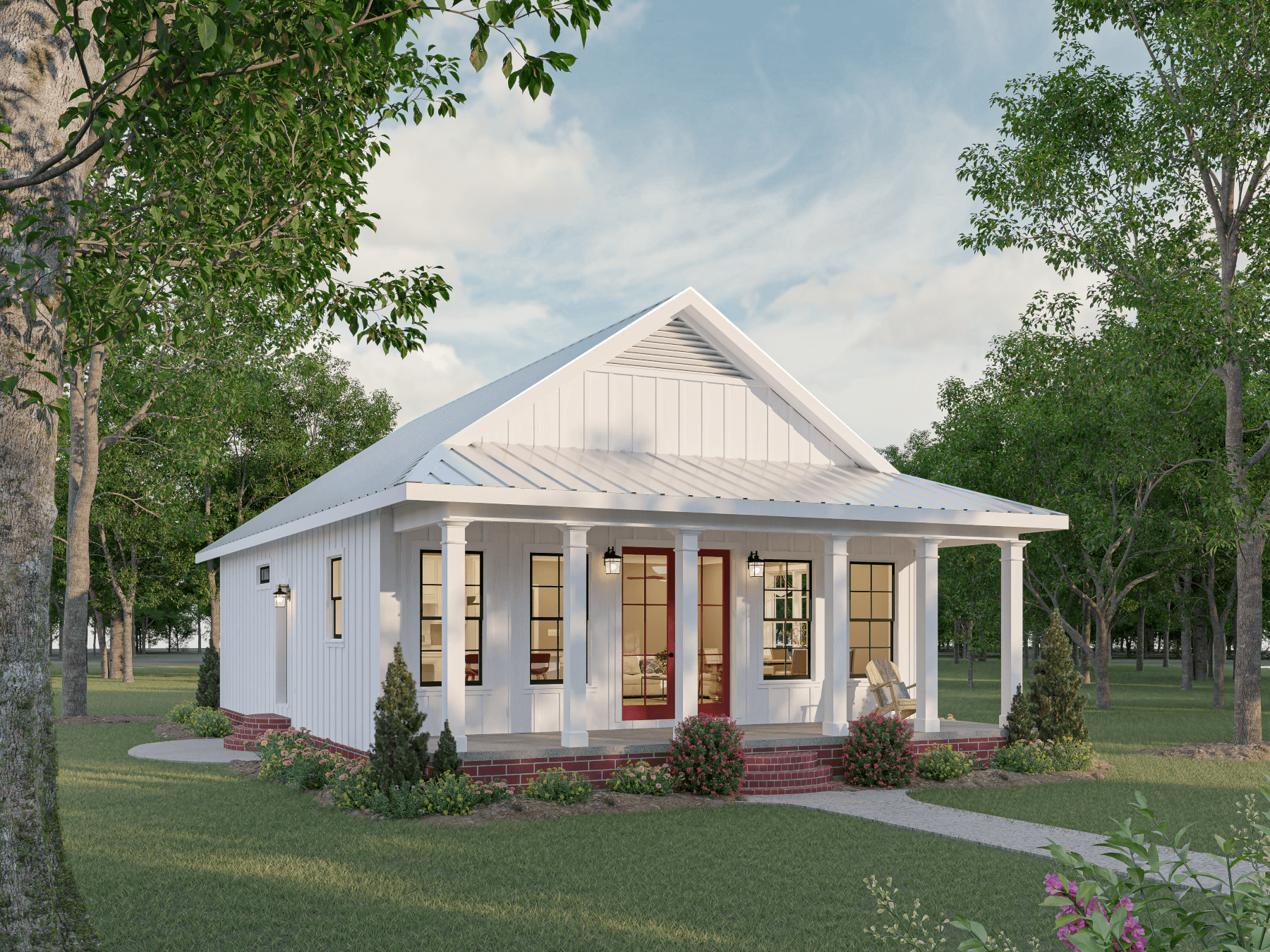
Contemporary house plans reflect current residential design trends. Unlike historical styles tied to a specific era, these homes evolve with changes in materials, construction methods, and how people use living space. These homes emphasize clean architectural lines, open interior layouts, and large areas of glass.
Exterior walls combine materials such as wood siding, brick, stucco, or fiber-cement panels. Window placement, roof geometry, and material contrast create most of the visual character rather than decorative trim.
Because the style continues to evolve, contemporary designs often incorporate elements from several architectural traditions while reflecting the principles of contemporary architecture.
Contemporary House Plan Design Features
There are several architectural features that distinguish contemporary homes from traditional house styles.
Clean roof geometry often replaces decorative detailing. Large window walls increase daylight and connect interior spaces, such as great rooms and dining spaces, with outdoor areas. Interior layouts emphasize open-concept layouts, while exterior materials combine contrasting textures such as wood siding, brick, stucco, and fiber-cement panels.
These elements create a flexible architectural style that adapts to different lot types, household sizes, and square-footage ranges.
What Defines a Contemporary House Plan
Contemporary homes focus on simplicity, light, and spatial flexibility. Instead of decorative details, such as trimwork, the architecture relies on proportion, massing, and material transitions.
Interior layouts typically have an open floor plan, where a large shared living area, including the kitchen, dining space, and living room, connects directly. By removing interior walls and adding large windows and sliding glass doors at the rear of the home, sunlight can reach deeper into the floor plan, creating a brighter home.
Rooflines tend to be simple and geometric. Shed roofs, shallow gables, and low-slope roof planes create strong horizontal lines and allow for tall window openings.
Contemporary vs Modern House Plans
The terms contemporary and modern are frequently confused, but they describe different architectural ideas.
Modern architecture refers to a design movement from the early and mid-twentieth century. Homes built in that style typically emphasize strict geometry, flat roofs, and minimal ornamentation.
Contemporary house plans are not tied to a specific time period. Instead, they reflect current design trends and evolving building practices.
Some homes in this collection share characteristics with modern house plans, including simplified forms and large glass areas. Contemporary designs, however, often combine influences from multiple architectural styles rather than following a single historical approach.
Floor Plan Layouts in Contemporary Homes
Interior organization is one of the most recognizable aspects of contemporary house plans.
Open living spaces are common in contemporary house design. This layout encourages family gatherings, entertainment with friends, while creating the sense of a larger, brighter home.
Many layouts resemble those found in open floor plan house plans, where interior walls are minimized, and sightlines extend across the floor plan.
Bedrooms are usually placed for privacy. Primary suites may appear on the main level while secondary bedrooms occupy an upper floor or a separate wing of the home, known as the split-bedroom layout. Larger homes may include additional flexible rooms that function as offices, guest rooms, or hobby spaces.
Exterior Composition and Materials
A traditional home relies heavily on symmetry and decorative time on the exterior. However, a contemporary home design emphasizes changes in wall plans, various roof forms, and diversity in materials to create curb appeal. A combination of wood finishes, such as wood siding, stucco or concrete, can define separate sections of the home.
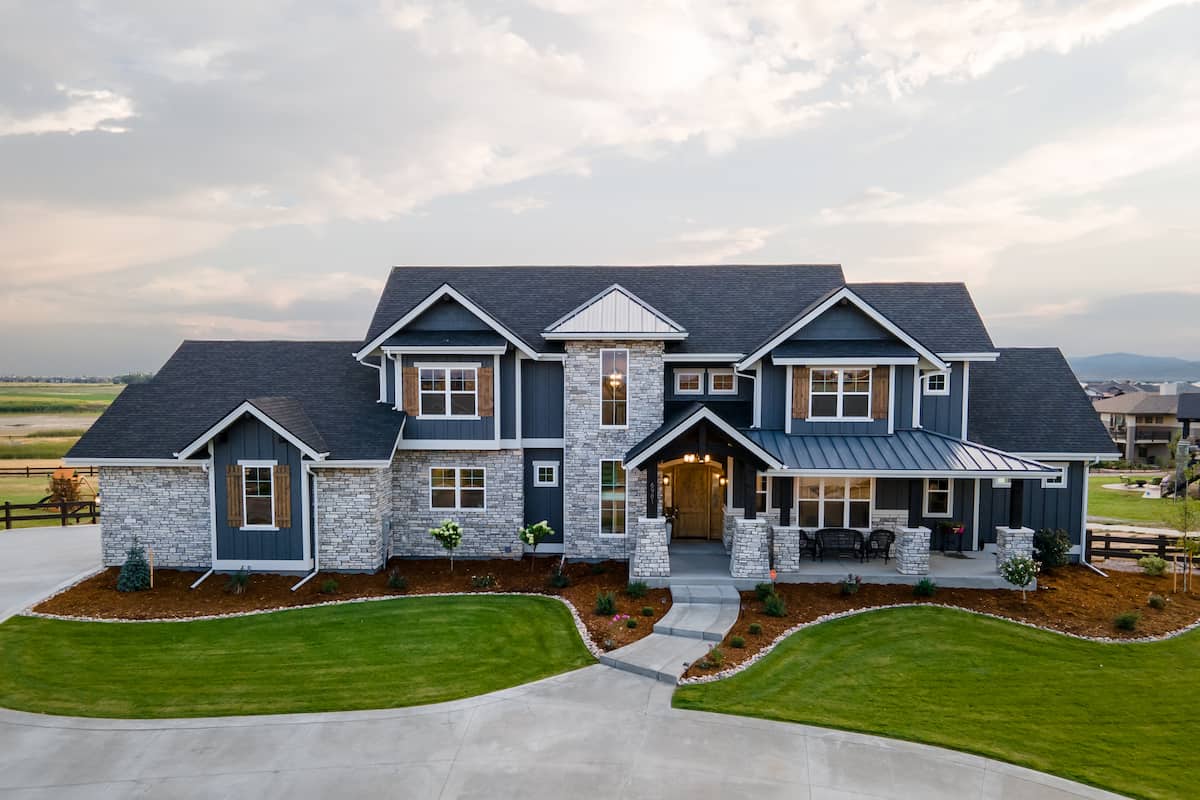
Layering exterior materials can be used to create contrast. Wood siding paired with stone or brick. Stucco combined with fiber-cement panels. Vertical panels offset by horizontal lap siding. All of these techniques can be found in contemporary home architecture.
Garage placement often reflects practical construction considerations. Many contemporary homes use front-facing garages that simplify driveway access and reduce grading requirements. This is especially the case when a lot lacks the width to have a side-entry garage.
Natural Light and Connecting the Indoors & Outdoors
Large windows and glass doors help connect interior spaces with the surrounding property.
Rear elevations often include wide window groupings that overlook patios, decks, or outdoor living areas. Sliding glass doors or folding door systems extend the main living spaces toward the backyard.
Clerestory windows are currently quite popular in contemporary house plans. Positioned near the roofline, these windows allow daylight into interior spaces without sacrificing wall space or privacy. For many of the same reasons, skylights are another feature frequently found in contemporary homes.
Covered patios and deck structures frequently align with the main living area. This layout allows outdoor spaces to function as an extension of the interior floor plan.
Contemporary House Plan Size and Layout Variations
Contemporary house plans appear across a wide range of square footage categories.
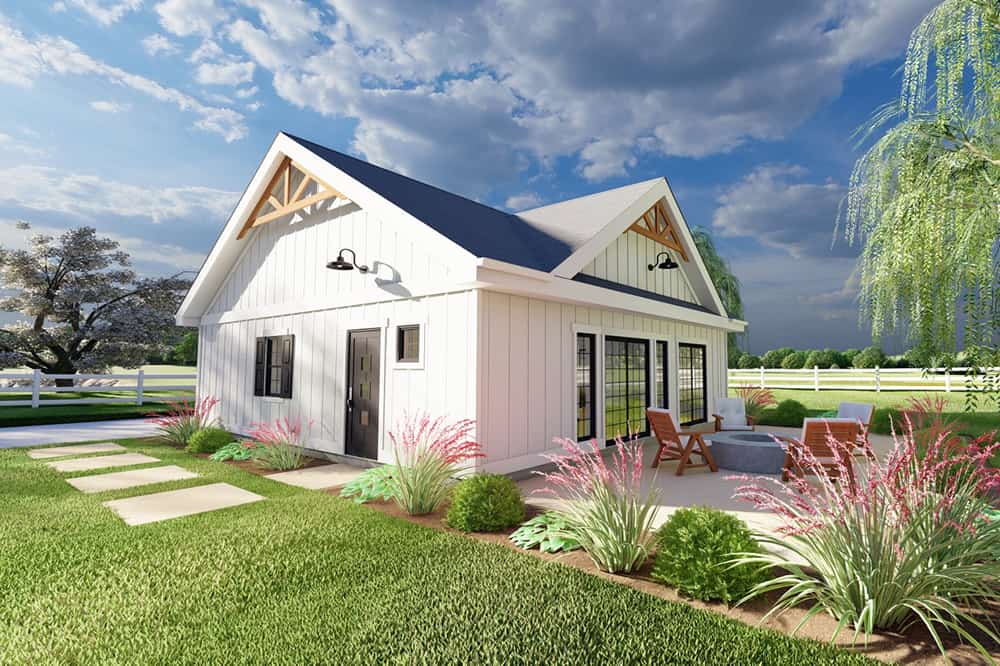
Compact homes often emphasize efficiency and simplified layouts similar to small house plans. Open living areas and carefully positioned windows help these designs feel larger than their footprint suggests.
Larger homes may expand vertically using layouts similar to two-story house plans. Stacking bedrooms on an upper level increases square footage while maintaining a smaller building footprint.
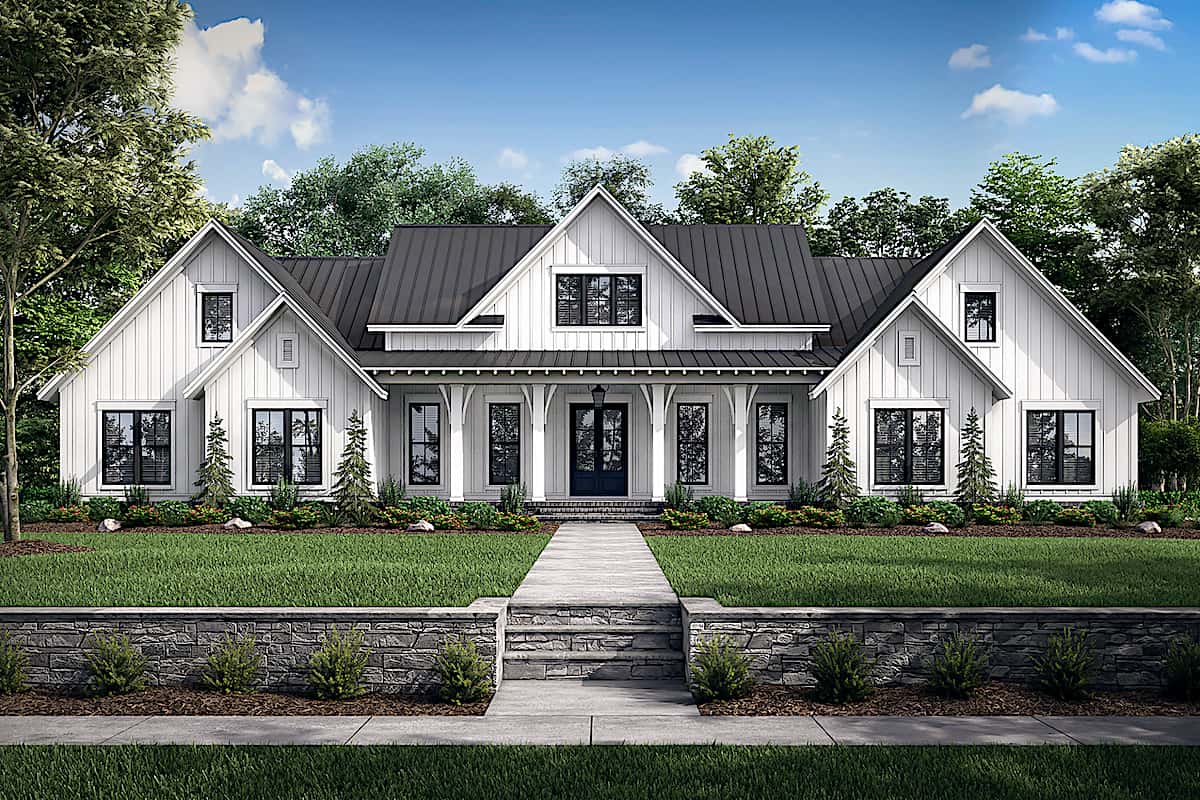
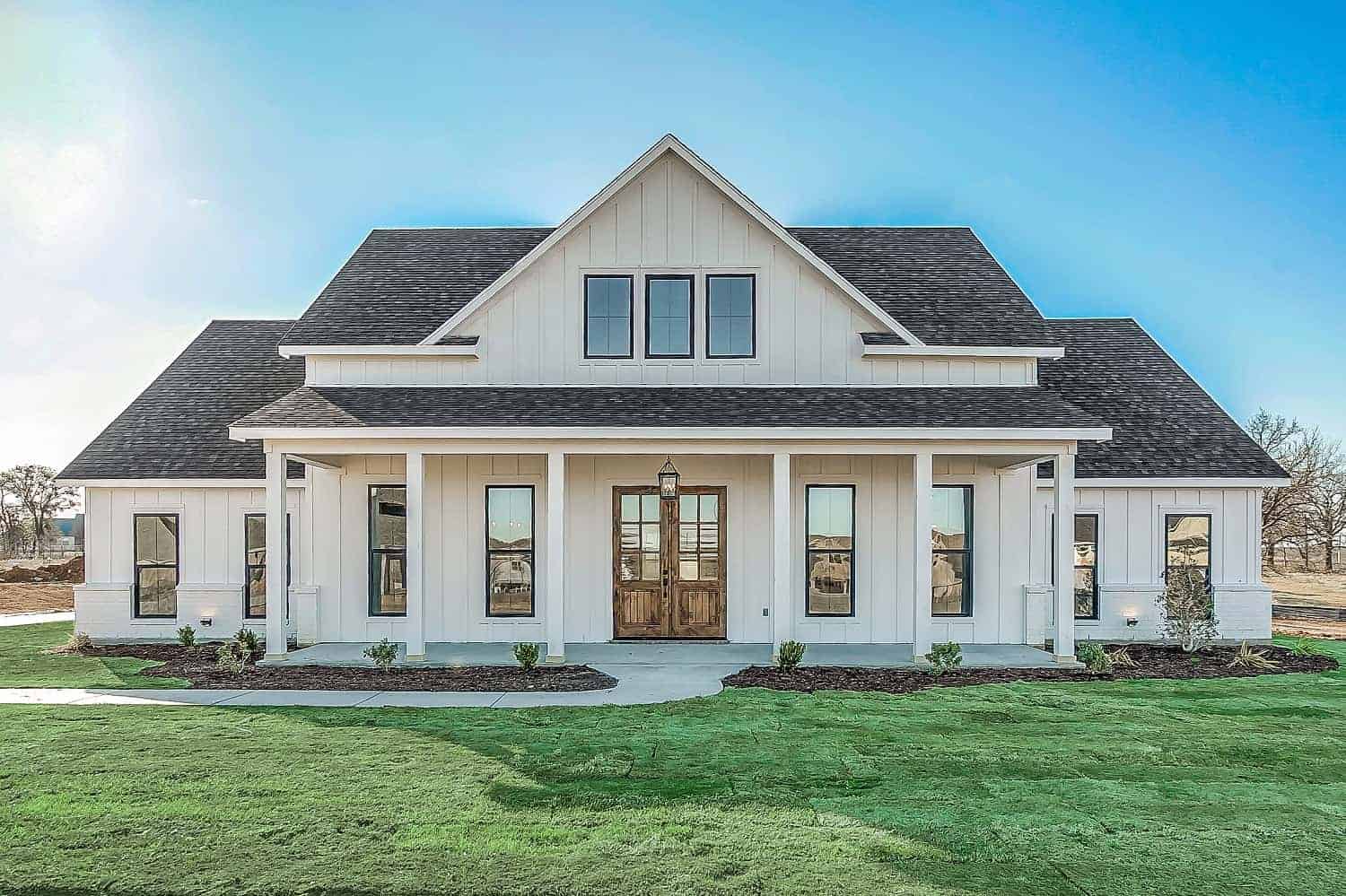
Contemporary architecture also adapts easily to other residential styles. Designers sometimes reinterpret familiar forms such as farmhouse plans or ranch house plans using simplified rooflines, larger windows, and updated materials.
Frequently Asked Questions
What are contemporary house plans?
Contemporary house plans are residential designs that reflect current architectural trends and construction methods. These homes often feature open interior layouts, simple roof forms, large windows, and exterior materials such as wood, stucco, brick, or fiber-cement siding.
How are contemporary homes different from modern homes?
Modern homes belong to a specific architectural movement that developed during the twentieth century. Contemporary homes reflect present-day design trends and may combine ideas from several architectural styles.
Do contemporary homes always include open floor plans?
Many contemporary house plans feature open living areas because they allow natural light to reach deeper into the home and improve circulation between rooms. Kitchens, dining areas, and living spaces often share a central gathering space.
What roof styles are common in contemporary house plans?
Common roof forms include shed roofs, shallow gables, and low-slope roof planes. These simple geometries create the clean lines associated with contemporary residential design.
Are contemporary house plans suitable for smaller homes?
Yes. Contemporary design works well in compact homes because open layouts and large windows make smaller floor plans feel more spacious.
Contemporary house plans reflect the architectural ideas shaping today’s residential design. Clean rooflines, expansive windows, and flexible interior layouts distinguish them from other house styles. This collection of contemporary house plans includes a wide range of floor plan layouts, exterior materials, and architectural forms suited to many different homesites.