Barndominium Plans
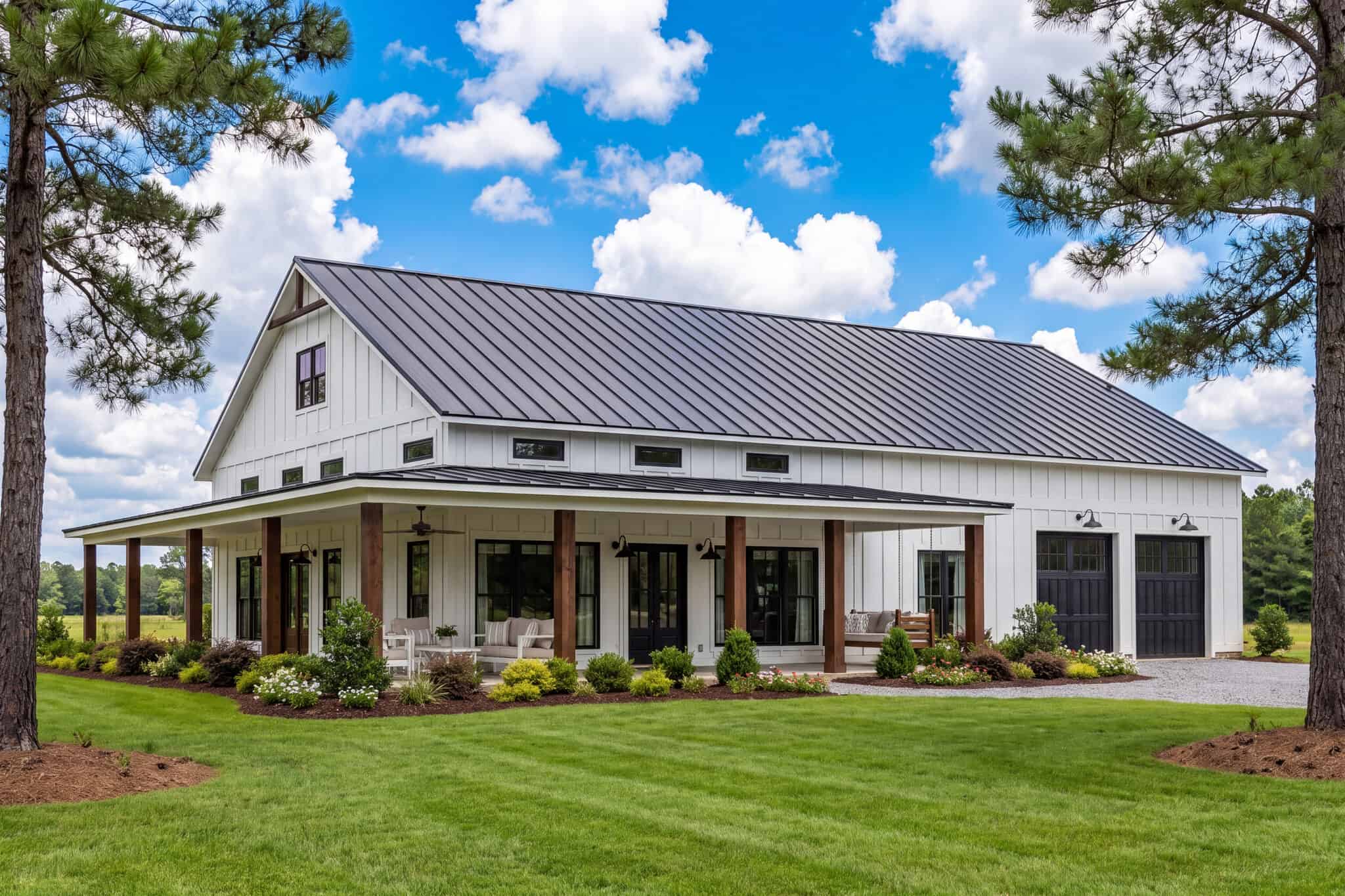
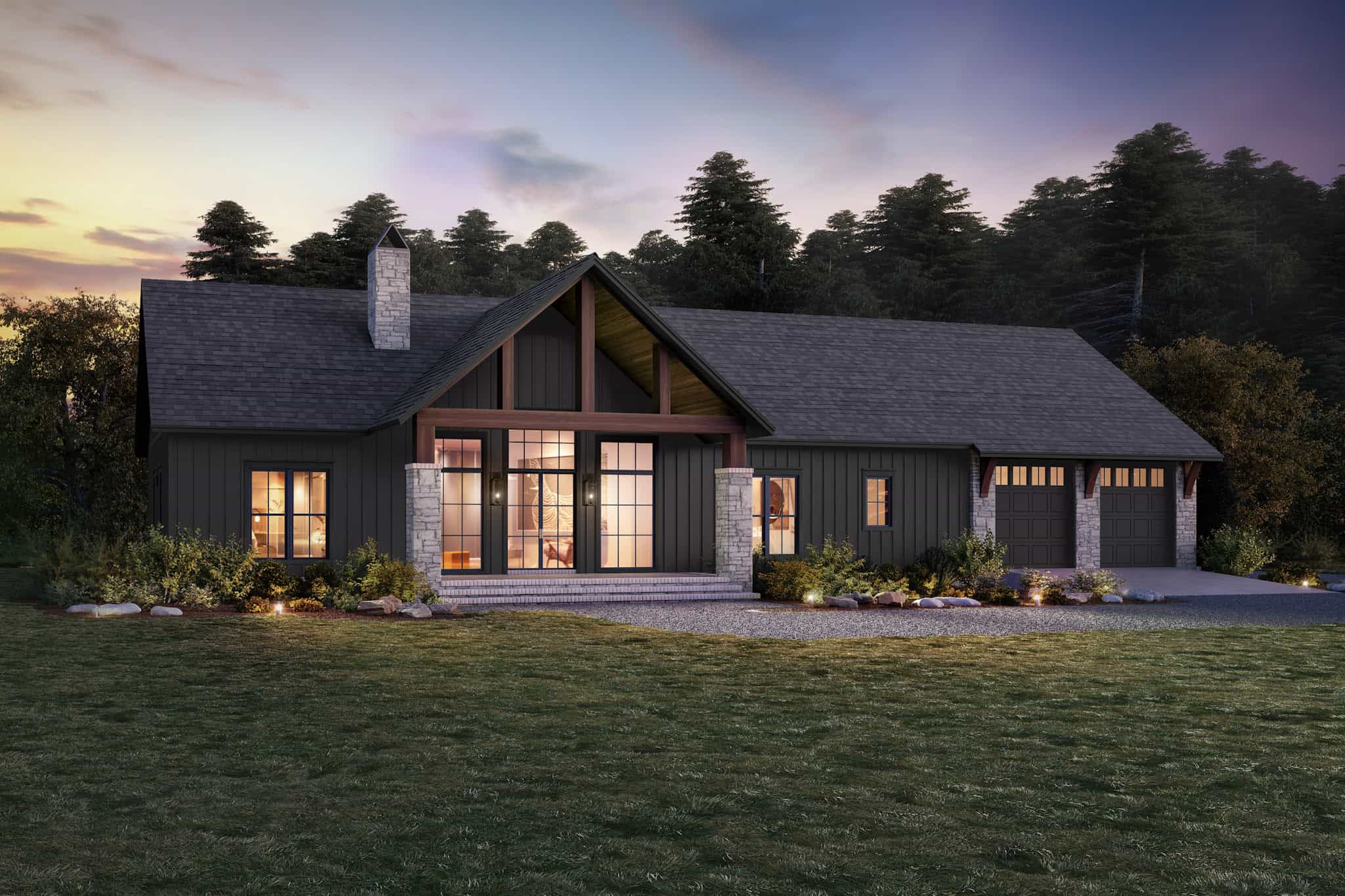
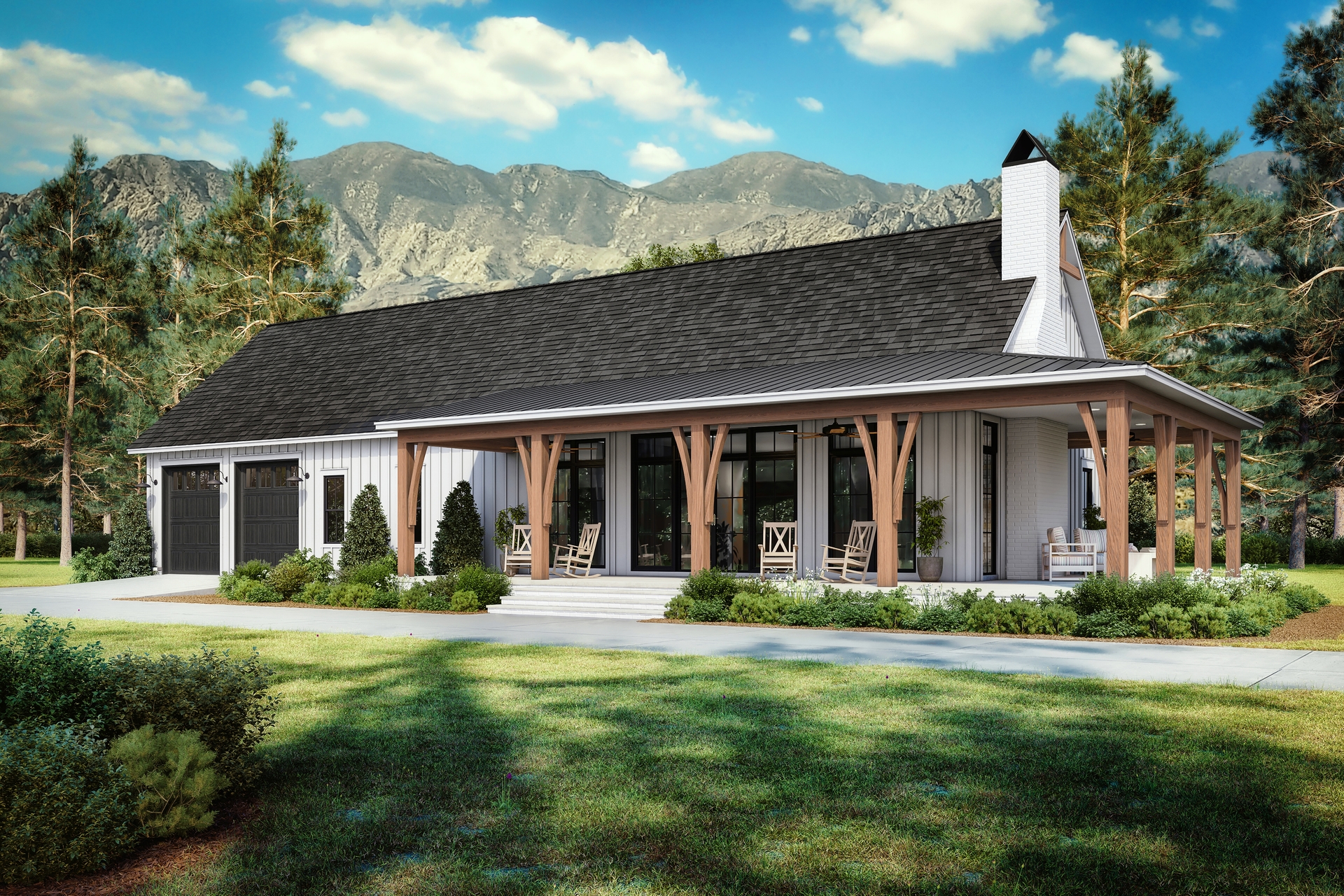
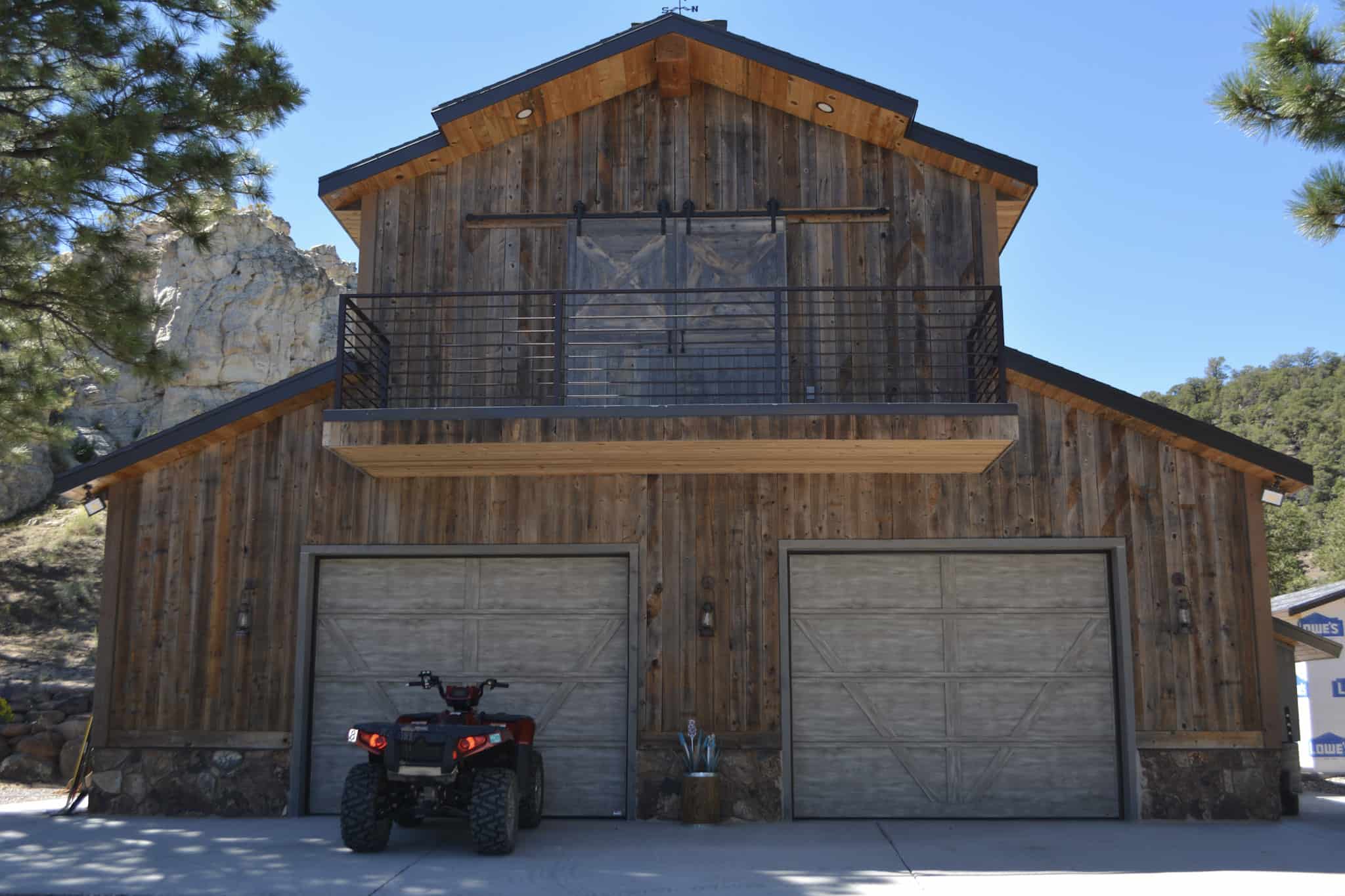
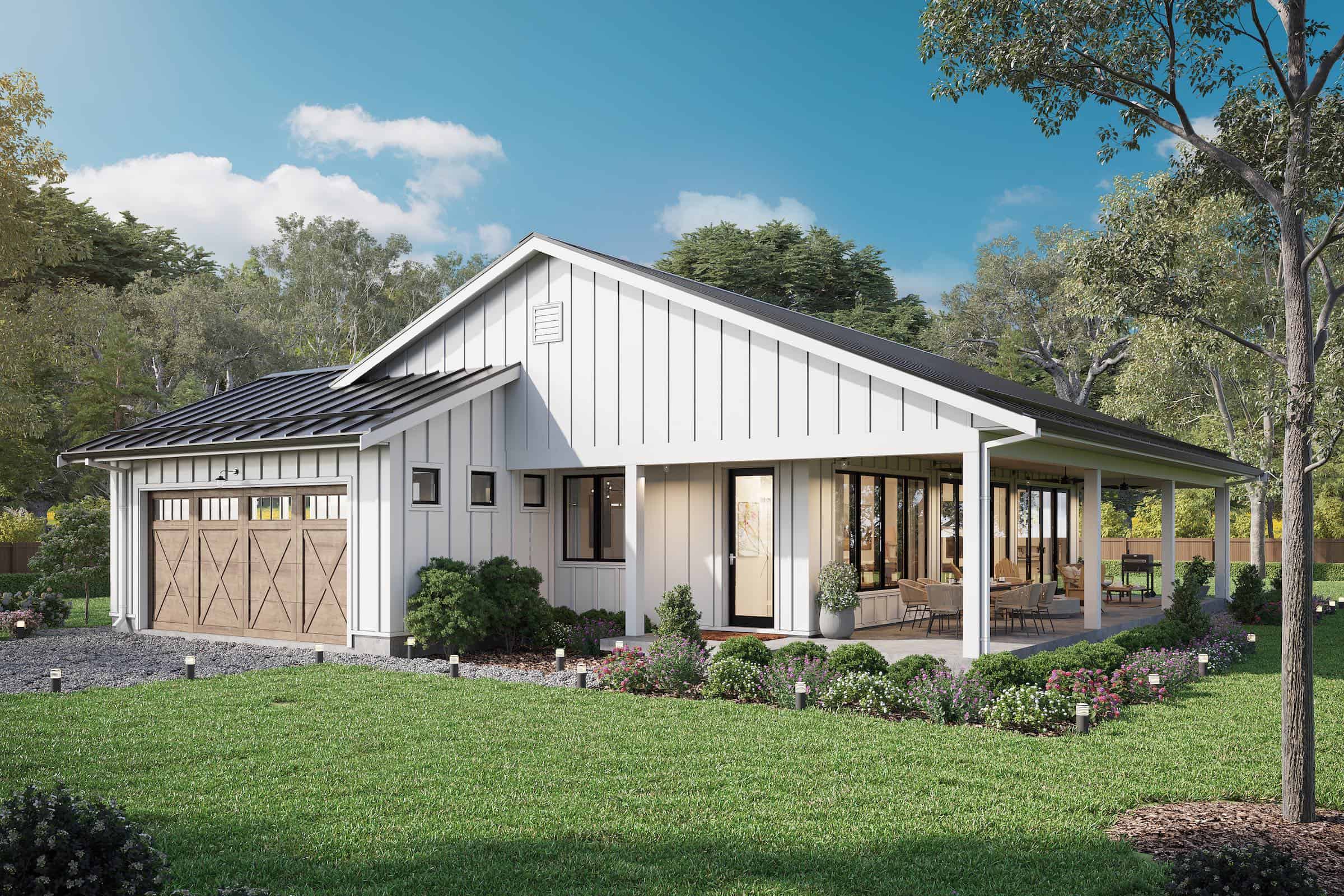
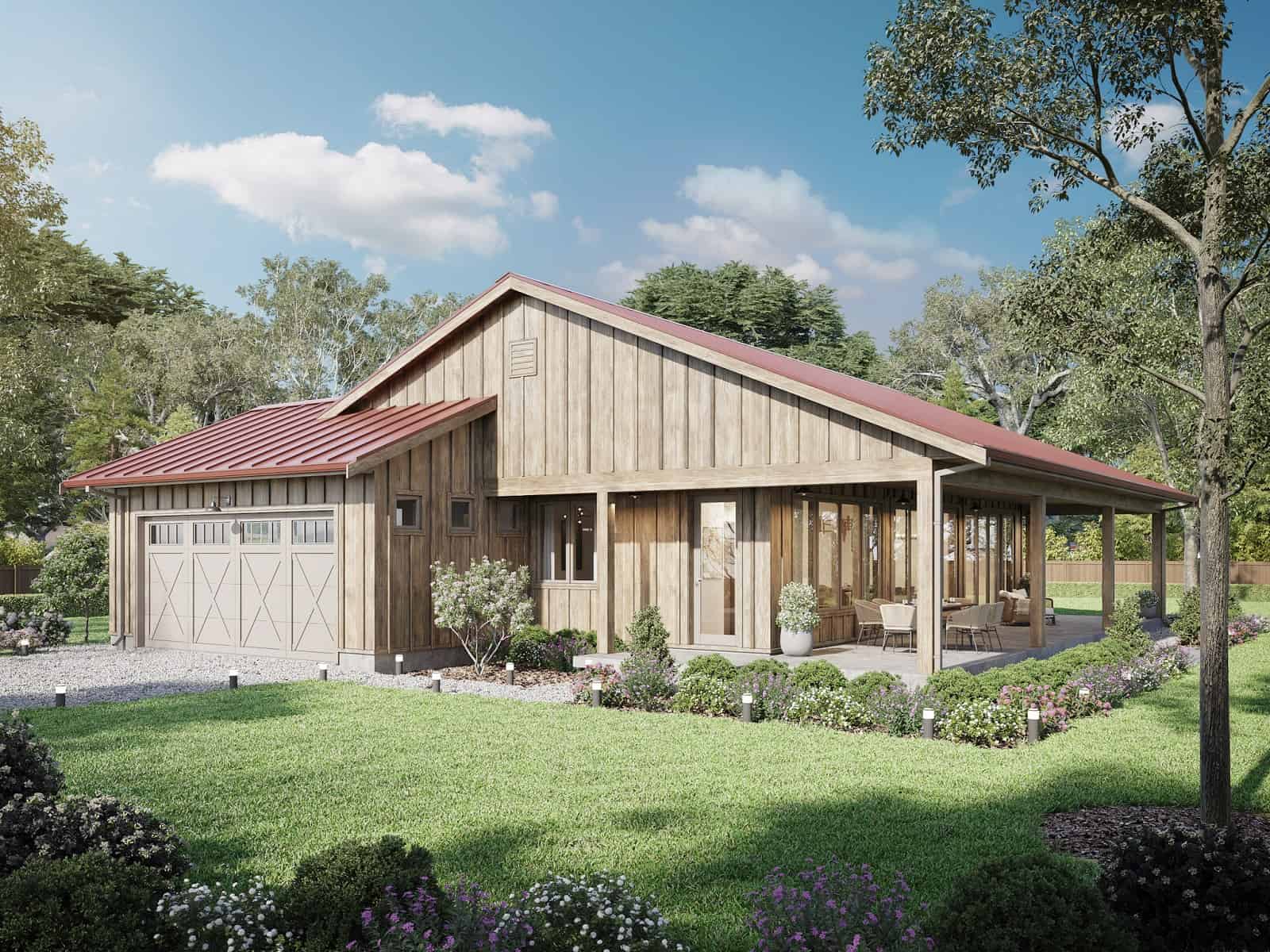
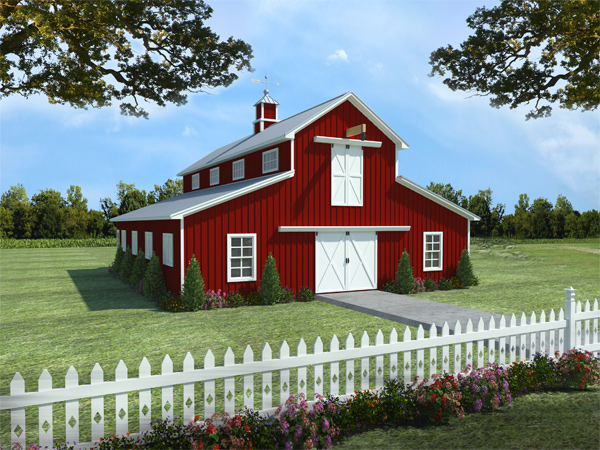
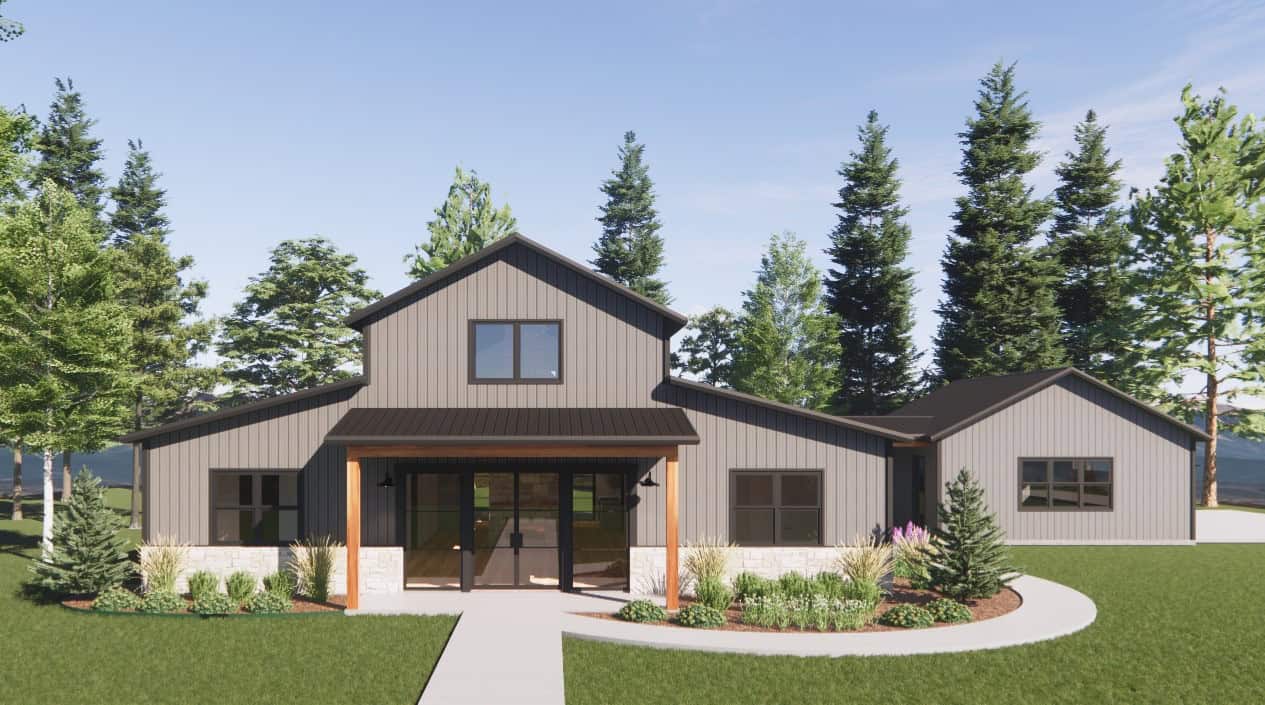
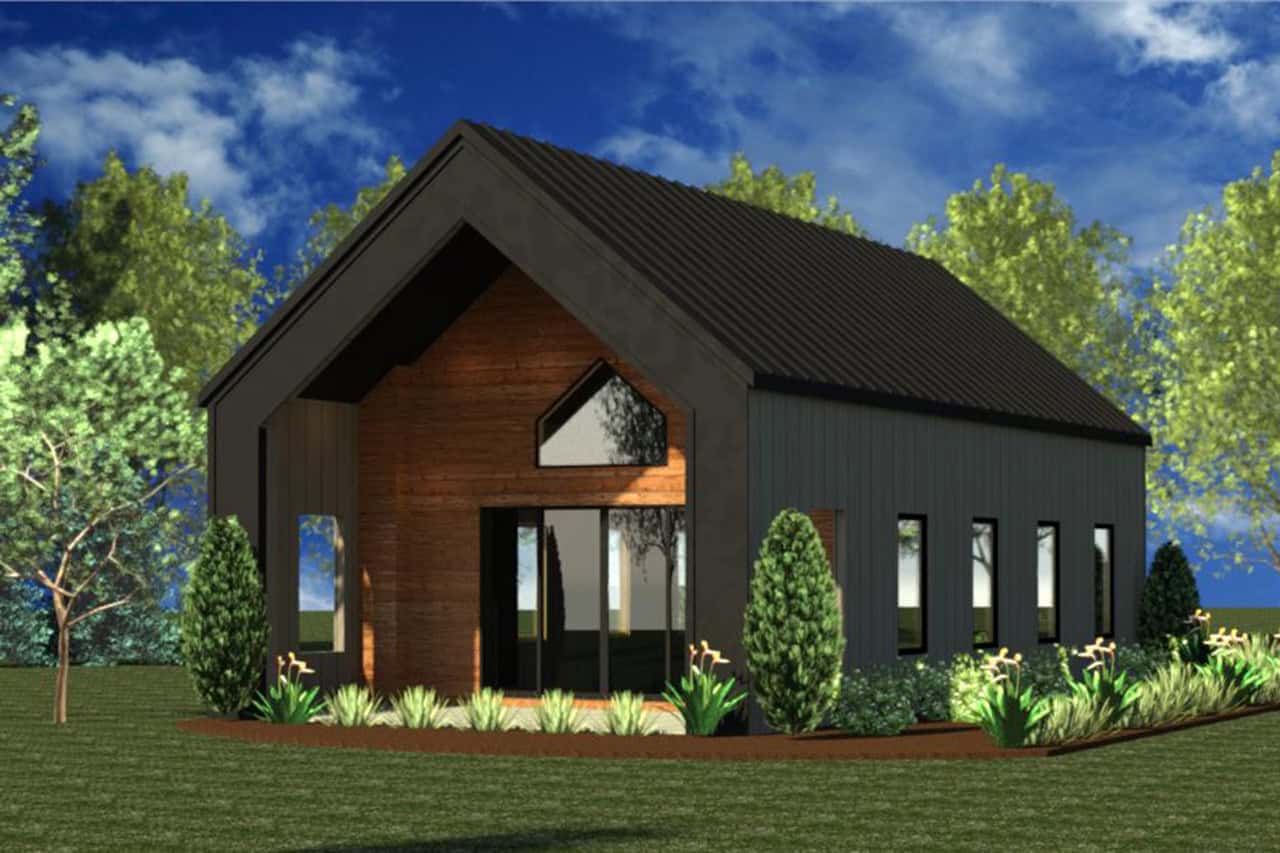
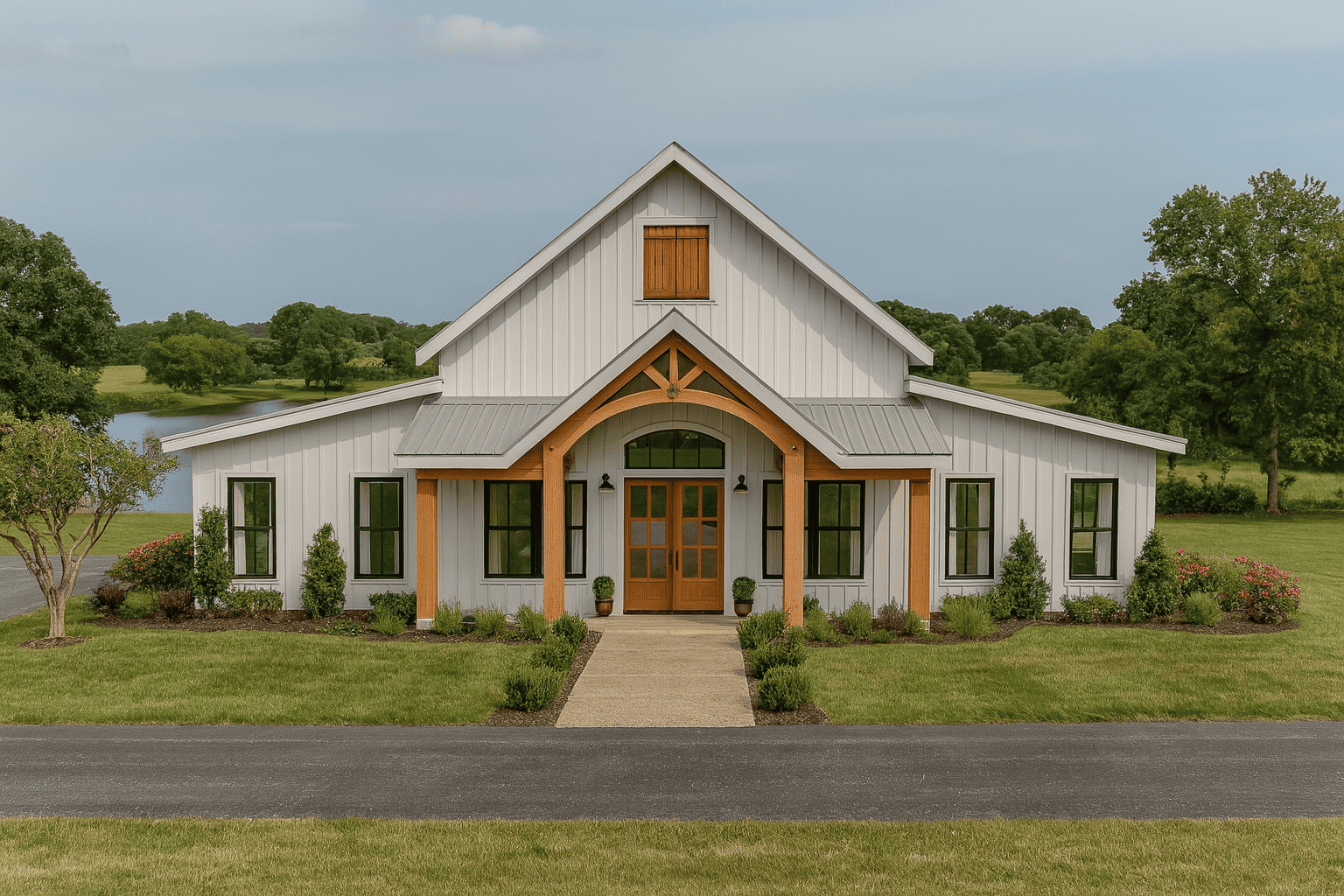
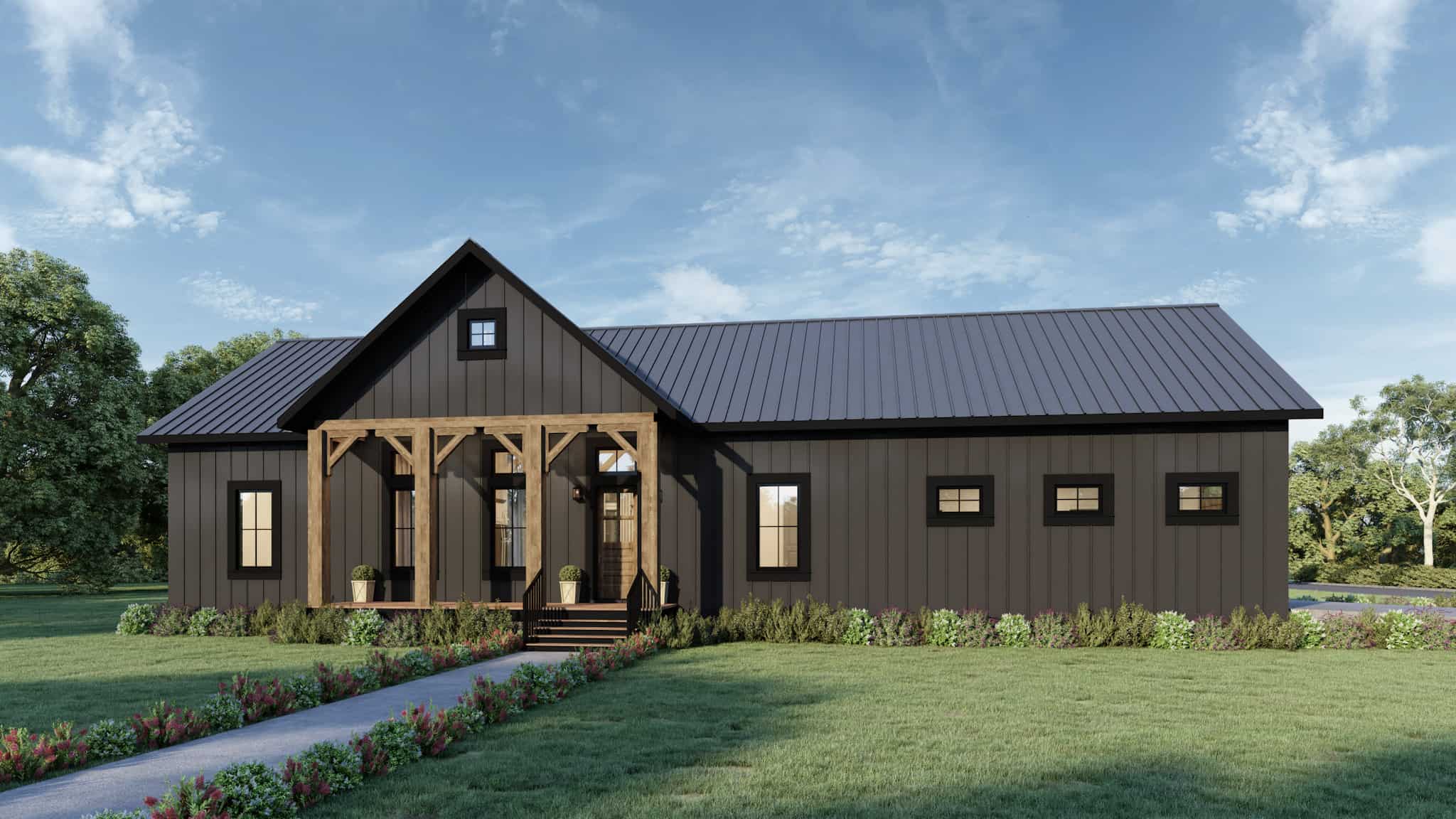
Barndominium plans are constructed on post-frame or steel-frame construction, with metal exterior cladding, clear-span interior framing, and roof pitches from low-slope gable to gambrel. Clear-span framing eliminates load-bearing walls. This creates a single open volume space for the living, kitchen, and dining areas. Barndo floor plans commonly offer workshop and oversized garage spaces. Modern or barndominium-inspired plans have the same interior layout features but are built with 2x4 or 2x6 exterior framing. These homes are sometimes referred to as barn house plans or barn-style house plans
Key Features of Barndominium Plans
- Post-frame or steel-frame structure supports roof spans of up to 60 feet or more, depending on the framing type, without the need for interior columns or load-bearing walls.
- Gambrel or gable roof types are standard. A gambrel roof maximizes upper-level space for a loft or bedroom.
- Vertical metal panel siding is the dominant exterior material. Barndominium-inspired homes more commonly use board-and-batten and lap siding.
- Slab-on-grade is the standard foundation. This surface is the most practical option for garage and shop spaces to handle vehicle and equipment weight loads without additional reinforcement.
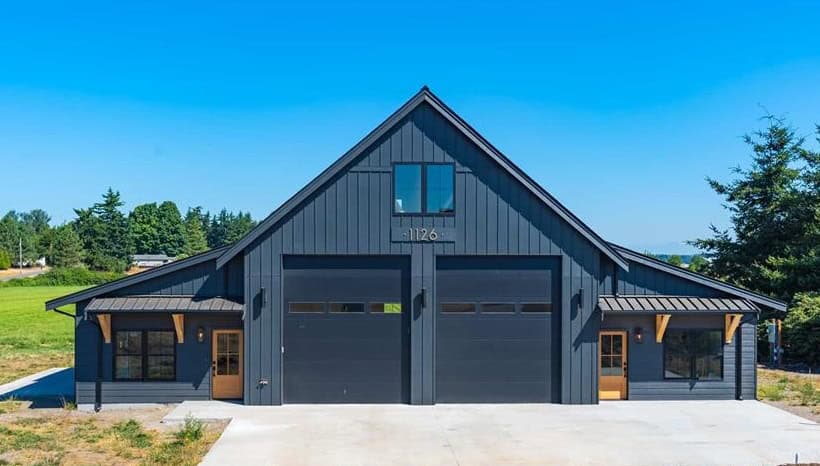
- House plans with an oversized garage are a defining feature of this style. Workshop and garage bays include roll-up doors that can be as high as 10 to 14 feet to accommodate RVs and heavy machinery.
- Exposed structural elements, such as steel columns and wood trusses or beams.
Barndominium Structural Design
Post-frame construction uses large-dimension wood columns. These are typically 6x6 or larger and set into the ground or anchored to a concrete foundation. These columns carry the roof load, which eliminates the need for interior bearing walls and keeps the floor plan fully open. Steel-frame barndo construction substitutes welded or bolted steel columns and beams. This increases span capacity as well as the home's resistance to moisture and insects. Barndominium-inspired plans use conventional 2x4 or 2x6 stud framing, but they retain the open floor plan layout by using engineered beams to support roof loads across longer spans.
Gambrel trusses create a pronounced upper knee wall, adding usable headroom for a loft or second-floor bedroom. Gable trusses produce a simpler roofline and are more common on barndominium-inspired plans.
The transition between the shop or garage bay and the living area is handled at the framing level as a shared wall with a standard passage door or a sliding barn door. Ceiling heights in the shop bay commonly run 14 to 16 feet; the living area drops to 10 to 12 feet, or follows the roof pitch where vaulted.
Barndominium Floor Plan Layouts
The main living area occupies the front half of the structure. The kitchen, dining, and great room share a single open volume, with the kitchen on one end. An island or peninsula separates the kitchen from the dining and living areas. Some plans push the kitchen to the rear wall, keeping the great room uninterrupted from front to back.
Bedrooms are located along one side wall or in a dedicated wing at the rear, away from the shop or garage bay. The primary suite is at the far end of the bedroom wing, separated from the secondary bedrooms by a hallway or a utility room. Plans with a loft add a second-floor sleeping or bonus area above the bedrooms on the main level, accessed by an open staircase visible from the great room below. Single-story layouts are the dominant configuration.
The shop or garage bay takes up the remaining portion of the structure. These spaces are at the rear or one end, separated from the living area by a shared wall. Plans with a dedicated shop space allocate 800 to 1,500 square feet to the work bay. The remainder goes to the living space.
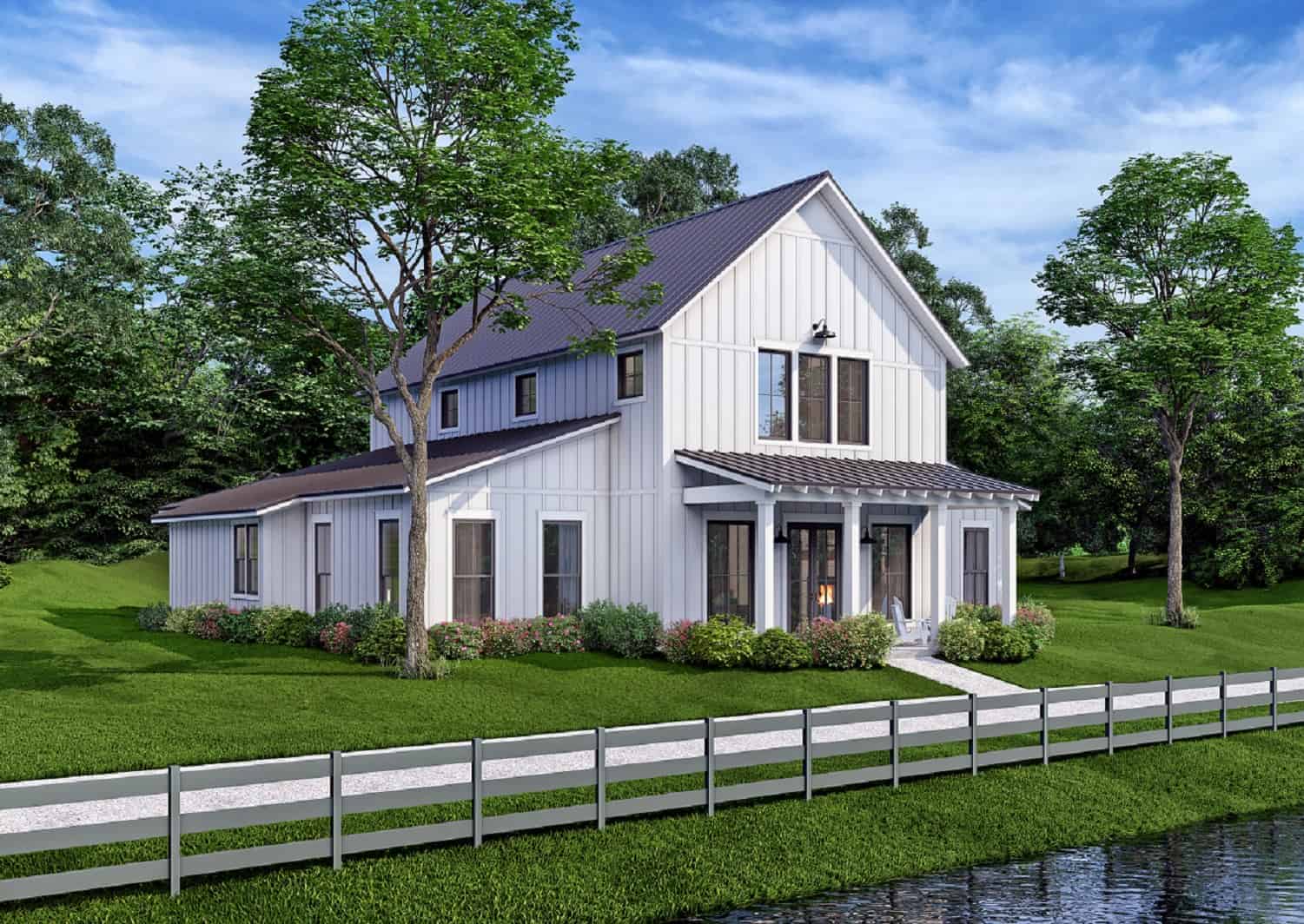
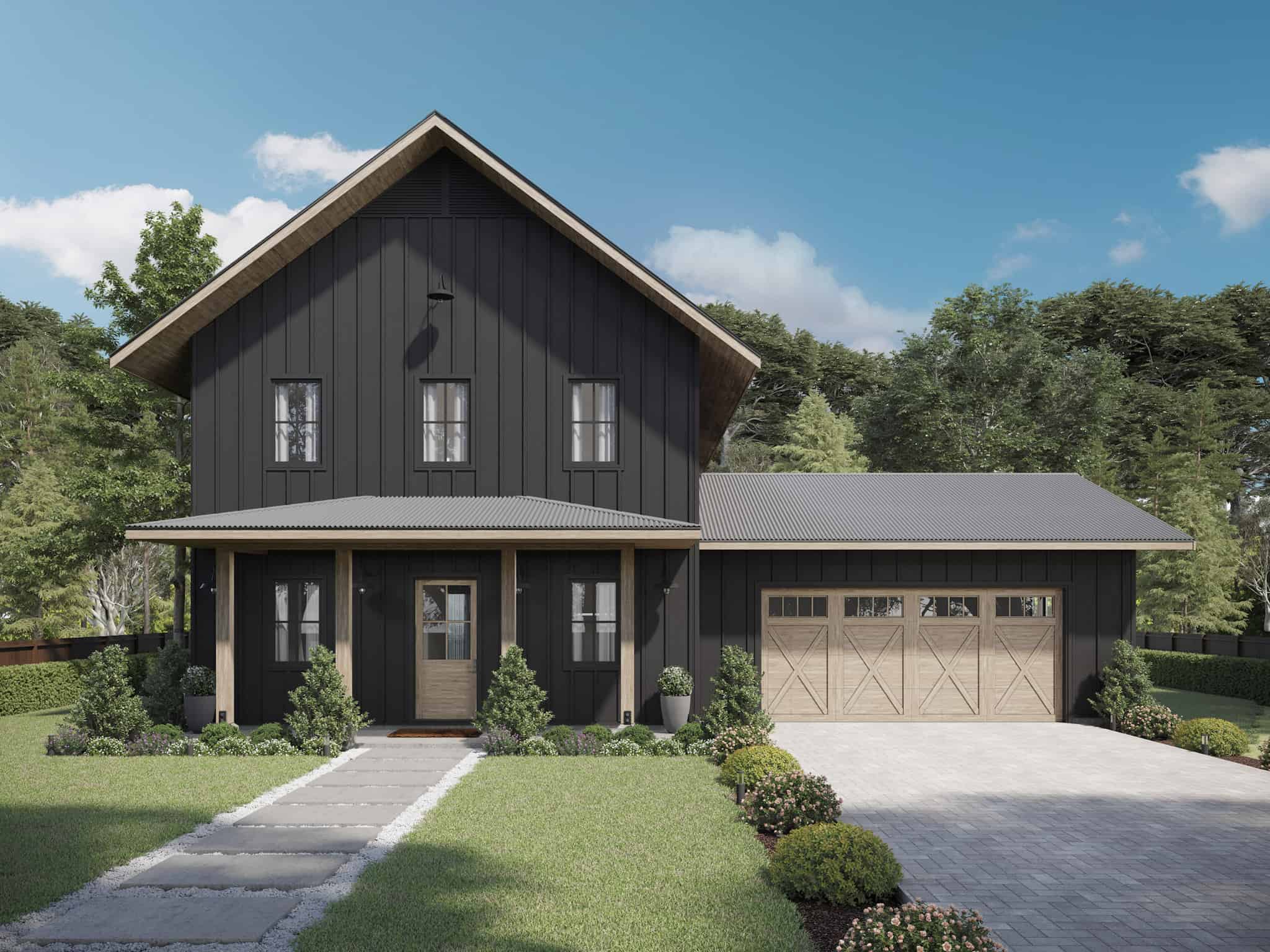
The inspired floor plans follow the same open layout but, in most cases, drop the dedicated shop and keep the garage. That square footage either reduces the footprint or shifts to living space, such as larger bedrooms, an additional bathroom, or an expanded great room. Some plans use a split-bedroom layout, placing the primary suite on the opposite end of the home from secondary bedrooms. The exterior dimensions are narrower than a true barndominium. Barndominium-inspired homes are better suited to suburban lots and neighborhoods with HOA restrictions on metal cladding.
Lot and Construction Considerations
Build timelines for barndo construction vary by method. Steel kit barndo builds — where pre-engineered components arrive pre-cut — can be enclosed in as little as one to three weeks. Contractor-built plans without a kit typically take 4 to 8 weeks to enclose the shell, with total construction from groundbreaking to move-in ready running 6 to 12 months. Inspired plans follow a conventional build schedule. The US Census Bureau Characteristics of New Housing reports the average single-family home takes 9.1 months from permit to completion, with owner-built and custom homes running 12 to 15 months. The difference comes down to structural complexity. Post-frame and steel-frame systems have fewer components and less sequencing than conventional framing, which means fewer subcontractors waiting on each other at each stage. Inspired barndominium plans lose that advantage because they are built like a standard house.
Metal roofing and vertical panel siding hold up well over time. Standing seam metal roofs last 40 to 70 years, and the steel frame does not rot, attract termites, or require fire treatment. Metal roofs with reflective coatings reduce summer heat gain, and the open clear-span interior makes spray foam insulation straightforward to apply across the full envelope.
Zoning regulations vary significantly by state. Texas, Oklahoma, and Tennessee have established permitting pathways for barndo construction. Other states still classify them as agricultural structures, a distinction that can complicate and delay residential permitting. In all cases, local zoning should be verified before a plan is selected.
Financing is worth understanding early in the process. Conventional mortgage lenders classify these homes inconsistently, with some treating them as residential and others as agricultural or mixed-use. USDA rural development loans and portfolio lenders familiar with these construction types tend to be the most reliable options.
FAQ
What is a barndominium?
A barndominium is a home built on a post-frame or steel-frame structure, with metal exterior cladding and a large open interior. The clear-span design removes the need for load-bearing walls, creating the open floor plan that the style is known for. According to a recent survey by Wells Fargo and the National Association of Home Builders, 7% of single-family home builders reported building at least one barndominium in the prior 12 months — up from essentially none a decade ago — a figure that reflects the style's rapid growth from a regional niche to a nationally recognized housing type.
What is the difference between a barndominium and a barndominium-inspired house plan?
A true barndominium uses post-frame or steel-frame construction with metal exterior cladding. Barndominium-inspired plans are built with conventional 2x4 or 2x6 framing but deliver the same open interior layout. The distinction matters for construction costs, financing, zoning, and HOA approval. Barndominium-inspired plans are treated as standard single-family homes in all four areas.
What foundation does a barndominium use?
Slab-on-grade is standard. The concrete surface can handle the weight loads of vehicles and equipment in shop and garage bays without additional reinforcement. Barndominium-inspired plans built with conventional framing sometimes use crawl space or basement foundations, though slab remains the most common across both types.
How much does a barndominium cost to build?
Post-frame and steel-frame barndominiums typically run $95 to $160 per square foot for a contractor-built, finished home. The NAHB's Cost of Construction Survey puts the cost of the average single-family home at $162 per square foot, a figure that reflects stick-frame construction with standard finishes. The savings come from a faster shell build and fewer subcontractors, not cheaper interior finishes. Flooring, cabinetry, and fixtures cost the same regardless of construction method. This cost advantage applies to true barndominiums; barndominium-inspired plans are priced like conventional homes.
Can you get a mortgage on a barndominium?
It depends on the lender. Conventional mortgage lenders classify this type of home inconsistently. Some treat them as residential, others as agricultural or mixed-use. USDA Rural Development loans can finance barndominiums in eligible rural areas with no down payment required, provided the structure meets residential property standards and serves as a primary residence. Portfolio lenders with barndominium experience are the other reliable option. Barndominium-inspired plans built with conventional framing are easier to finance because lenders treat them as standard single-family homes.
What states are best for building a barndominium?
Texas, Oklahoma, and Tennessee have the most established permitting pathways for building a barndo. Rural counties in the South and Midwest are generally more accommodating than suburban or urban jurisdictions. Zoning regulations vary significantly even within states, so local verification is necessary before selecting a plan.
What is a barndominium with shop?
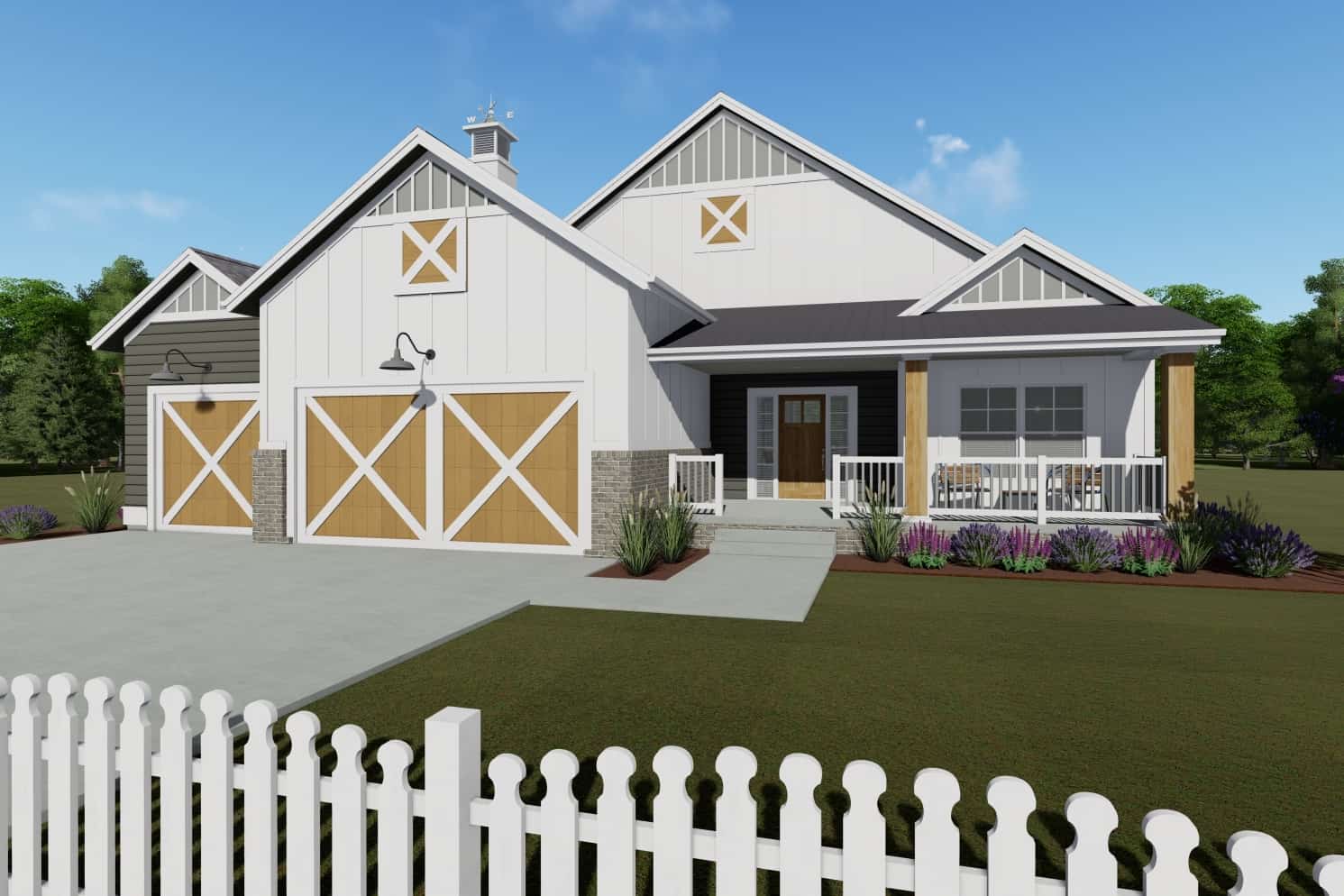
A barndominium with shop — sometimes called a shouse — allocates a dedicated portion of the structure to a workspace separate from the living area. Shops typically have between 800 and 1,500 square feet and roll-up doors 10 to 14 feet high to allow sufficient access for vehicles, equipment, or RVs. The shop and living areas are separated by a wall, with a passage door or a sliding barn door between them.
What is the difference between a barndominium and a modern farmhouse?
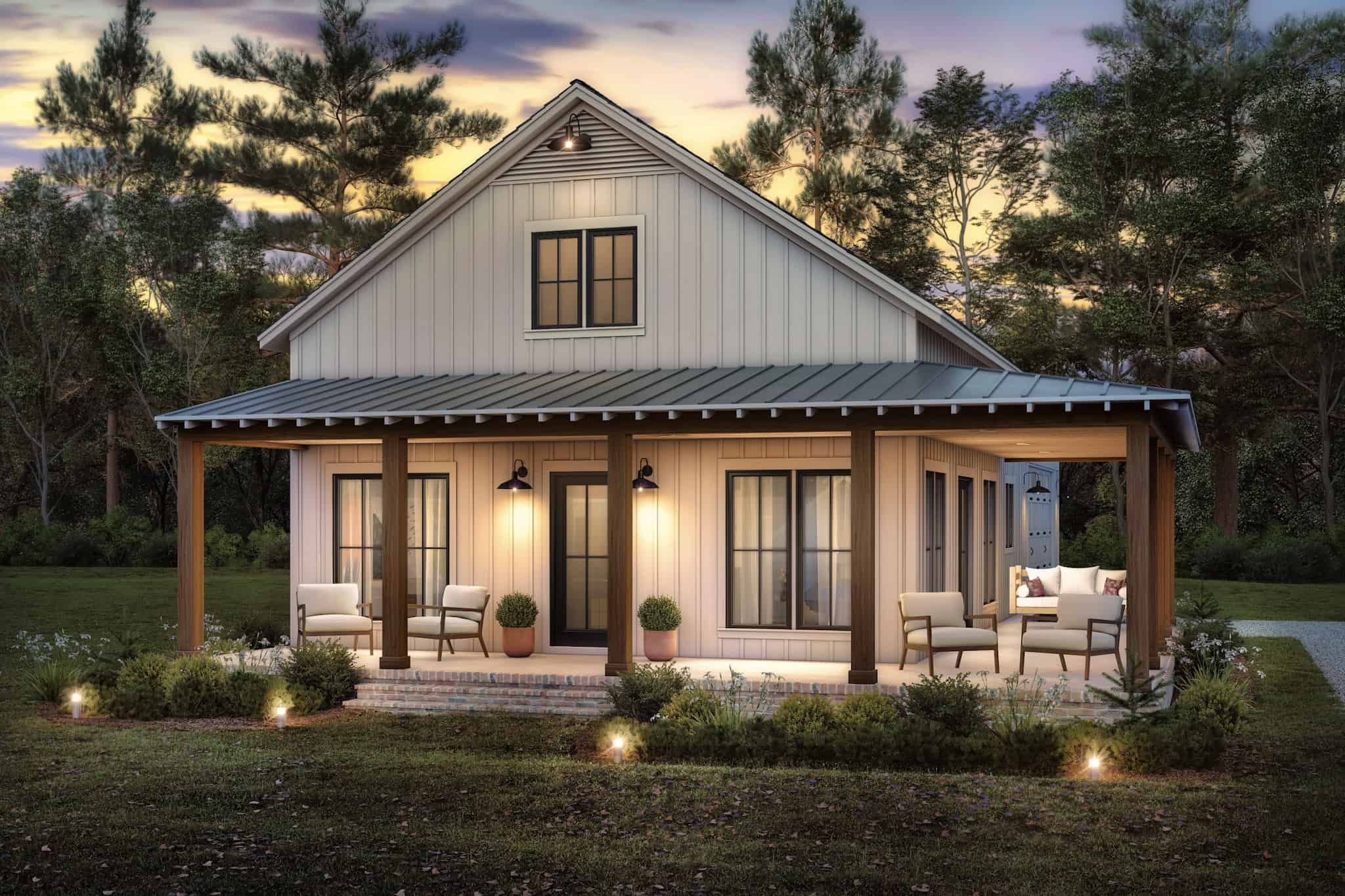
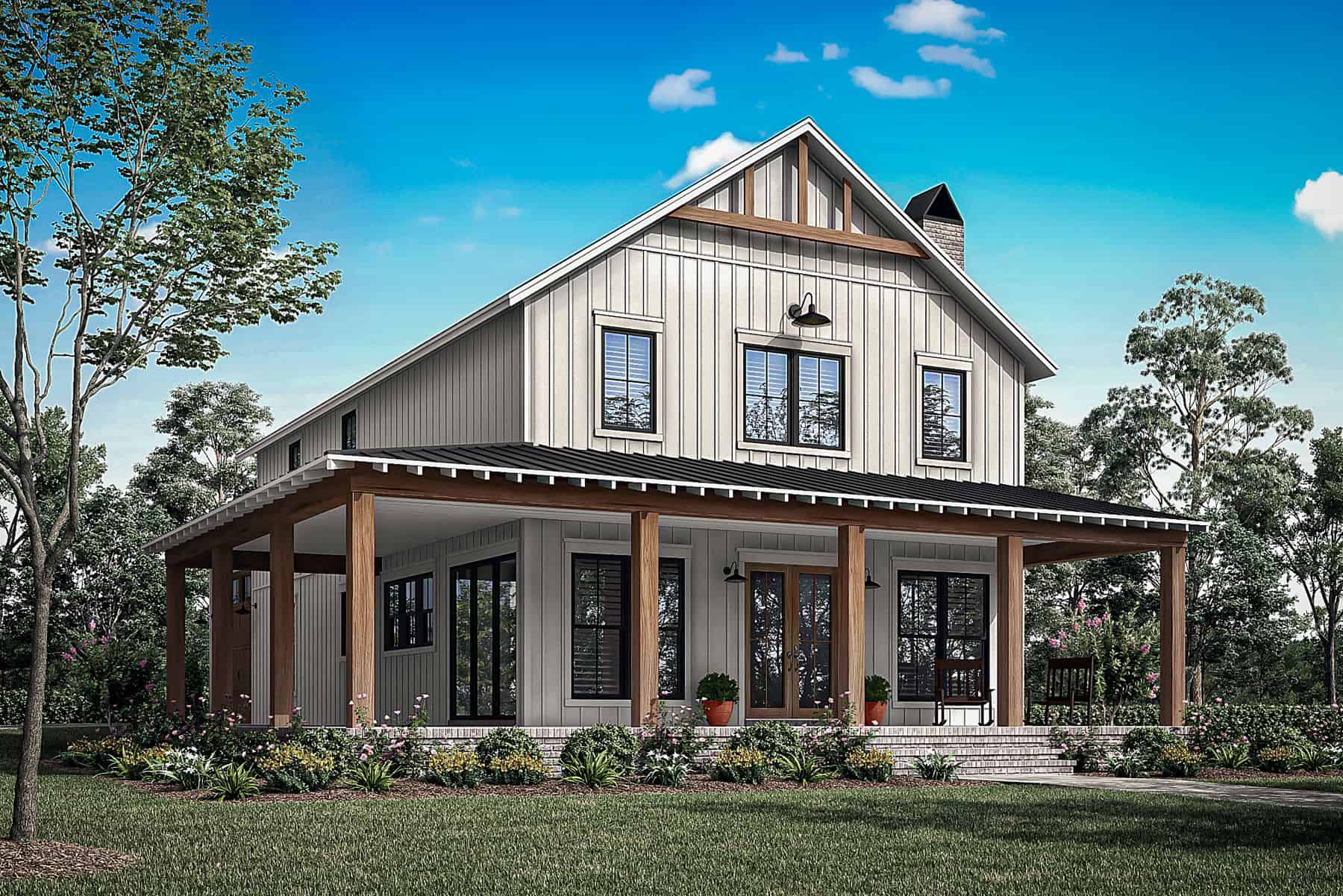
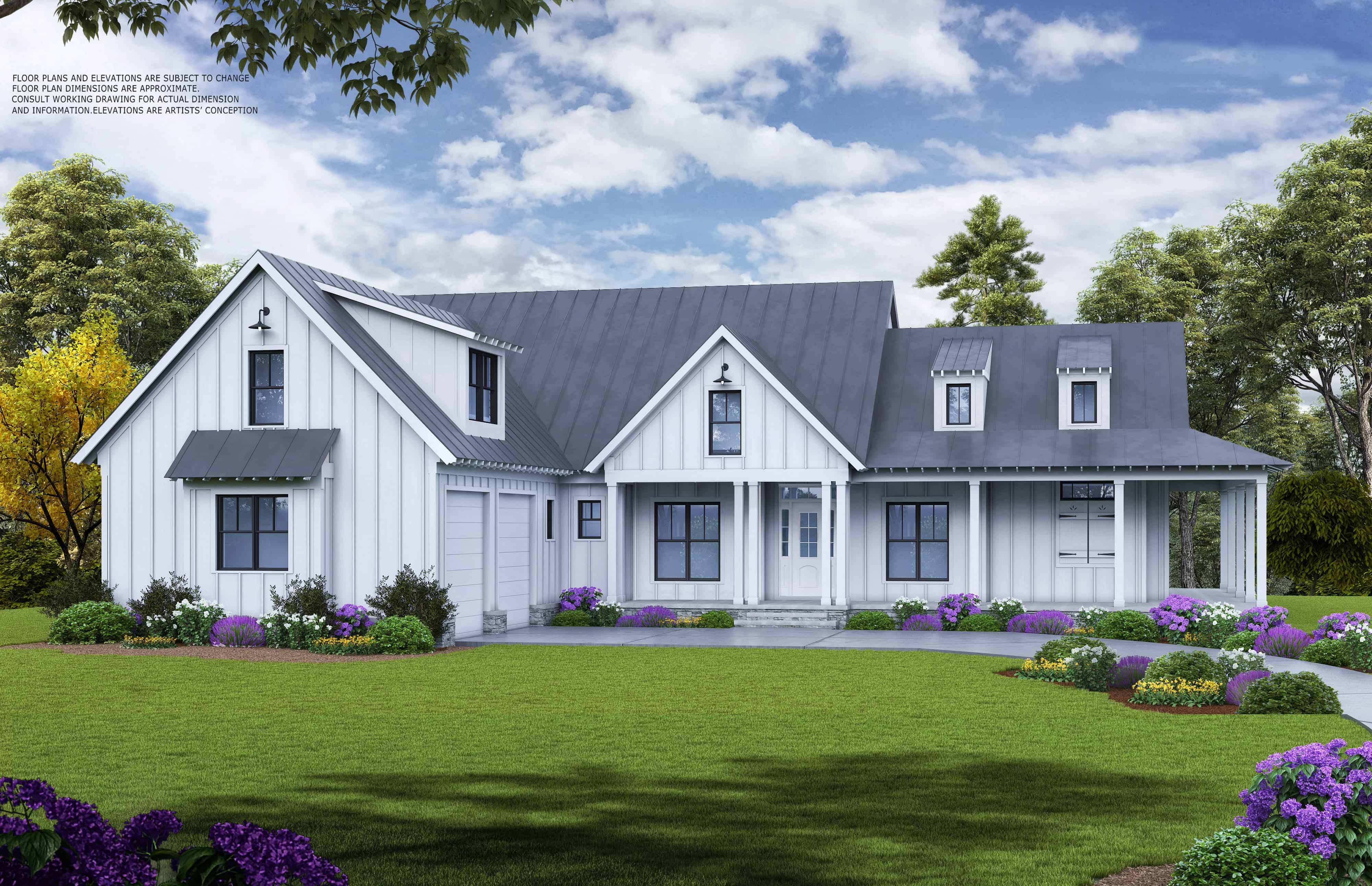
The difference is both structural and aesthetic. A barndominium uses post-frame or steel-frame construction; a modern farmhouse is stick-built with conventional framing. Exterior materials differ too — metal cladding versus board-and-batten, lap siding, or mixed materials on a modern farmhouse. Interior layouts overlap significantly, with both styles favoring open floor plans and large kitchen islands. Aesthetically, the modern farmhouse looks more like a traditional farmhouse than a traditional barn. Roof lines will vary, porches are prominent, a second floor or window dormers can be found, and a softened symmetry is visible between the door and windows. Homeowners who want the barndominium advantages on a suburban lot or in an HOA community often find that modern farmhouse plans are a practical alternative.
Most barndominium plans in this collection include at least one garage or shop bay. Use the square footage and bedroom filters to narrow by size, or sort by style to find rustic house plans and other rural designs.
Plan Results
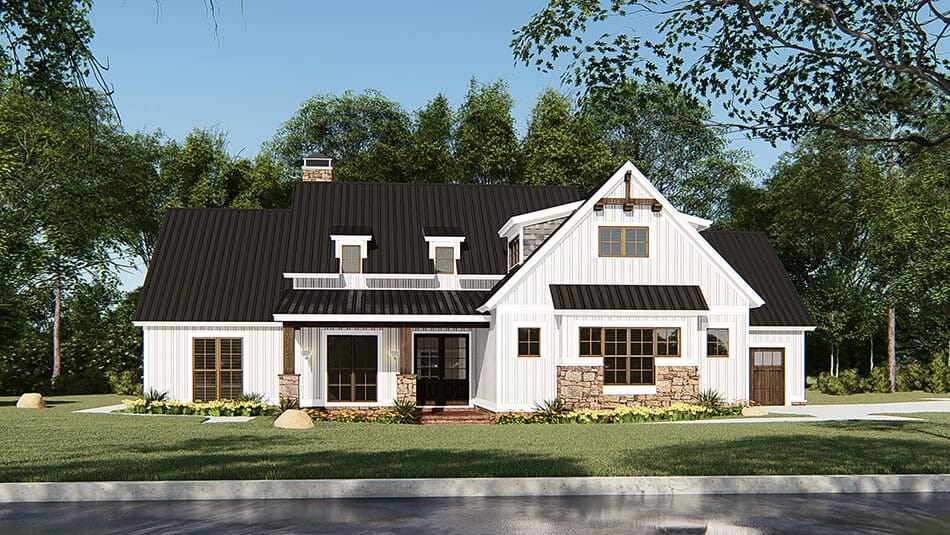
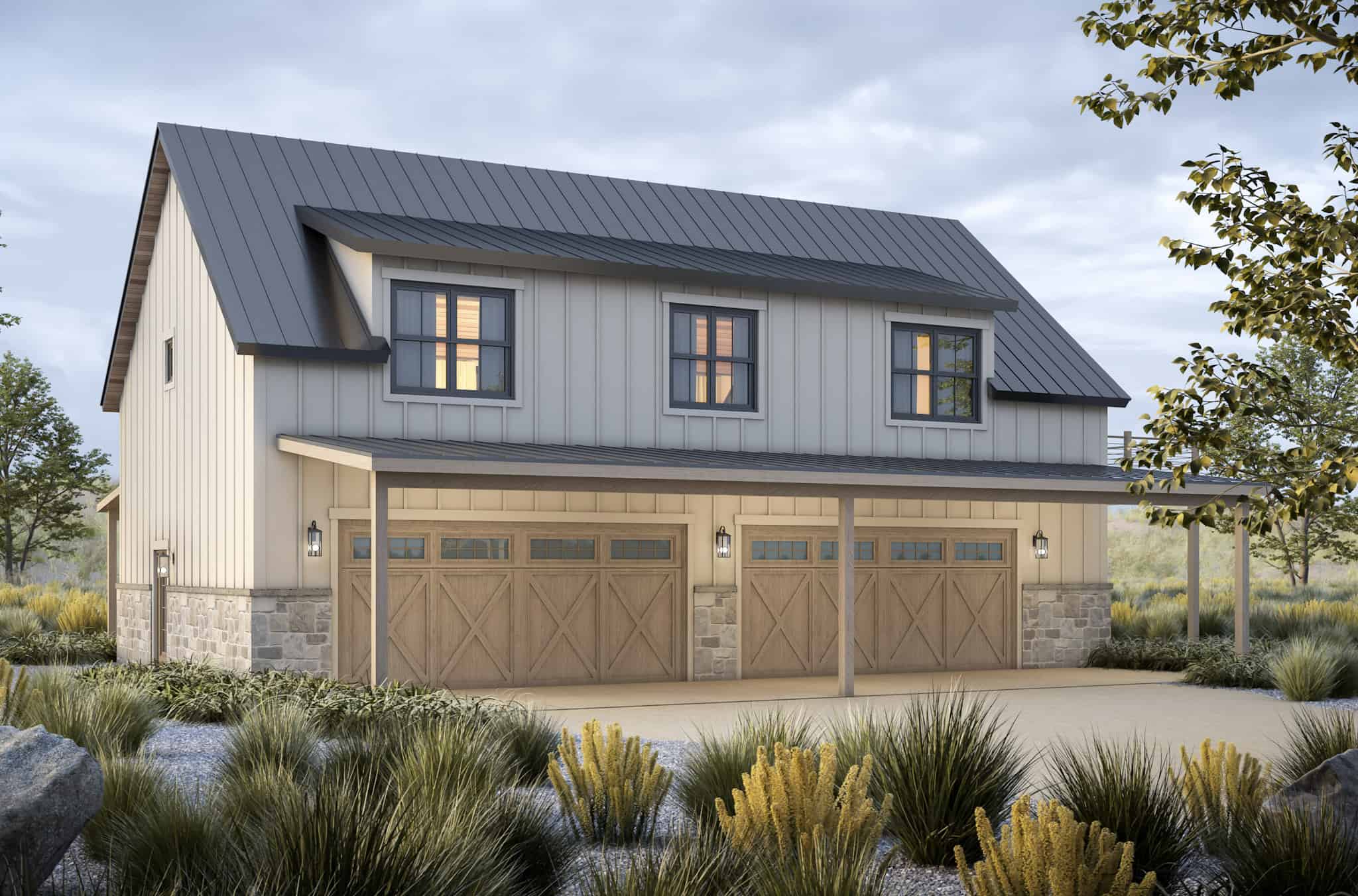
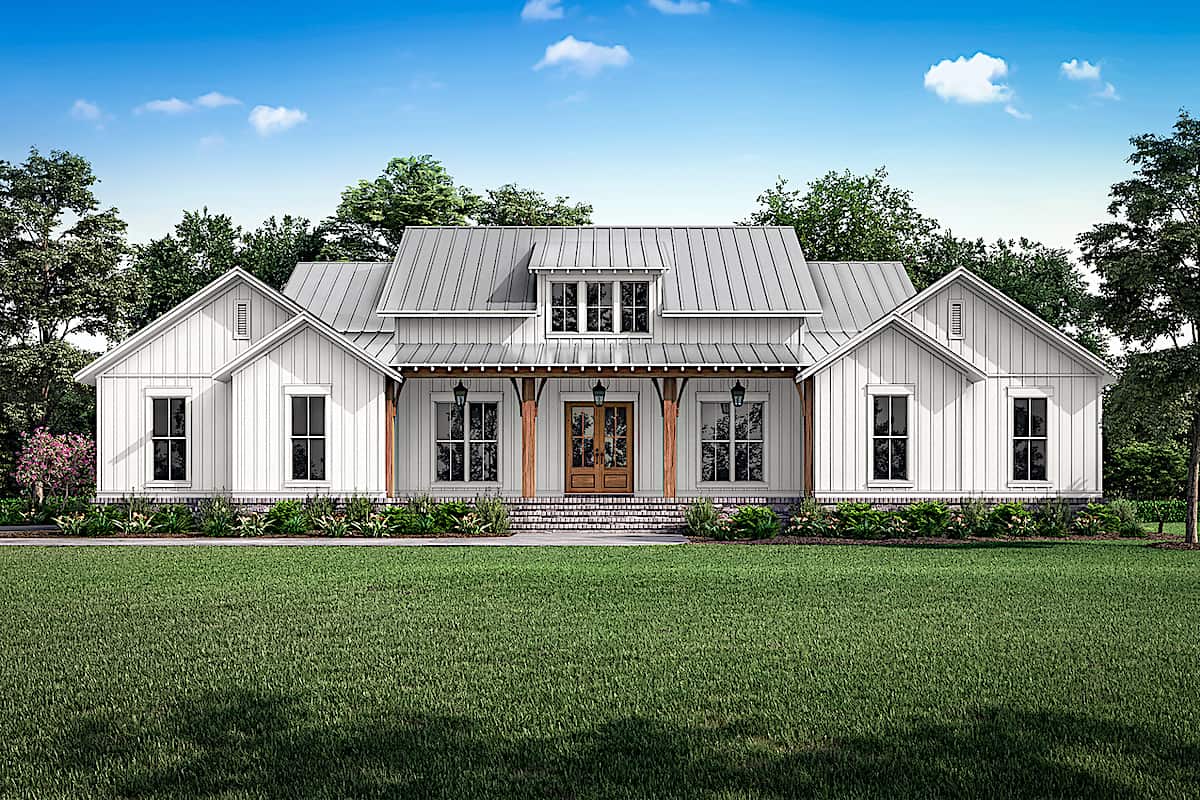
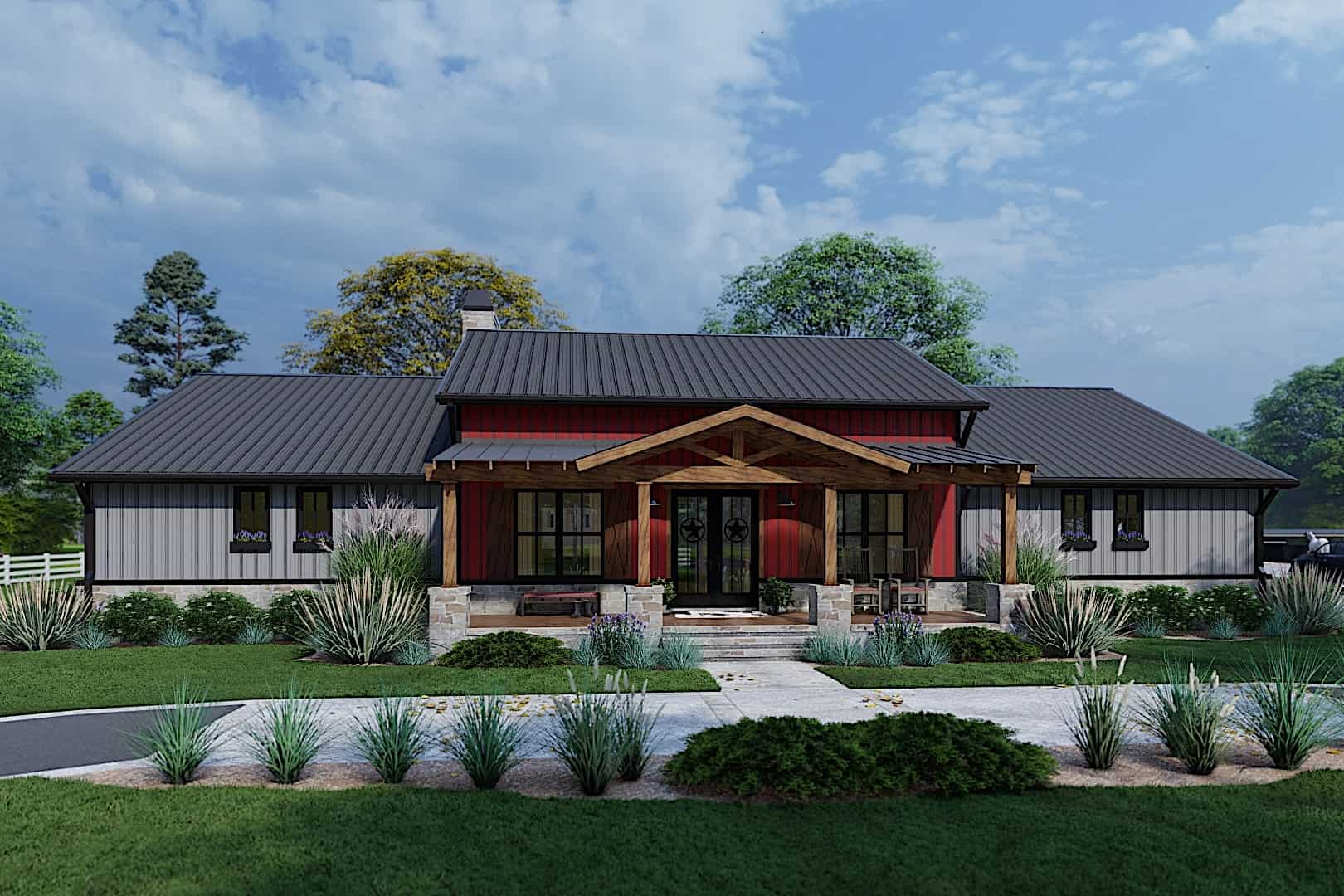




Barndominium & Barn Style Video
The Plan Perspective
What is a Barndominium? Features, Benefits, and Costs
The housing market is constantly evolving, with new architectural styles emerging to meet the needs of modern homeowners. One of the most exciting trends in recent years is the rise of the barndominium, or "barndo." Combining the rustic charm of a barn with the comfort and functionality of a contemporary home, barndominiums offer a unique living experience that appeals to a wide range of buyers. Whether you're looking for a spacious family home, a live-work space, or a cost-effective alternative to traditional construction, a b